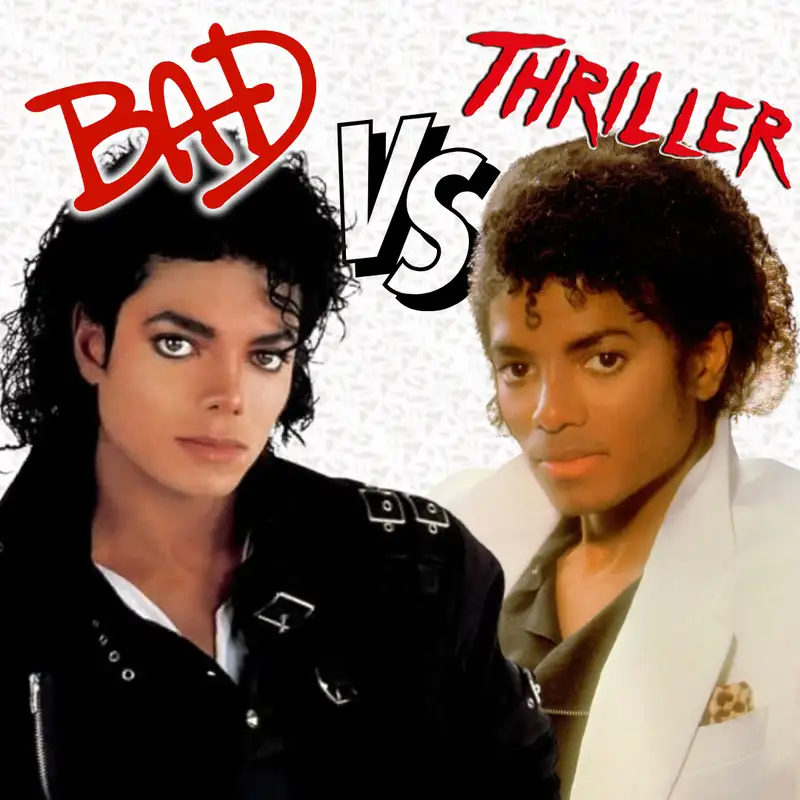
Today we're listening to perhaps the most anticipated
album of all time.
The Follow Up to the Monster Hit Thriller.
Even though this album sold 50 million copies
and is undoubtedly an artistic masterpiece,
many people believe that it was a massive letdown,
which frankly, I think is criminal.
Hmm. Fantastic arrangement, Adam.
But is it Michael Jackson? Bad or said?
I am Adam Maness. And I'm Peter Martin.
And you're listening to the You'll Hear It Podcast,
Music explored,
Explored, brought to you today by Open Studio.
Go to open studio jazz.com for all your jazz lessons.
Hells Yeah. Hell's Yeah. Peter,
I've just been wanting to say that all day.
Well, it's a big day, so I get it. I get it. Hell's yeah.
We're listening to Michael Jackson, 1987. I've been classic.
Okay. Bad, bad. I love this album.
Me too, man. I really do love it. Where
Did you first consume this?
What format? Because this was in a, this is 1987.
Yeah, this was a, I remember that year.
Well, there was a lot of formats drifting around. It was
An in twixt time format.
It was, it was between LPs and CDs.
A little something we used to like to call cassette tape. Is
That where you originally had
It on? I, this was
in the first batch of cassette tapes
that I bought with probably my like birthday money.
Wow. It was Def Leppard's, Def Leppard's hysteria.
Def Lepard, Def Def Leopard's, hysteria. The Def Leppard.
And Michael Jackson's Bad. Were the first ca set.
It's like a collab between Deep Purple
and Def Leppard. That would be awesome.
But this is, I remember, I still remember having the
cassette tape and we'll talk about it in a moment,
but I think that's what makes the sort of album art on this.
Yeah. So fetching is, this was the age of cassettes,
and this looked awesome on a little cassette.
Like it's, 'cause it's just such a big image of him,
and there's a lot of literally white space behind him.
And so it was very striking as a cassette.
And it had a, I think it had a multifold out
booklet inside of the cassette.
Right. Which, you know, they're so tiny,
the cassettes compared to like, even I know.
I know. And, um, but I, I vividly remember listening to this
until, you know, you could wear cassettes thin.
Yes. Like, they would, like, records would wear out,
cassettes would start to get real warbly after a while.
I definitely, this was a cassette
that got caught in my tape player several times.
And you'd have to get the pencil in there. I was
About to say. Yeah, you
Have to roll it back up.
And I'm sure I taught myself how to do that on this tape.
Um, and I wish I still had that tape. Was it
Dolby? Dolby B,
Dolby C? You don't know.
You were a little kid. I was eight years old.
You, I was eight years old. How old were
You? I was 16.
Oh, you could
Have babysat Me. I was,
or just, no, I just turned 17. Okay.
So I remember this distinctly.
I bought this, I bought it on CD first. Okay.
I was kind of an early adopter to the CD four.
I mean, although by 87 that there was certainly around,
I would think, I would think
that this was selling heavily on cd.
Although actually probably cassette
Was 80 is early. Yeah,
true. I remember CDs like really coming into the,
to the mainstream in the early nineties. Is it
That, okay. Well maybe I was
early then. Yeah. But I,
I'm sure people have them in the
eighties. But like, I had a
Little portable yellow, uh, Discman.
Oh yeah. Sony Discman.
You know, that was shockproof supposedly.
It was not shock proof. Totally.
Um, but this record was shocking, I can tell you that.
It was kind of shocking. I mean, we'll talk about it.
You know, this is, it was a long time
Coming. Long
time coming. Yeah.
You know, he's following up the greatest
selling album of all time.
Yeah. Thriller. And his breakthrough hit,
we talked about this not five months ago.
Yeah. When we did our thriller episode,
and we talked about how Thriller was this intentional, um,
album designed to make Michael Jackson famous on every kind
of radio station in the world.
Right. And it worked. Right. Doggone it. Like they did it.
Michael and Quincy did it.
And they even kind of invented a new format
and distribution point for, you know, obviously still going
with all the traditional ones.
Radio, um, you know, lp CD was, no, no, not cd,
but I mean like all the different places.
Television, soul Train, video. Yeah, yeah. But video. Yeah.
But long form videos. Long form videos,
which people were like, why a million
dollars to make a video, which
Would become a huge part of Bad was the,
is the film Moonwalker, which was this video.
Mm-hmm. I had the, the VHS cassette of Moonwalker
and I, I mean, I wore that one out too. It
Was all extended versions of all the videos. Right.
All the videos, all the extended videos.
There was also like kind of a through storyline, right.
If I can remember. Right. Super weird.
He turns into a spaceship in the end.
It gets really weird and a little creepy.
But man, talk about like pressure, right? Yeah.
Coming off of, because you know, going into Thriller,
obviously he's very famous
from the Jackson Five from Off the Wall.
Yeah. He's already a celebrity. But
after Thriller, you know, we don't have these kinds
of stars anymore that are just like so globally famous.
Yes. He was so globally famous that Mo one
of the most famous people in the world.
He might have been like 19 85, 19 86.
Even going back to like 83, 84.
I mean, first of all, thriller was out
for two years or longer.
Remember that. Like it came out. That's right.
The single came out before.
And then it was like, I mean, it was literally
for two years, it was the,
it was in everybody's consciousness all over the world in a
way, a sort of singular cultural event, as much
as you could have around most parts of the world.
So by the time this came along,
and then remember they did that tour,
and I think they did a live record with the Jackson's,
the Victory Tour that was huge.
Huge In between, between, which is not officially
The Jackson's tour, the Jackson tour.
That's right. Yeah. Um, but I mean, yeah.
So people had been talking about this record.
It took 'em two plus years
to do five something like five years between this
and Thriller, which is a long time
Back that, I mean, I couldn't imagine the pressure
after making something like Thriller
that becomes this cultural and worldwide phenomenon.
Like, how do you follow that up? Well,
Although when you've banked that kind of bread,
how much pressure is there actually in your life?
Well, it's self-imposed at that point. It's
Self-imposed pressure, you know,
more money, more problems here.
But you know, he, he, he came back
with a very familiar team for this.
So Quincy Jones is the producer Yeah.
Who produced Off the Wall and Thriller.
And this would be his final Quincy Jones, the final
Quin. And honestly,
uh, I think it seems to me,
and we can talk about this,
a smaller Quincy Jones footprint than the other two.
Yes. Agreed in to my ears.
And I could be wrong about that. Maybe
A little bit of a marginalized footprint,
a little bit. The
Quincy's, like Michael might be taken over in some
of the production and he's using some other producers.
You know, I know Rod Templeton doesn't have a song on here.
Apparently he helped out with some of the production.
But, you know, rod was a huge part of the songwriting
of the fir of the Off the Wall.
And, and Thriller, not a songwriter on this album.
Michael did almost all the songwriting on this album.
Although I did read that.
That was encouraged by Quincy very much.
That was not like a bone of content.
Like Quincy was like, and that was, you know,
there was certainly, we can talk about some Prince influence
by this time for sure.
Where like, prince is not only
producing, but playing every instrument.
I think that they both always said
that there was not a competition,
but there was, there was a healthy competition in terms of
How could there not be. Yeah.
I mean, and, and like Prince's output
was so much more Yeah.
Than Michael's during that 82 to
81 1 every other year.
Yeah. And won every year until 1987. Yeah. 88.
And a bunch of unreleased stuff.
A bunch of live stuff. A bunch of,
Um, so the engineer is Bruce Sweden who Yes.
Was the engineer on Thriller
and then assistant engineer Brad Sunburg.
Yeah. Um, that he met on.
So Quincy's guys, that's the brain
trust right there. Yeah. That's
The brain trust. And a lot of
the same musicians are fave are very fave.
Greg Fill gains, filling gains is all over this.
Uh, Steve Ccao doing a lot of programming that he, you know,
a similar role that he had on Thriller.
Yeah. Eric Gale. Yep. You know, Ollie Brown on drums.
Mar uh, Miko Brando on drums.
There's a lot of people on here.
I would say Jerry Hay is back with the Yeah.
But they're Marginalized.
They are little. We're gonna talk.
I don't like the, the, the horns being pushed
to the only, the end of the track.
They took some of the horns off
of the original LP version Yeah.
On the, because they thought it was too backwards looking.
You know, Paulino DeCosta huge, uh, force on this
as he was on Thriller and collaborator
with Michael Jackson in Dugo here.
Great. Brazil, yeah. Duo's on here.
But, but Indu actually in Dugu.
What, what track is Indu? He's on. Um,
Oh, I see. Before we get
too far, we just got a note from the
Wait, it's coming in from The control booth.
Yes. So we have our producer and engineer. Yes. Sam Mall.
And then we've just got a new, we new
Producer Caleb, producer Caleb about marginalized.
He's editing all this stuff. But, uh,
we've got a new production assistant, uh, Charlie.
Yeah. Who just noted that it is not Bruce Sweden. Right.
As we've been saying for the last year and a half. No,
I've been kicking you under the table
every time you say it wrong. Have you?
Well, I don't think so. My legs are short. It's
Bruce Sine Sine.
Of course it is. S swine.
I I I knew that long. Just like it's
Written, Just like it's written. Bruce
And Brag Berg.
Brad Sandberg. That's right. So, thank you, Sam.
Apologies on that. Charlie.
Thank you to the audio engineering nerds in the booth. Yeah,
Absolutely. Um,
okay, so where were we? Where were we with this?
We were talking about we bad. Oh, and
Peter. We're at bad. We
gotta we we gotta
we gotta start listening, man.
I'm, I'm itching. I'm itching to hear some music.
Okay. Okay. Let's do it. But I also noticed something
that I want to address before we get into it.
The elephant, the Yamaha in the room.
There's a little white keyboard on the table.
Well, yeah, it's a little, we've had problems
with the bigger keyboards with,
we've been trying to figure this out.
But is this something that might interest you, my friend?
Hold on a second. Oh, we can even go down to here.
Is that, is that the patch?
Brass sine just a mixture. Mixture of Bruce,
I'm just coming up with whatever this is just
to give a little sun, just a few little musical
examples we can go through.
Okay.
So we've got the Yamaha Reface in the house.
We've got a little bit of a keyboard on the table. Yeah.
So it just as a little punctuation, it's battery powered.
Shout out to, uh, luxury and Diallo. No, not no.
Shout out to Yaah for all this crap
of theirs we've purchased over the years.
No luxury. And, uh, dial's two
of our favorite po music podcasters.
One podcast. Podcast. One song podcast.
Shout out they, I got jealous of Luxury's little keyboard
where he was demonstrating some
stuff. So we're bringing it back.
Well, we might need to get a little reface
with all the EP sounds.
Keep going. I'm just playing background.
That way we can double reface, you know what I mean?
Oh, double re Dope. Pio Face Toia. Got it. Okay.
So the title track, the opening track Yeah. Is
Little thing called Bad.
Huh?
Clap. Damn.
That form A smack on a smack about a snare drum.
That's a smack two and four.
That's like the New York City Subway SmackDown.
Uh oh. That's, that's bad.
So we're all
These background vocals here?
This
Got a little twist.
Okay. Can we pause here? So much Great stuff happening here.
So many mi like this is just,
even if Michael Jackson wasn't singing this,
if somebody else was, you still know it
was a Michael Jackson track.
He, he wrote this, he wrote almost everything on this album.
Big Change from Thriller, big Change from All World.
He's always been a great writer,
but this is where he really was like taking over.
Oh, that's just drums, right? Just the drums with the claps.
So when we talk about the claps,
that's probably like a Lin Drum.
Would that be a Lin Drum clap? Or, I assume so. Yeah.
I'm not sure what they were using on that,
but what I love about this is all the drum Oh yeah.
The syncopation that's thrown around.
Is anybody actually on drums on here? I don't think so.
Oh, no. Okay. So interesting. It says, my bad.
JR Robinson, the Legend. AKA Yeah.
From, um, many earlier from Rock with You. Yeah.
The legend himself is playing on here.
So obviously there's some programming going around
what his foundation is.
But one thing is
that Baseline, which is a b flat blue scale.
This is a very Blues.
Or like, you wouldn't think about it
because there's a lot of, But that's what that is.
Blues Foundation. But check out the Pit.
You know how sharp it is? It's like a quarter tone sharp.
That's crazy. Crazy. I never noticed that before. Yeah.
And we check this with our piano and with the meter.
It's always like, so we can pause it. There. We got it.
Hold on, hold on. Okay. Sorry.
Oh, David Williams. Oh,
filling gains.
Sorry. Ah,
So that's the Moog base Filling
Gains on Keys.
David Williams on Guitar Man. Just that
Groove without the drums, man.
But then you add 'em in. Jr's killing.
It's just, there's a lot of programming on top of that.
Can we open, can we open up the Pandora's box
of the question of is there too much
drum programming on this?
Well, is it too automated sign?
So is, does that date this sound? Yeah.
When we were talking about like, what,
what's the thesis for bad, right?
Yeah. Like what do we want to talk
about when we talk about bad?
Right. One of the things that I think about with Bad is
that it's like you're on this scale from this organic sound
that you get from all these analog
instruments on Off the Wall.
And there's still, when you think about Baby B Mine
and you think about like PYT
and you think about like all of these sort of like,
you know, analog sounds on thriller,
even though there's still a little more,
there's a little more programming going on.
Yeah. But we're not fully digital.
And with bad, it feels like to me.
Okay, now we're fully digital.
Like now we're Prince Prince has arrived. Right.
And we're post Purple Rain.
We're post like, you know, Peter Gabriel's on the scene.
Yeah. Making like all these huge sounds
Y hommer y Hammerer,
Miami Vice.
Exactly. Exactly. Like we are, we are in this sort
of like digital revolution musically.
We're using a lot of computers to make music Now. Herbie
Hancock Rocket, Herbie Hancock
Rocket is a great example. An
Early precursor, great Example.
Yeah. But computers are on the scene here.
And they're on the scene with Bad. And you can hear it.
There are some organic things that happen though.
Peter, I don't know if you, you
Remember? Oh no, we're gonna, we're
gonna
definitely jump under into that.
But just since you mentioned Baby B Be mine,
do we have the drum example?
Just so you hear a contrast? Yeah. Yeah. Here, this is Indu.
Go on. Doo Chance with the Great,
So this is from Thriller.
Yeah. And it's got, it's got a little bit
of programming on top of it too.
But it still has the, it's a drummer playing. Right.
Primarily. That feels amazing.
And, and when we've gone over, it's not that bad.
The groove doesn't feel amazing.
It's not that we still don't feel JR in there,
but the programming's, the computers have taken over.
Right. They have, we, the computers have taken over
and it's not a bad thing, but to me bad it's some,
it's, it is a bad thing.
That's why they, they named this, this record bad.
I don't know what's, like, if you, if you had a preference,
does that make us old school sue us?
I do. No. I do think, though, does that make us
Boomers Like we just listened to at the end
of last season on this show,
we listened to Sign of The Times.
Right? Yeah. Amazing. Ooh.
But Sign of The Times and Bad both came
out around the same time.
Yeah. And they both have like a, a, a sonic color palette
that feels different than the stuff from the seventies
and early eighties that we like so much.
Yeah. And I wonder if it is an age thing,
because we are of the age where it's like,
by the time, I don't know.
I love that stuff when it came out.
But now, like, looking back on it, I,
I kind of wanna hear off the wall,
But think about like Stevie during this period too.
He kind of fell into that as well. Everybody was.
Everybody was. Yeah. I mean, everybody was on this,
on the, on the on board for the technology train. But
Maybe Thriller was that perfect mix.
'cause it was going in there. But like we just heard it
still had enough of that.
And there's parts of this. I mean, look,
we're gonna hear some ADEs move baselines that well,
we're gonna hear, you know, an
An organ solo as well. Oh yeah,
That's right. We gotta get
to talk about going back to the sixties.
Woo. And the guitar. Ah,
David Williams. Yeah.
And Michael's voice.
That's the main thing that pulls it together,
Right?
I mean, this shit's grooving. Come on
with the guitar.
Oh, this is the version. What they took
most of the horns act too.
I mean, they got, they got
that organ filled down in the mix,
But it's there. It's way down
in the mix. It's way
Down in the mix.
That's filling gate. That's filling
Gate.
So That,
Do we have that organ solo on its own? We have
The organ solo on its
own. He plays a
Yeah.
This is Jimmy Smith. Jimmy Smith. Jimmy.
It's Jimmy the Master. I
Had no clue until this week. And he's,
And he's just doing Jimmy Smiths till
This week. Yeah.
I just assumed it was one of the session.
Yeahs on here doing everything else.
It's Jimmy Smith of this Jimmy Smith. Yeah. Jimmy Smith.
Yeah.
That had to have been Quincy that pulling him in. Right.
Also, I Maybe Michael, by the way.
Hey Quincy, get Jimmy Smith.
I would never know that this was a B
three until you sold it.
I know. I assumed it was synthesizer
Mix so much.
But you can clearly hear it's a B three. Yeah.
You can hear the Leslie kind of. Yeah. But
In the mix it sounds, with all the other digital things
happening, I I assumed it was like a
DX seven or something. Yeah.
It got a little bit that, that'd be a little bit
of a quibble bit that I have.
Although it works within there.
And so maybe we're just like jazz guys.
Like it's Jimmy Smith.
Everyone else has to stop playing
and listen and honor the master.
But it's just, it's, it's sublimated so much in the mix.
I think it's so funny that it's
been Jimmy Smith this whole time. It has been.
It's changed. Yeah. It's awesome. That's, um, yeah.
So that, that, that's it.
So this thing of like, you,
you like it being sharp is really interesting to me.
'cause it's like about a, as far as I can tell, it's close
to a quarter tone sharp.
And that was just a decision. I don't know if
that was Quincy or Michael or,
or the, the production team to kind of give it another sign.
There's a couple, if you don't know anything about
pitch, then it doesn't
Matter. There's another one, isn't
there that I
Feel there's a bunch of things that
are outta tune, that are outta tune.
I shouldn't say they're outta tune.
They're just in their own tune.
They're pushed Up for what, for
whatever reason. Yeah. Can
We talk about the video for a second? Oh,
Yeah. Wesley Snipes.
Wesley Snipes in the early
Wesley Snipes, but clearly in
Wesley Young. Wesley Snipes. Yeah.
Right. He's the, I I don't wanna say the cool,
I remember when it came out, I was like, wow, Michael,
you're making yourself not, you're
so much more talented than everybody else dancing around.
But my but, but Wesley Snipes kind of stayed cooler to me.
Yeah. He stayed batter and
The video directed by Martin Scorsese.
If you can't get anyone else, just get him.
I mean, if you need to make a video about,
you know, some, some street
Did you call him Scorsese?
Scorsese. Scorsese my friend. Okay. Sc
Scorsese.
Like I said, Scorsese, you know,
it's probably not the way either one
of us is saying it, so it's all good.
Um, okay. So thumbs up
or thumbs down on that track in general?
Thumb, thumbs Up. Okay. So Right. Thumbs down.
This is one of my favorite on the album.
I think it's a great opener. Yeah.
I think there's a lot of, like, some of it gets,
do we have any of the vocals on their own on this?
Or does that, do we just have, uh, I was just saying
with some of the background, like,
because Michael's, um, his syncopation,
he had such a great rhythmic concept
and the way that it would be actualized
even on stuff like this.
Like you would hear it on the live stuff for sure.
And like how, what a great improviser he was. Where
They say the sky's the in and to me, the
Like those little rhythmic things,
the vocal arrangements, that's all Michael obviously.
But like his precision with his time
and boop, it's got a little bit of swing to it.
Right. Boop, can we talk about like, everything he does is
so intentional with his rhythmic concept.
And so that enables him to be able to play
with the syncopation in a way that really adds to,
and when you hear it alone, like when you got all the drum
program and stuff on top of, it's a little bit, um,
gets a little bit lost is my only thing.
I was talking with a friend about this song
and you know what stands out to me too about that is like,
so it's, it's influenced by a true story
that Michael Jackson read about a young man who tried
to escape poverty, but Yeah.
Was killed upon returning home.
He was at like a prep school. And
It also makes sense,
but no one, no artist, especially of Michael Jackson's fame
and Caliber would make a sort of dramatic telling Right.
In this way, in a sort of post NWA post
hip hop world that we're living in.
Yeah. Where like the sort of like,
stories like this are told from
a perspective that's not Michael.
Right. You know what I mean? That's,
that this pop star is like putting on this
costume to tell Right.
Is to me is like the thing
that actually dates it the most. It was
An, it was an innocent time was he didn't pull out newsy,
he pulled out his dancing shoes.
It was a dance off for
Sure. I mean, it was like literally
like, it was like,
it's like more, it's closer
to West Side story than it is very influenced by
It than it is the dance routines. Everything very
Influenced to Nas or something. You
know what I mean? Like, it's, it's closer to
It's nas. Thank
you. No, it's uh,
but you know what I mean, like Yeah.
Also the very next track on the album banger.
It's a banger, but it's like, it's a,
it's a flirty sweet Michael.
Right. You know what I mean? So like, he's like
this I'm bad.
Tough guy. Right. That didn't last long.
But he's, but he's not a tough guy, is he?
Like, he's not, we know he is not. Right.
Anyway, I just, it, it always stands up. When
I was a kid, happy vice.
I didn't even think about it. But now it really stands out.
Right. But remember how separated out these singles were?
It was like months between them.
So it almost felt like unrelated knew.
I didn't relate it until you put the album on it. It's true.
This is a good video. This is a killer video.
But even like that, what he just did,
like his rhythmic attenuation
Genius.
This gotta swing. It's a shuffle. Right.
This is JR. Again, this is up there for me.
This is one of my favorite Michael Jackson songs.
Kind of a blues too,
Right?
This was outta tune too.
Made his vocal harmony with that sus chord.
The back of Cluster it Down. Yeah.
There's The horns
second verse.
Henry. There's a lot of wonderful five moves.
Jerry Hay, I got Henry Han in mine.
Such A great breakdown.
This is the,
I love
You got it. You got it.
Got it. So this is one of the only tracks
where they really let the horns loose and left the stuff.
Yeah. The parts you were talking about.
You like it's, and this sounds outta tune.
I'm in, you know, he's playing around the, you know,
he's got the sus with the major, like really sophisticated,
fun kind of harmonic stuff that he's playing around with,
but always with that sink of patient.
Oh, on top of that, what's essentially a shuffle groove.
Right.
I know, I was thinking like, like
A programs type of shuffle
As a, as a, as a as human beings.
We need to get back to the shuffle. Yeah.
When was the last big hit That was a
shuffle? Was this the last big
Hit was a shuffle?
No, there's been some kind
of crappy stuff to tell you the truth.
But big hits like Mariah Carey's had some hits.
No, no Shade on Mariah Carey.
There's a shuffle. Yeah. I like the way you say
that. A shuffle, but like a
Real shuffle. Yeah.
No, I mean,
is this even a real sh this kind of is a real shuffle. It's
Kind of a real shuffle. Yeah. Yeah.
That's what I'm saying. Man. It's amazing. But
Mean, I think it's, it comes across because
Then you hear the horns be like that that like
all the offbeat
Stuff stuff. All the offbeat stuff. Yeah.
And then Michael,
so dip, dip, dip.
Like it's the harmonic thing and the melodic thing.
But it's also he's always right in there with the,
his rhythmic attenuation is is crazy.
Next up is one of my personal favorites.
Just because when I was a kid
and with that Moonwalker album Yeah.
This video was amazing.
It was this mix of claymation
and they would use these like costume heads.
Yeah. And it was like this five minute long intro
before the song starts where they're chasing Michael Jackson
around a what? You look
Pain. No. Are we skipping? Are
we skipping
to a later track? Or are we gonna listen
To Speed Demon? Yeah.
That's one of your favorites.
You don't like it? No, that's
Okay. This is where, this
is where,
to me, I started serious skipping.
Are you serious? I'm not a crazy, I'm not
crazy about this track of my favorite. There. I said
It. This is one of my favorite tracks.
I know, but listen to what you're talking about.
You're talking all about the
Video. I was a child.
Okay.
And It was Claymation. We're not children anymore.
My And and they're chasing Michael Jackson
around the Hollywood lots.
So there's a nostalgia flavor
for you that didn't have it for
Me. Listen, we can
get into this later. I
Was a grown ass man at 17 when this record came out.
Yeah. We can get into this later. But I feel like this
whole album has, um, a bit of nostalgia bias for me.
Of course, of course. Like when we did the Thriller
episode, I said that was Yeah.
I think this is better than Thriller. Yeah.
And now having spent a lot of time
with Off The Wall Thriller
and Now Bad, I think I have to amend that.
No, I would agree. I think you just
said it in the proper order.
If we had to rank them off the wall, thrilling them bad.
I think that's right. It could be Thriller Off the Wall
Bad. I I thought it was off
the Wall. Bad thriller.
But I think Yeah. But we can, we can get into that. Yeah.
But Speedman is, is I think, really, really fun. However,
It's, I This is a great example of the sort
of like programmed,
like the very super programmed digital thing
that's happening here at this time.
Yeah. Just in music in general. Not just with Bad.
I mean, at least Greg Fe Means is still on it.
I love The Chew. Never heard that
before or since.
This Is a weird track To me. It's all
Chew. I'm
Headed for the It's
So in my mind It's
On his mind.
I get It. He got a ticket.
It's Weird. It's a weird,
I Is this you Big? Is it Chew chirp
Or, I dunno, to me it's just,
It's got the base.
That's program. It's fine, obviously. Yeah.
It's very trons, right? It is.
Um, to me it's just like, this is one of those places.
There's a couple places on this album.
If I'm being, can I be entirely honest? Please be honest.
Can I put, can I wear my heart
on my sleeve? Please? Wear Your
Heart on my Sleeve. Okay. Um,
that I'm like, they went through 60 songs.
It was supposed to be a triple album.
We was supposed to be a triple album.
Yeah. All this great material.
And to me there's just more of a fall off.
We've talked about. We don't need to revisit
where I felt there was one place on Thriller
that they fell off, um, on Off the Wall at the,
there was no fall offs.
Mm-hmm. You know, which is rare. What's going on.
We've talked, I mean, there's records.
I'm not saying tapestry.
Maybe there's one fall off. Mm-hmm.
Track to me there's like not double digits Of course.
'cause there's not, there's four or five. Three or four.
And this is, this is the beginning of it.
And it's early on and it's fine.
But I'm like, you spend three
years, two years making a record.
You're Michael Jackson. Of course he sounds great. Yeah.
Even beyond the data, to me it's just not, not
that speed demon.
It's, it's not. I'm now, I'm gonna believe Point Oh
Yeah. When you sing it like that.
Next up is,
this is an interesting
one. This is one. I didn't really, those
Were bouncing off pretty quick though.
Well, this is one,
this next track is one I definitely birth. This
Is what I like to call Birth of Puto.
Okay. This is Liberian girl.
Interesting video on this one too. This is a
Fun video. Yeah. Very
fun video.
This exotic Canyon Cafe,
The mid eighties exoticism.
Is it, it actually dated
316 million years ago.
And at this time there was no way to Google
what the hell he was saying and what language it was.
It's Swahili, isn't it? Yeah. It's Swahili.
It's like a combo vibes marimba kind of scl vere sound.
You came and you changed my world. Love. So,
But this to me is a better song than speaking.
Well, This was
Girl, This was written earlier in the eighties.
Oh. And made its way to bed,
Came And
World.
She says, you love
Me as more cinematic than
that's gotta be.
Do you love the song
Precious?
It's in tune. That's good. You kiss.
It's interesting. Yeah. It's
Okay. I put this one kind
of on, on the cusp. It's fine. It
Does. This album does
admittedly has has a
little bit of a dip here in the middle.
Yeah. And it ends super strong though. Oh yeah.
That, that's to me, that's part of it. Now are we gonna
Go all the way to the We're gonna
Go. We gonna, we're gonna go all the way
to the end.
'cause that's not on the, wasn't on the
lp. We'll, we'll, we'll get into that
Though. Liberian Girl wasn't
No,
No, no. The last track.
Oh, the last the cd. Oh, leave me alone.
See, this is, I I know, again, I love that from the VH one.
VHS. Right. Moonwalker. I know.
Leave me alone really well as well. But that
Was part of the thing of like, to get people to buy CDs.
I was only on the cd, not the
Lp. Oh, I didn't know that. Okay.
Remember they used to have the bonus, I
think. 'cause it wouldn't have been spaced for
It. Anyway. So this next
track is I think part of the dip.
And it actually pains me to say this.
So it's just good friends.
It's not a bad song at all, actually.
It's kind of a cool song,
but there's something going on to define cool.
Like, I like K with like with a K. Cool.
Well, let's listen to it. So this is featuring,
this is a problematic track for me.
This is featuring Stevie Wonder. Yes. Which you might think.
Okay. Love Stevie Wonder, the Love Michael Jackson.
The last time we saw Michael Jackson,
Stevie Wonder together, it was with, uh, I can't Help It.
Yeah. Right. When Stevie wrote, I Can't Help It.
Michael recorded. Yep. He gave it to him.
And now Stevie's featured on Bad
and we get just good friends.
Oh, there's some cool stuff happening on here.
No, the harmony weirdly not happening.
When Stevie's part of it. The harmony is amazing,
Actually.
And this is not Michael's song. I don't, I don't think.
Yeah. This was written by Terry Britton and Graham Lyle.
Yeah. It's only one of, only tutu's not written by Michael.
This started life, uh, connected to the Captain EO film.
Oh. I'll watch you on the
right through you.
Something pre
Chorus is killing. Yeah.
Pre chorus is killing.
Yeah. Very modulation is cool. Yeah.
And the chorus is killing. Yeah.
Good. This
Snare drum is killing me.
Yeah. The snare drum is killing me. Oh, killing you.
It's killing me. Yeah,
It's Clap. It's dominating
the whole track.
Oh, The chorus is the weakest part of it. The preco
Just good Friends.
Okay.
But this is not all,
This is cool. Actually.
It's fine. It's what happens. He's
Take, let's do
first impression.
I tried to hide.
He's trying to make something of it. Right?
I mean, he is. Can I say,
so just the verse, melody to me is for such a huge album.
Yeah. Isn't it kind of clunky? It's very clunky.
It's a little clunky of a melody. Yeah.
Just, I mean, even some parts of the chorus, no Shade.
Terry Britain and Gram Lyle,
who I know are awesome musicians.
But like, to me the verse is like, lyrically like lyric,
the lyrics fit with the melody and the way the, the phrasing
of it is, it's like you can hear
Stevie's like trying to pull this.
I know's it Stevie. I mean, it's great.
Of course it's Stevie, but it's not.
It's a, I think the pre chorus is
maybe the best part of the song.
Yeah. And I love the lift going into the chorus,
but the production then starts to like,
date it a little bit for me.
Like the big deep on one.
Yeah. You know what I'm talking about. Boom.
And then back to the, and then just the super over
dominating, super clapping two and fours. It's a
Lot. It's a lot. It's a lot.
Don't even,
But it was a Lot on bad. That's the same
Clap.
And then Yeah. And like the horns. That's great.
But like, before it would've been like, like they pulled out
so much stuff because they didn't want it to sound
what they thought was dated at the time.
And this is document. People have talked about this on the
production team is like, and in fact they,
there's even horns that appear on the LP version.
And then when they, they took them out, they took 'em out
because they were like, that sounds dated.
That sounds like the wall. They
Didn't want to sound like off the wall.
Right. But could Im, could you imagine this song
with Off the Walls production?
Right. It actually is. Like,
you can kind of hear it, you know? Yeah, no,
It's a great, it's a good song
With that, with that minor four seven
Change. Know there's
interesting stuff there. The
Road Actually,
the Less Horns makes it sound almost more
obtrusive when they come in.
I mean, it's, it can't be at all.
Like, it's not ever, it's not, just to clarify,
this is not bad at all.
It's, it's actually really, really good.
No, but it's, everything on this album is,
but it's just like, oh man.
It has so much potential to be something. Right.
Incredible. You know what I mean? And
We've already heard, and we're gonna hear some more.
Look, Michael set out to set out to make a record
that out the gate was gonna sell a hundred million copies,
which is a lofty goal.
It's lofty. He didn't achieve that. But I mean,
like, that's what he was going for.
So it's a little bit surprising.
Look, maybe our taste was off. Who knows? It's,
It is, this is all, obviously
There's many skipper
On here, but this, this one feels,
it just feels like a missed opportunity.
You got Michael and Stevie together.
I you got a really catchy chorus. You got this amazing Preco
Verse. Is there there precedence for
this though? Little is Paul
McCartney and, and, and Michael on
A lot of people have said they love
that Paul McCartney song from three Oh, I know
that. We kind of like threw some s**t.
Give is mine, man.
Warren Wolf really likes it.
Well, you know what I mean, shout out Warren Wolf.
But, um, so it is just a total taste thing.
It is a total taste thing. But I, I just like, man,
how many opportunities are you gonna
get Michael and Stevie together?
Right. It would've been, I don't know.
Yeah. It's, I, it's,
it's, I it's could've been amazing.
But next up is, now we start
to pick up the pace a little bit.
Yeah. Now it starts to from here on out, actually for me,
I dunno about you, but from here on
out, everyone's a banger. Yeah.
Well, we're on side side two now.
Like, actually side two is better than
side one as a whole.
Yeah. Woo Truck.
See, this is, this is dated Groovy eighties. I like this.
You know what I'm saying? Like,
that's the same clap two and four. But it,
There's some prints in here.
Oh, a lot of prints. There's a lot
of aspirational Prince guitar riffs.
Oh, he's coming in hot. Do what? Chris Tucker.
Come on man. Sorry.
But this is like Every detail, right?
So, ah,
I would've loved to hear Stevie.
Oh, he was so much better. Come on Michael.
Don't bring him in. Put on, put a chromatic
Harmonica solo on This Jones.
The ho. It's actually, this is very like,
hotter than July-ish.
Yeah. You know what I mean? It
Is for sure.
Oh, And that's like another gear
for his background vocals.
There's some other people besides him
on this, I think background.
Oh, maybe that.
And this is like getting into that Michael Jackson,
Quincy perfection production, everything in his place.
Who's that? All Based?
The horns. Come on Man. I forgot how good this truck.
Ah, oh yeah.
Oh
Hey. So this track
that's pure joy man,
is the perfect combination.
Pure joy. It's got all the,
what should be dated eighties sounds, Lin
whatever the program drums and stuff.
Yeah, yeah. But man, dude, it's so I'm here for it.
Like, that's because it's, it's a killer song.
It's got all these vehicles for Michael to get creative
with the background vocals.
Like when you talk about him as a producer, I think
that like, there's a number of different levels that,
that his genius was manifested even
before you get into the dancing and the video aspect,
just in terms of audio, his singing.
But there's other things besides just like the lyrics
and the songwriting, the background vocals,
how they're placed in there.
But this kind of perfection thing that he battled with Quin,
I don't know about battled, but
they were one up up each other.
It's like everything in the right place. Killer song.
To me, it's like every song should have been like this.
Not stylistically, but just at this level.
And this is maybe not even the greatest song on here,
but it's like, come on, it's in there.
It's, it's up there for me.
And, and this is, you know, up to this point,
every song has been written by Michael except
for just good friends, which we, you know, we kind
of talked about a little bit this next track, Peter
after another part of me, like,
this might be the best song on the album. Are
We the apex of the album? We
might be at the Apex.
Um, and this was not, again, not written by Michael. Um,
And this was like the fourth
or fifth single, I don't know if it was the biggest hit.
He, I felt, I felt like at the time it was the biggest hit.
But, um, we're talking about Man of the Mirror, right?
We're talking about Man Manir. Yeah.
It was written by sa excuse me, Saya Garrett. Yep.
And Glen, is it Ballard?
Yeah. Glen Ballard. And they were
like a songwriting team. Ballard.
Charlie's a Ballard. Millard Millard.
He's a Millard Duck. Okay. Yeah. SAA Garrett.
Very, very interesting story
because she, there's a little connection with friend
of the pod, friend of Open Studios.
John Beasley. Hey, who? Legend.
Well, really, society Garrett said this actually first
coined the phrase, man.
Well, he didn't coin it, but he first brought it to society,
to Garrett's attention years before.
Wait, Beasley Beasley Bees
Are who like open studio mentor
session. Yeah. Teacher Beasley,
My number one sub and Diane Reeves
for many years. And now, now
Diane Reeves, music Director.
Great jazz panels from la Yeah.
He was doing some songwriting
with sighting gear several years before this
and was on the bees baby, baby bees.
Right. Um, the Be's knees. Wow.
We got, so we got all sorts of names. Okay.
And he said something about Man in the
Mirror and that caught her attention.
She wrote it down years later when Glen Ballor came in.
He's like, I got an idea. Great. Ding ding with that intro.
She immediately was like, hold on.
And she went back and found in her notebook. Cool.
Uh, that, that, and that's how the, the title came about. So
The panning of the shakers. Yeah.
Make change once in my life.
And these are real claps, I think
Going As opposed to the, which makes a difference
Going. Make
it
as I turned up the,
the blow my
mind, this
Was Shall sharp.
It's like the four 40 twos they put Push everything up,
man.
The little harmonic backgrounds.
What a melody. Man, this here,
That's what society Garrett's singing.
Gorgeous. Yeah. And then here,
Filling gate. Enter
the filling gate.
Don't worry. This is a superhero.
And then Bring
The blues into it. Let's
bring a little diminish.
Oh, walk down.
I gotta, sorry. This is a perfect track.
I gotta back it up. Forgot this.
So we talk about the snare drum.
The entrance of the snare drum
after the first chorus is one of the great moments.
This might be my effects.
So there's a little, there's a little piccolo snare.
Yeah. That's playing on all four
beats, right?
Ah, it's coming in hot. Incredible.
Incredible.
Ah, the lyrics are killing on this too.
I wanna talk about the lyrics. Yeah.
Because I think it's interesting. Yeah.
Ooh, Controversy. What's that? Controversy?
That's next. Next on the list is controversy.
The pre chorus is magical. Yeah.
This here. Oh, back down,
Man. What a melody. Yeah.
Unbelievable. Oh,
Philly Gates started to get in there.
He's, he's like, he started to add some stuff.
See if anyone notices. He's like, cool, I got it.
Every time Michael performs this live here,
we're gonna spin diminish the dance moves come out.
Oh, yeah. You know what I mean?
Oh, Check out filling gauge.
Let's take our time. Let's take our time.
We changed that up. And choir.
I think we're at a lift.
Greatest. Maybe the greatest lift ever. Oh,
So good. And
it is an effortless lift, right?
It's not like it's just,
It's it's on, it's on.
I will always love You. It is territory.
It might even be above.
We
We're Not even in the apex.
He the chair. No.
You know what the apexes are, right?
No. Oh yeah. You know where they're Oh yeah.
But this is like, it sets it up. Here it is.
Oh, Phil and Gates sitting on that four. Come on.
Oh. Oh. Sit on it. Sit on it.
It's going real good. Samon indeed.
Peter just,
Oh, minus That.
Man. This is so much longer than should work.
And it just works. Every second world. Oh,
Us
Man. Michael Jackson's
gospel. Chopped
S**t.
Lesser hands, all this
Damn Man.
That's a perfect track. It's a perfect track.
I'm gonna put it out there. It's a perfect track.
Can we break it down a little bit? Let's break it down.
But I just want to man a couple things
that I had hardly noticed.
Like, they're sitting on that four, so
of course it modulates up a
Little sharp nine thing. Yeah.
But once they go down and sit on that, I mean, this is
so important for gospel music, for American music,
for black American music.
The four chord, the four to the one Ah man. Yeah.
For Bach, for European, classical, all this stuff.
And so the fact that they sit on that for so long,
it's such a, like a reverential kind of feel.
Right. And then filling gates is just like, f**k it.
I'm gonna be filling gates. He's, he did something.
It was like de Oh no, boy.
Yeah. Yeah. We're gonna get into that.
But it was a de and it's so we, and that he's jumping up
and down on that Moog base.
So melodic soul, soulful, and so connected.
Like this is such a highly produced track.
Probably one of the most highly produced track. Andre K.
It's a perfect arrangement. Yeah. The wine.
It's a perfect, yeah. And there's so many moving parts
and it sits on that floor for so long in lesser hands,
this would be like, oh my God, this is so corny. This is,
We're in the perfect hands, Man.
Quincy and Michael. Yeah. We bow down, shout
Out to SAA Garrett. Glenn Ballard
who wrote the song,
Glenn Ballard SAA Garrett.
This might be a perfectly Penn song. It's incredible.
I, I, I sense you might have some
reservations about some of the lyrics though.
No, I don't have any
reservations about the lyrics. I love the lyric
Thes, the two, we are the world ish story. All
I, all I on upon this.
Listen, you know, we, we do a lot.
I listen to this to every album we do.
I listen to at least like two
or three times as we're leading up to it.
And when I realized listening to Man in the Mirror now
for the first time in probably a decade
that I've really listened to bad
and like really, really listened to it, is
that I don't think we're writing songs like this anymore.
No. Because we, uh, just the idea of like,
we're gonna make the world a better place
by changing ourselves.
Yeah. Things have become a lot more about
accepting who we are.
Right. Right. And it's like that, that is, don't
Change the world. Try to change yourself.
So Yeah. It's like I, the, the idea
that I'm not good enough is not something that we,
that is a virtue anymore.
Right. That I'm, I should be, I should change myself. Right.
The virtue now is that I should accept
who I am for, for how I am.
Right. And I just think it's a very,
we're flawed, we're all Yeah.
We're all flawed and we should embrace all the messiness
of being human and all that stuff.
So we're getting selfish here is What
you're saying. No, I, I don't,
I have no comment on on that.
I just think it's interesting that no one would talk like
this about this kind of thing anymore.
Is it? Yeah. Is it, for this day
and age, is it too wide-eyed
and bushy tailed too optimistic too.
We are the world ish, but this was the time. Yeah.
I mean, when this song, man, this was like,
this was an impact Yeah.
On this record. Um, you know, in a way that, I mean,
it's not like overt politically, you know,
politically active, like some
of Stevie stuff was from this time of before,
but like on a mass, like on just
a general good good feeling.
Can we love each other? Yeah.
You know, like this was a big deal at that time.
But it also, like there's,
there weren't wellness in influencers No.
Back then. You know what I mean? Michael
Was kind of a wellness.
I mean, although he had flaws,
We, we get, we get bombarded every second of our days now
with us not being enough on social media
and comparing ourselves to these, you know, images
of perfection that we see and Yeah.
And virtuous behavior
that people project in a very manicured way online.
Yeah. That, you know, we've had to sort
of like reverse course on this
and be like, actually it may be too much for me to try
to like be perfect.
Right, right. Or change myself.
I just, I I, I'm not saying good
or bad, I love the lyrics of this song
and I think it's still something that we all aspire
to improve ourselves.
But I just think like in the current climate we're in,
there's a lot more talk about like, man,
you gotta let that go.
Right. As opposed to like, man, you should work on yourself.
Do stuff in the mirror. It's
Like, I mean, and that said, there is just
so much you gotta work on yourself.
You should have abs and get up at 4:00 AM
to start your day and Right.
You know, pray with your wife for two hours
before you run eight miles.
You know what I mean? All that stuff. Right.
Like, so it's just, it's just really interesting that sort
of difference culturally that we're looking at.
Absolutely. But the tune itself, man, like I said, the apex,
when he comes in after the very last sharp nine situation.
Yeah. If you can play that sharp nine chord, right.
And it goes back to that last walk down
and he starts hitting woo.
He does those, those really high woos is like, to me,
I still, you know, it's, it's moments
that you know are coming
and you're still like getting chills.
I know. I'm still getting chills.
And I was, I've heard this when I was eight, right.
And now I'm 47. I still get chills, man.
I know. It's really incredible.
It's a timeless classic track,
Amazing piece of work. And
It makes the out, I mean, it makes whatever small
deficiencies we're saying on the other things.
And again, shout out to society Garrett and Glen Ballor
because apparently they wrote this song
and like, they were just, it was almost like, you know,
Quincy Jones out in LA
and New York was running his own Brill building.
He had all these songwriters, all the songwriter were
writing for Quincy Jones Productions
or whatever it was called at the time.
And, um, they didn't have access to Michael directly,
but everyone was trying to get on
this album of course, for two years.
And so they had this song
and they wrote, we're gonna sell a hundred million copies.
Yeah. They wrote it very quick as soon as she heard,
I believe in like one night or something.
Oh my God. And she connected
with the Man in the Mirror, the lyric.
And then she would, they were so excited.
They did a, a, a full on demo of it that you can go online
and hear very close to this version.
Kind of like, what was the song on Thrilly?
That was, that was, um,
that we talked about the very last track.
What was the last track called? No, no, no.
It was Anyway, don't get sidetracked. Don't get sidetracked.
No, no. But on this they did the, the demo
and they brought in Quincy's like,
yeah, just drop it off at the office.
I'll check it out on Monday. And Sa Garrett was like, no,
no, no, I want you to check it out now.
And he's like, I'm busy. She's like, no, I'm coming over.
Like, she insisted you gotta hear this.
And then he called back
and was like, I'm putting this in front of Michael.
And then when they got in the studio,
well this is gonna lead on to how she ended up getting on.
She's on the next track, the
tracks singing on the next track.
It's because he heard her on that. Oh, interesting. Yeah.
And, and then, so the next track is I
just can't stop Loving You.
And this has an fascinating history.
So like we said, this is featuring Saya Garrett who wrote,
who's one of the songwriters on Man In the Mirror.
Yeah. And she made the demo on Man In the Mirror.
Quincy heard it, put it in front of Michael.
They both agreed that they'd been having a hard time finding
a, a duet partner for I just Can't Stop Loving You Tried.
Well, they got some rejections.
They tried Best, which is weird.
Barbara Streisand. Yeah. They got rejected.
Yeah, they tried Whitney. Yeah, they got rejected.
Which is weird. Don't you wanna be on Whitney Houston? Yeah.
Come on. And, uh,
think the managers got in the way of some of that.
They, they might have, but then they heard SAA Garrett on
the demo of Man In the Mirror and thought, well she sounds,
and just, I don't want to, I wanna cover our ass a little
bit if that's okay, because De Boi
and De Boce is about to text us.
Okay. I do, I think SAA Garrett had sung background
with Michael before this.
Okay. So I don't think I, it might've been more
of a reminder kind of hearing her on that.
'cause I know there was some relationship and,
and she'd been working with q um,
and you know, as one of his songwriters.
So it wasn't just a total like I've heard it Well,
but maybe it was a reminder, whatever.
I mean now we're on the second half of the album
and now, now we're cooking.
Dude, I do know when she got in the studio that day,
she didn't know she was gonna be singing this song.
That's crazy. And literally sang it that day.
This is, this might be the best track on the album. Ooh.
Plant your Flag. I mean, I like it. I think that's good.
I think all of Side B could make a case.
And this is all Michael, Michael wrote this, right?
I think so, yeah. This is one of his best
songs ever actually.
Yep. Oh,
Can we have some real drums?
Thank you. And Dugu
back from Trailer Louisiana's
Fine. Time The wind
blows. I hear your voice.
So I call your name
When I think of Home,
I think It says Wiz.
That's what it is. It's home. Yeah.
The major to the su to the
Four
I Wrong.
I'm proud to say
Very. And I think
I'm home.
Michael wrote the s**t out of this.
This was the first single, wasn't it?
Yeah, this is the first single.
It came out a couple months. It came out this summer. I
Think it's the number one hit, wasn't it? Yeah. Number
One.
Number one, pop, r and B and ac Adult
Contemporary. Awesome.
Which of course, that's what made it adult.
That's what made it adult contemporary.
It's, it's like a Broadway feel to it, right?
I can't stop What a song, man. Yeah. That great chorus.
I think that might be Michael Jackson's
fight is just straight up
Song, his original composition. I, I mean,
It's, it's in the, it's in the conversation.
Babs would've been great on that actually.
That's, it's very like, you know,
Oh, Barbara Streisand would've crushed that.
Yeah. Are you kidding me?
Also, Whitney would've crushed that.
Yeah. Yeah. Well, IIDA crushes, she great.
She does so great. Um, and the hits don't stop. No.
This, this is a back Stacked album.
It is a backs stacked album. Yeah, for sure.
Stacks back stacks back stacks.net.
You sure about that? Sure.
Mixed Feelings about this chat. I'll put it
Out there.
I mean, it's a song about a groupie. Yeah. No, no.
Like a fictionalized groupie.
That's clear. That's it's very on the nose.
But I mean, the, the hook is so hooky
JR Robinson, this is a little more
authentic. Drums coming through,
Kind of got, you know, who's got JR.
Man, it's gotta Phil Collins vibe.
It does, doesn't It?
It does. With that reverb guitar.
Yeah. Eyes.
Oh, Jackson on Guitar Williams,
the guitar player.
That was, um,
that's Steve Stevens.
That was the Billy I Idol guy. Yeah, yeah, yeah, yeah.
Man. Dirty Diana. It's great. What a song isn't that great
And it's very like Michael with the 2 5 1.
Next up we're gonna keep the energy up. That was bad.
And this was my favorite video from the Moonwalker.
This was like the gangster thirties kind of likehey video.
This might be from a dancing standpoint. Yeah.
Well, from a choreography standpoint.
Da Lean. Yeah. You know how they did this.
Lean his finest, you know, except for Thriller.
Maybe there would be like a little, a
little hitch in the stage.
Right. Because I tried it over there.
He had like a hook on his heel or something. Hook it.
You tried it. Yeah. Didn't work. Smooth
Criminal.
It's very, this is, it's a little bit
of a drama queen kind of album.
There's a lot of drama. You know what I mean? Really? Coming
Off a thriller. Who
Would've thought? I'm just saying
they really leaned into it. Yeah.
Hey. Like, was that intro necessary? That's a quibble bit.
I have,
man.
Have you seen, um, Sugarfoot Moffitt playing Drums Day
touring drummer on YouTube.
Oh, killing it.
JR.
Jr's actually doing some killer high-hat work
that you could barely hear by this.
I mean,
The slap really works.
Yeah. There's something about the, just the,
just good friend slap is like too slappy or something.
Yes. Yeah. But these are
All sitting well for you. No,
they're all well, like, they don't, they sound
of this period, but they don't sound dated.
Yeah. Sound good. She's A, oh, this is hilarious.
A smooth, Incredible. Like,
You definitely start to understand like Michael's, uh,
on these songs that he wrote by himself.
Like all these songs, his Harmonic, you know, oh, another,
another Sharp Dang.
Like certain core progressions
and harmonies that he really liked, you know?
Um, were his signature thing. Play just the beginning.
Hold on. We have a hilarious note on our thing.
Maybe you're looking at the same thing.
Play the very beginning of that. Hold,
Hold on, hold on, hold on.
I gotta go back. I gotta go back. I
something queued up. Queued
Up. Sorry. Go ahead.
The heartbeat is
Michael's they brought No, they brought in a doctor.
Record it. I see. Oh my God. Why'd they,
We've got this picture I love.
They brought in a doctor. He just is stethoscope.
That's unbelievable. A doctor
Of audio or A hard, so I was bringing,
you probably don't remember this, but this was also a huge
hit when I was a teenager. He's got sunglasses
On.
Oh, this is Alien and Farm. Yeah.
Sam Mul going crazy over
There. All like,
All the millennials are going nuts in there.
Nice. It really lends itself to Yeah, it's
say I was going to the blue note that he says
No excuse was not, but you know,
this song was based on another song
called Al Capone. Have you ever heard this?
No. An early version.
A smooth criminal. Oh, is that the demo? Yeah.
Oh, man.
Michael put out some killer demos at his home studio.
I mean, everyone's got those now, but that, that was,
so he's, he was working
On it for a while. He
Was working on a while. He was scared to use
a Capone's name. He might
Been, he might've been.
So we end the album, like you said,
this wasn't on the original LP version, but leave me alone.
He won not the Grammy for best music video.
It was directed by Jim Bla
field. I don't know if you remember
This. Not on the
LP version. It didn't fit.
It's like it has like this stop motion vibe. This crazy
Yeah. Beautiful vibe
where it's like on the magazine covers
and the newspaper and the, you know what it is?
It's early, you know Roku City? It was Roku City.
That's Roku City. I love the song.
That's DX seven Sound Piano. Oh, I love it.
Have A shuffle. Shuffle, man.
Wacko jackle.
There's Bubbles in this video. Bubbles
Is all over. This
A representation.
I,
This is why we shuffles,
If anybody knows of a modern, like a hip song
that was a shuffle in the last 20 years.
Yeah, please leave it in the
Chat, man. This was
released as a single 1989 back two years.
Yeah, Yeah. Won a Grammy
for best music video in 1990.
That's killer
In lesser hands.
This could have been like a novelty
song, like a throwaway thing. I think
It's amazing, man.
Like I said, from as soon as another part
of me starts the beginning is that attitude as well.
Yeah. Yeah. It's crazy. As soon as this starts
Wearing bird theaters, Woo.
It's like a, it's like a new album.
It's like that run of another part of me Man In the mirror.
Yeah. I just can't stop loving you Dirty Diane.
A smooth criminal and leave me alone.
I mean, this is why I said side side two.
I mean, I think this can like,
compare to Thriller a little bit.
That's a, that's an incredible, if you're amid half
of the first side, I, that's the problem is there's a couple
of, there's a couple of dip, I think.
Yeah. The whole side too is bangers.
But the whole, I mean, there's really only,
I said fi I mean there's,
but you know, leave one or more Peter.
It's about the last thing's.
It's three songs that I think that, that, that,
that fall off a little bit.
Three outta 10 or three outta 11.
If you, let's get into some categories.
Peter, what's your desert Island track? Okay.
My Desert Island track is Man in the Mirror. Mine too. Okay.
That's, that's, wow. We really It is, it is.
We hit that fastball buddy. It was 60 miles an hour. It is.
We made a single. It is the best song on the album.
What's your Apex moment? Um, okay.
Filling Gains on Man of the Mirror.
I have a little Can can we, can we indulge? Yeah.
If you love Greg, filling Gains Raises
your hands up in the air, buddy.
We're an hour and a half into the Michael Jackson podcast.
We do whatever we want.
This is just filling games on base
And the vocals To
before they go up to a flat, just the ingenuity.
And then he just starts getting Willy getting
Jiggy with it as he goes.
A little bit like Stevie on,
very Stevie on, uh, Intervision.
Yeah.
Then you close your Mind. Quit
Never Heard Killing.
That's a great effect. Quote.
Mine is the, the high, the woo
woo on the end of Man of the Mirror.
After that last, the part we talked about already.
I just think it's the, that's not what you've written here,
but you, that that was, I that was a good audible.
I figured I had. It is great.
I mean, you know what, that's the actual Apex moment of it.
I think it is. It's literally,
but filling gains what he's playing under that is killing.
He is killing. It is killing. So that's a big part of it.
Alright. Bespoke playlist title. What do you got?
Okay, I've got, um, uh, you know what I was gonna say,
Jan Hammerer meets Prince,
but I'm gonna go, um, I like Yammer meets Princes B
three Hammond meets Princes.
Just to change it up a little bit, just for that one.
15 seconds. Okay, great.
Lemme, I have, uh, I have a here now. Ooh. A little shade.
I have a here because I'm, I'm, I am gonna change my flag.
I'm, I'm taking down the flag.
That bad is better than Thriller.
Look, he's, he's getting quiet and co I am.
But I am gonna, he's losing his confidence.
I am gonna put him on the same tier as Thriller as far
as Michael Jackson albums.
I'm gonna say off the wall is S Tier, which is the top tier.
Yeah. I'm gonna put Thriller and bad on the A tier.
Wow. So you say these are equal?
I they're close. I think I, I do give Thriller the Edge it
as just a little bit more complete the whole way through
Point. But the high,
the highs
of Bad might be a little, that's what I'm mean.
Here's where bad Pushes over Thriller
for me is I was a little young for Thriller.
Yeah. Until like, experience it in real time. Yeah.
'cause I was like three years old, four years old, bad.
I was like so into this album at the time. Yeah.
This was like, again, really, really important to me.
So the nostalgia for me pushes it over Thriller.
But upon reflection now, 30 something years later,
I do think, uh, I can, I can say 40 objectively
that thriller's probably a little bit more complete. Yeah.
Yeah. Okay. I Got you. I think
Quibble Bits what you got. I
Think some of the sound production things we talked about.
Yeah. Like, you know, the Just Good Friends is a good song.
It, it could have been a great song,
but I think it just got a little, uh, away from Yeah.
You know?
Yeah. I mean my, my quibble bits, I've,
I really don't need to beat to the ground.
There's three songs I just think fall off
A little bit. You know, speed Demon, like
you were saying,
like all that speed.
It's Demon, it's a gimmick. Yeah.
You know, and, and at the time it was very flashy.
'cause I mean, we'd heard program stuff like that
before, like it had been around.
Yeah. But it was to be on such a big
record, it's like, oh, okay.
But then, you know, with all that stuff,
all the computer stuff, it's like, okay,
well a machine can do that.
Actually, I would say my even bigger quibble bit is just
like the sublimation of the horns.
Like, I could hear like there's some cool hay horns, like
as stuff is fading out
and I'm like, dang, I wanted to hear that all along. But
You want Jerry Hay? Yeah.
Um, ooh. Ter, what do you got? I
Think we, according to my notes,
we're gonna agree for the first time ever.
No, possibly. I'm going one.
I'm going one. Funny. Oh my God.
Finally, God, we've discovered what?
That's incredible. And where would Aunt Linda go with
This? I'm, I mean,
she's gotta go one.
Would she loved this though? I
See this is the, thus the problem
with this thermometer. She is 80
Years old Peter, so it is tough.
But, uh, I'm going one.
What about, so usually we have is better than kind of blue,
but I'm gonna put, is it better than Thriller?
I'm saying no. I had hell no.
But now I'm just going a, a slight No,
I'm, as I discussed, I'm saying just barely no
Acc Maz. What do you got? Really?
'cause you got even written. Okay.
ACC MAs, I'm going eight. I think it's really, really good.
But it's not s here, but it's great.
I mean, look, this is iconic. It's not
Thrill at all. I think it's great. Think
it's, there's,
There's no feline. I
I don't think it's perfect, but I think it's a, a nine,
it's a album nine for me.
Okay. Up next. What's the next
album you would listen to after this?
I mean, this is 1987
and I, I don't wanna throw a little shade
and con, not shade, but controversy in here.
Controversy, but Sign of the Times.
Good Call Prince, which we've covered. Great call.
Is that a greater album than this? Maybe?
Ooh. Maybe. Okay. Um, I have Nirvana's in utero. Right.
Because, you know, coming off of Thriller,
this huge monster hit that puts Michael Jackson in,
in this position of being biggest album of
All time, Global Superstar.
He follows it up with bad,
which is like we discussed really, really incredible.
Great. Even, but can't quite reach the level. Yep.
Nirvana has, nevermind they break through in this way.
That's like changes a generation Yeah. Practically.
And they follow, follow up with In Utero,
which is excellent album.
Some people prefer in utero to, nevermind.
A lot of people do, but it's like they never quite reach
that height of the first big, big breakthrough.
Mm. Interesting. Interesting.
Well, should we play a little bit?
Let's play a little bit of a little smooth criminal. Yeah.
Till next time you'll hear it.