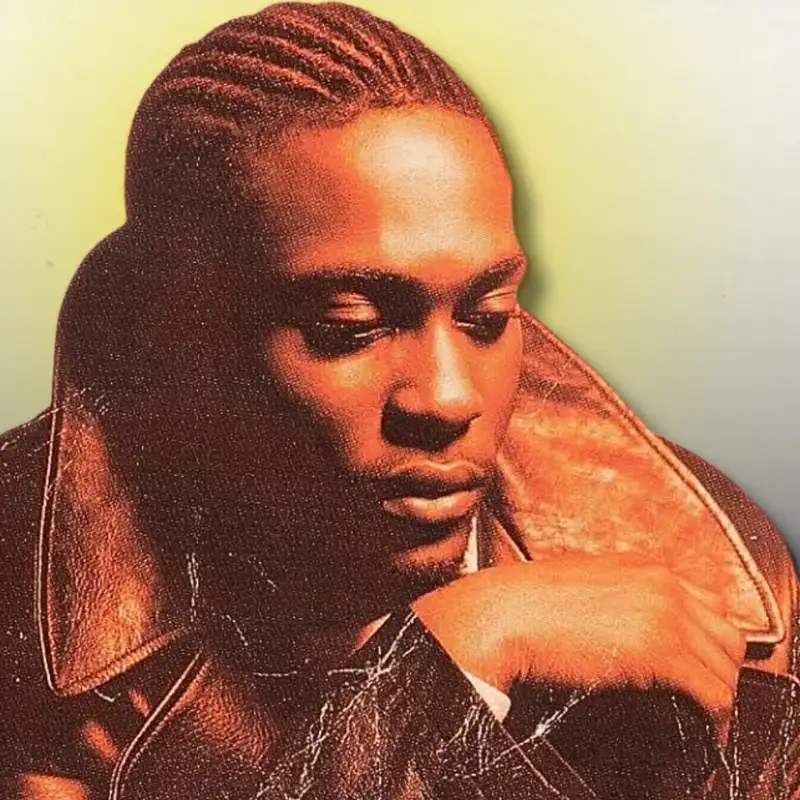
1995 R&B is all drum machines
and digital production, slick
Polish, safe.
Hip hop and soul are living in
two different houses.
All of a sudden, a 21 year old
from Richmond, VA walks into a
New York studio with a Fender
Rhodes, a Hammond organ, and a
head full of Marvin, Prince and
Tribe.
He plays almost everything
himself, writes it, produces it,
arranges it.
Nobody asked for this record,
but it would build a bridge
between those two worlds.
His manager announced it as the
birth of neo soul, but
D'Angelo never claimed that
term.
He just said I make black music,
this is brown sugar and he's got
someone he wants you to meet.
Let me tell you about this girl.
Maybe I shouldn't.
And the name was Brown Sugar.
See, we've been making love
constantly.
That's why my eyes are shaved.
The way that we kiss isn't like
any other way that I be kissing
when I'm kissing.
What I'm missing.
Won't you listen?
Brown Sugar babe?
I can't high off your love.
I don't know how to.
I'm Adam Maness.
And I'm Peter.
Martin and you're listening to
the You'll Hear It podcast.
Music Explorer.
Explorer brought today by Open
Studio Go to Open studiojazz.com
for oh, your jazz lesson needs
Peter big day.
Big day.
This is going to be fun.
We're going back in time.
In fact, we're going so far back
in time that I got a little
confused what decade it was.
I did say 1995, right?
Yeah.
Yeah, right.
Yeah, yeah.
But then I realized, I mean,
this, this is 1995 right here.
This is Scream in the middle of
the 90s.
You how many?
You how many Toyota Celicas I
got in the passenger seat of
where?
A copy of that CD D Angelo's
Brown Sugar was kind of broken.
The case was broken.
It was sitting on the floor of
the Celica.
Yeah.
And it had the Celica also, by
the way, it had ground effects.
It had a had a wing on the back.
Some McDonald French fries.
Hell yeah.
Smelled like weed.
You know the whole.
Thing half of this was kind of
ripped up, but it been looked
you.
Know absolutely there was.
What a.
Time and it and by the way CD
was on the floor, didn't even
that Celica didn't come with ACD
player had a tape deck with
that.
Convertible ox.
Yeah, yeah, maybe it maybe it
had dogs.
Oh, 95 was great because we
weren't really like Y2K.
Maybe was just a little like a,
a joke, a glimmer.
We weren't freaking out about it
yet.
Not.
Yet.
Not yet.
But I got confused 'cause I
pulled out.
You know what this is, my
friend?
Well, of course you know 'cause
you were robbed there.
But this was my very first.
CD player?
Where did you find that?
Thing, this is the Sony.
Well this is actually this is
the same model.
This is not the actual player.
I found it on a little place
called eBay.
I can send you a.
Link that is commitment to
physical media this.
Is the D50 though?
This was the actual 1st and I
was so excited for this episode
but then I realized I got my
decades wrong.
I bought this in 1980.
Five, I was going to say that's
a little bit bulky for 95.
Yeah, yeah, yeah.
But it was sort of piggybacking
on our Michael Jackson bad,
which was one of my first early
non jazz C DS.
Man, do you remember when this
album came out?
Brown Sugar.
Oh.
Absolutely.
It blew me away.
I, I remember it's one of those
moments.
It only happens occasionally in
your lifetime where you hear
music and you're like, oh, I
don't think I've ever heard
anything quite like this.
This is like a new thing for us.
I, I totally agree.
I mean, it just, and you know,
records that as soon as you hear
like that intro, that it just
takes you back to a place, man,
what, what, what, what a
wonderful thing that we have
with this.
And I mean, one thing about this
is it it, it is something new
and it does like it was like,
whoa, but it was also something
backwards.
It feels familiar.
That's the the genius about
D'Angelo and actually all three
of the studio albums is They
both feel like something totally
fresh that you've never heard
before.
And it also feels like something
from your childhood somehow.
Like it feels like something
that's been around forever.
It feels like something that is
very familiar to the culture and
yet it has this this air of
freshness, this new combination.
It's the mark of I think any
true genius And I'll I'll throw
the G word out for D'Angelo.
I truly one of the great
musicians.
I'll put a.
Capital on that G, my friend.
It's really, really good and I
love this album so much.
To me, this is like the classic
announcement of a brand new mega
talent and you know, we were so
excited about this.
It's what really caused Voodoo
to be such a massive hit as
people were so excited to see
what was next from, you know,
the artist that made brown
sugar.
That, that that anticipation for
Voodoo was so incredible.
And it man did that pay off.
Absolutely, and this was a time
still maybe the tail end of it
kind of.
But when you were expecting,
when you were, you know, coming
out with great records and and
getting hits and stuff like this
did to have another record that
next year, right, Maybe even
nine months later.
And he was five years till
Voodoo came out.
So that was an eternity then.
I mean, it still would be, but I
mean, this is something that's
exciting I think too like this
thing of like, what does it
harken back to Marvin Gaye,
Stevie Wonder, Those are sort of
obvious things.
But I think for folks that maybe
came up kind of Gen.
Xer type types like us and a
little older and a little
younger too.
It was, you know, Prince, right,
who was ever present still there
then, of course, in the mid 90s
and before this, but was so
influential on this, but also
the connection to hip hop, which
I think D Angelo doesn't get
enough credit for the first
track here, Brown Sugar that
we're going to dig into a little
bit deeper.
Even then we just did.
I think it's such a an example
of that.
And with Ali Shaheed Muhammad,
that connection with Tribe
called Quest.
But the grooves all over this
record are like they're hip hop
grooves, but he's singing soul
and background.
And he wasn't the first to bring
these disparate elements
together.
But I mean, he sure was the
first to like put it together
and then his manager coined it
Neo soul, which he didn't like
and none of them liked it.
He never claimed it.
He never claimed it.
But whatever it was, it was
this, this soul jazz.
We're going to talk for sure.
We always talk a little jazz,
but there's.
Jazz musicians on this album
too, but we.
Have jazz some some of the
greatest 90s or or anytime jazz
musicians on this room.
Let's listen to a little more
brown sugar, and then I want to
talk about the 90s a little
more.
So maybe let's listen to this
open track.
Get it in our ears.
Let's do it big fat B minor 6 to
start it out.
Come on.
So the background chatter,
studio chatter, very Marvin, but
very Tribe also.
Let me tell you about this girl.
Maybe I shouldn't.
I met him and the name was
Brian.
We be making love constantly.
That's why my eyes all the
shade.
The way that we kiss isn't like
any other way that I be kissing.
What I'm pissing, what I'm
missing.
I guess high up your love.
I don't know how to.
Be all the background vocals.
This is like, that's the Prince
thread.
You know right that the
attention to detail on those.
And the mix on these vocals,
extraordinary.
The backgrounds in the main, I
mean, also, man, yeah.
Virginia dude, yes, the the
gospel influence.
Oh sugar, wake it first to me.
You love me right down to my
knees and whenever you let me
hit it.
Sweet like honey when it comes
to me.
Skinless caramel with the Coco
eyes.
Even got a big sister by the
name of Chocolate Chow Brown
Sugar Bay.
Don't know how to behave.
Man, can we talk about the sound
of that snare drum?
Real.
Quick so great incredible Ali
Shahid Muhammad did the broke
the drum brunt the sorry the
drum programming on this the
organ, the Hammond B3.
That's that's D'Angelo, of
course, but the snare.
Is that organ based too?
I think it is.
I mean, I'm convinced that it
is.
It's definitely D'Angelo on it.
I mean, you hear that sustain on
it.
And so I mean, that's the that's
the Virginia Richmond, the the
gospel influenced Angela's
father was.
There's some great videos on
YouTube of him playing as a
teenager in his church and it is
sublime.
It's unbelievable.
And he comes out of that, you
know, the Pentecostal 4 male
quartet, vocal tradition
quartet, which he put his own
thing together and had been
doing that.
And then he's doing that with
the backgrounds on this.
It's it's incredible.
But I think that this, you know,
with Ali programming the drums
on this and also probably even a
bigger influence on D'Angelo
beyond just this track and this
record, Ali Shaheed Muhammad is
the one that introduced that
connected Bob Power, who we just
lost this last week.
So I mean, this is as much a
celebration of Bob Power and his
collaboration with D'Angelo and
and also just all the mini
records from this this period
that he worked on.
But I mean, he was the engineer,
but he also played guitar.
He produced.
They did stuff at his loft up in
Union Square, just him and D
Angelo that were demos.
A lot of that stuff made it onto
this record.
Some of it D Angelo wanted more
of it to come on this record,
but he was just a force.
And seeing the outpouring of
love and appreciation and
camaraderie with Bob Power this
last week has been amazing from
some of the best musicians on
the.
Planet.
All right, Peter, one of the
best Bob power.
Can I just put in your ears a
little bit?
I mean, not literally putting
your ears, but do you remember
the early 90s, some of the R&B?
You remember Brian McKnight?
Yeah.
Remember Boys to Men?
Yeah, sure.
They were going stronger.
And Vogue.
Yeah.
Right.
R Kelly.
R Kelly.
Yeah, yeah.
Can't remember him.
But the the sort of pop music
influence, especially of like
with like Brian McKnight,
Babyface, yeah, even boys to men
like the shiny, programmed,
polished.
This has more of that organic
70s soul vibe.
I think it's easy to take for
granted now because D'Angelo has
been such a huge part of music
in our lifetime since this
album, that this was so it felt
so different.
I remember it so clearly.
I was, I think I was a sophomore
in high school when this came
out and I just remember the the
video for this and him on a real
roads.
And I just learned what a real
roads was right around then, you
know, and knowing like that was
even that was a bit of a
statement.
It wasn't a digital, brand new,
shiny and Sonic synthesizer, but
it was this earthy, organic
roads that Stevie Wonder played.
You know, that kind of thing.
It was the sound, it was the
visual, but it was also, you
know, somebody sitting at that
instrument and connecting with
the elders.
You know what I mean?
You know, Herbie in the 70s and
stuff.
Like he was making a statement
with that.
And the hip hop thing is too is,
is I think I think it's
legitimate.
There's no like rapping on this
album.
No, there are a lot of four
chord vamps on this album.
Like this whole song is just
this, these four chords that
happen together and it's a lot.
There's a few, few tracks like
that on Brown Sugar and I think
it does make for it seems like
at any moment someone's about to
come in and like spit a verse,
you know what I mean?
Like it's like it could happen
it.
Could totally fit over this.
And it's kind of like D'Angelo
and he talked about this.
Something like his aesthetic,
his connection with the music,
the grooves, the beats,
especially Tribe Called Quest,
but also Jay Dillon, we're going
to get into some of that, the
connection with that a little
bit later.
But like he wanted that sound.
But then he also like had a
vision for like he'd already
done demos of these mostly songs
or at least half of them he
wrote when he was like 1617
years old in Richmond, VA in his
bedroom, some of them with his
brother.
You know, he had like an in
Sonic, one of those 4 tracks
that he won when he came up to
New York, the famous story
about, you know, he's won the
Apollo thing and everything.
So like he had worked a lot of
this music out and he wanted
that sound and so that's
actually how he connected.
He asked I I think it was Ali
Shaheed Muhammad or or somebody
in tribe to connect him with Bob
power, because he's like I like
his sound like.
So he the same way like later on
Pinot Paladino, like he went
into the to the to the B.B.
King session.
It was like, Oh my God, I've
been looking for someone that
loves James Jamerson as much as
me.
That's what I want.
That's nice.
Yeah.
So I'm gonna put I'm gonna put
out there also today.
Not only is this an incredible
record and D Angelo yes capital
G with the genius, but also
incredible visionary and
bandleader. 100%.
You know, I mean, he's 21 years
old on this and like, we're
gonna hear some live stuff that
he did.
And I remember like when he was
on David Letterman, he went on
AI mean, what was the what was
the London show?
Jules, Jules.
Jules Holland.
Jules Holland.
Yeah, yeah.
He went with the band man and he
was like sitting at that rose
and then he'd sing these lines
and then come man it was.
This is nothing program.
This is why church musicians
rule the world because they can
do all that like they they they
can back it up with some real
playing and real live
performance.
Can I get a little music nerdy
for our music Nerdy.
And this is some nerdy.
This is some weird nerd jiu
jitsu because I'm going to use
some nerdy stuff to encourage my
music nerds out there.
No, no, you got it.
Do you know this tune?
You know the change of tune?
What key is it in here?
Be minor.
So be minor.
So for my music nerds out there,
don't be too precious with your
keys, with your major in your
minor.
One of the, I think most
powerful things about brown
sugar, this is a few times when
he's like, I guess high, the
high, right, Which is like
you're reaching up there.
You're thinking that's going to
be the minor.
I guess high a few times he
bends it up even more to the D
sharp.
Bends it up, yes.
Can you play a B minor?
Yeah, I guess.
Hi.
Yeah, hi.
Bending it up, right.
Bending it up.
Even though the chord he's
playing is minor, he's singing
that major third over it.
And not only do you like, does
it not sound bad?
It sounds amazing.
It's it's like it brings you
back into the cosmos, almost
like it takes you to a new a new
plane.
I know that sounds grandiose,
but this shit is grandiose, man.
It's really.
Good it is.
And I mean, it's, it's a little
bit overly simplistic to like
call it.
It is.
It's bluesy.
Yeah.
It's.
Stupid, but it is.
But I mean like, it's that
element, it's.
The tradition of the Blues, that
is, that major minor rub is what
makes Western black American
Music so amazing.
Yeah, you know, it's what makes
it so different and special.
So this is the beginning.
Just the vocals in the
background.
So you get this kind of studio
chatter thing, you know, it's
it's the Marvin Gaye.
It's the Tribe Called.
Quest Is that the Detroit Lions?
Yeah.
But it was with Marvin.
But it's throughout the track
and so it gives us this, you
know, it's just like this.
It keeps going on the whole time
in a vibe.
Yeah.
No, it doesn't.
Absolutely.
Does it really?
Yeah.
And then later on, like when the
backgrounds come in, you're not
hearing it.
Tribe stuff.
There.
Yeah, totally.
Yeah, you hear it.
And you know EMI famously, yeah,
that was going on there.
I had no idea.
I mean, I heard in the
beginning, but I I just didn't
even realize.
Yeah, you don't.
Really know I mean, you notice
it once you hear your.
Smoldering or something.
It's so it's like you're in the
studio and it's it's got a
certain and like some of these
tracks, and we're going to even
hear D'Angelo talk about this
are very clean and they're
killing.
And it's like kind of the
opposite of this is the one
track, which is incredible
because it's not, this wasn't
the biggest hit, but this was
one of the hits, right?
It's got to be the biggest hit.
Is it?
I guess ladies probably the
biggest.
Yeah, yeah, lady.
But this was the first single,
though, and this was the one
that he was doing on time when
everybody was like, damn.
I'll tell you what though, for
me and my friends, this was the
one, this track was the one,
this is still, this is probably
going to make it into the
categories for me, this track.
Yeah, no, it's so great.
But I mean, and when he goes
into like but you can still hear
it, right?
Once you hear it, you can't but
but check out this base on the
organ.
This is just the left hand, or
maybe it's with the feet.
That's probably.
The left, do you have a little
filling games in there?
That's the thing, man.
He had all of it in there.
He, he, it's one of those
musicians.
You would just love to talk to
him about music and talking
about his influences.
Yeah, listen to music with him
would be amazing.
Yeah, You know, it's that
organic feel, even though it's
the program drums that like
that, that tribe sounded that
just, you know, it's loose.
It's that loose production
aesthetic too.
And that's that chatter in the
studio.
It's just like we're falling
into this thing.
EMI was pissed about this.
They were like, no, smooth it
out, smooth out.
And he had to really fight to
keep this one on there.
And because they were like,
you're going to start that, they
just going to be the first
single.
And they love the song, but they
they thought it was too rough
around the edges.
They were wrong.
I think they were wrong on that.
OK, let's explore a little bit
more.
This is there's some great
archive interviews, Red Bull
Music Academy, which I don't
think it exists anymore, but it
was a wonderful interview.
Like Red Bull, the energy.
Drink the energy drink they're
on.
They were in the music interview
business for a while.
They won a skydiving F1.
Yeah, D'Angelo.
D'Angelo.
But I mean, he did a wonderful
interview.
You know, he didn't do a lot of
interviews.
He was, he liked, he didn't like
big crowds of people.
Rafael Saadiq said that he was
like, he liked to be, you know,
even when he would record in the
studio, especially later on,
he'd have like a, you know,
already a studio's like a cave
usually like no windows or
anything.
And then in the vocals, when he
was running vocals, he'd have
like a sort of tent cave thing
to like a, a cave within a cave.
You know, he wanted to feel, he
wanted, he didn't want people
around.
He wanted to concentrate.
You know, he was never social
media or anything.
I mean, he was like, I get it.
Yeah.
But this is where he talks about
what we mentioned before about
coming to together with Bob
Power.
This is D'Angelo.
Just about the entirety like of
the first album, Brown Sugar.
I wrote it the majority of that
record in my bedroom in
Richmond, and all of the demos
for it were done on a four track
in my bedroom.
I think EMI was a little leery
of me being in the studio
producing it on my own, which is
what I was fighting for.
So it was important for them
that I go on with someone, an
engineer.
Everyone was trying to pick,
like you should get Prince's
engineer or somebody else.
And I picked Bob Power because
of my love for Tribe and what
they were doing and it was the
best, It was the best thing to
do.
And he was so awesome.
He taught me a lot.
All of the demos that I had.
Basically before we even set
foot in the studio, we were at
Bob Power's house for like 3
months.
Like going over every detail,
like tweaking every I had, every
symbol, you name it.
Wow.
Yeah, so.
That's amazing.
I've never heard that.
That's incredible.
Yeah.
And, you know, this is one of
those records where they where
it's listed.
And this was the fashion at that
time because people were
actually doing it.
Composed, written, arranged,
produced and performed by
D'Angelo, you know, which is
like, you know, very much coming
out of the Stevie Wonder
tradition, but very much Prince,
Prince, you know, coming out of
that tradition.
And then of course, there was
other people on there.
But you have to go across a
certain threshold to be able to
say that it doesn't mean you
can't have little guitar, little
trumpet, little which which is
on here.
You know, Rafael Saadiq killing
guitar at bass.
But I mean the fact that like
everything, not only is is and
he wrote almost everything too.
I mean, there's the one cover
cruising and there's a couple of
collaborations.
Great cover.
Yes, his covers are amazing.
A whole type of thing.
But anyway, yeah, so I just
wanted to kind of frame it on
that that partnership with Bob
Power and D'Angelo on this.
Shall we move?
On Yeah, let's check out the
next track.
Yeah, now this was oh man, I
love this.
I forgot for some reason.
I would skip over this a little
bit for some time.
Oh, this is good.
Man, but it's so good.
I'm not saying it ain't good.
I just, that's the joy of music,
right?
Coming back to it and you're
like, all right.
Shout out to some envelope
filters on this album.
Yeah, just full of little wow
things.
And that's Bob Power on guitar.
This is just D'Angelo on Power.
So good drunk programming.
I think they out wendelled
Wendell.
Wendell who?
That's all right, That's all
right.
We made for misunderstanding.
That's all day.
That's all day.
Because you're mine, girl, and
not you're married.
That's your.
Mind that's your.
Mind girl, you're still trust me
while we'll be all we'll be all
and there's all we can do is
just.
That melody comes back a little
bit too later.
He uses that Lady as well, Yeah.
The way they've got the vocals
sitting in the mix in the
backgrounds.
We're going to check them out
separately because they're it's
so well setting in there.
You almost, I mean, like when
you turn it down, you kind of
hear it almost better, you know,
and all of these, I mean, this
is Wah Wah Watson.
That's that's what power is
doing.
He's channeling, you know, the
great guitar, you know.
Amazing.
The placement of the drum.
And this is the thing,
D'angelo's 21 years old.
I mean, he was, you know, I
never got a chance to meet him,
but I was kind of around him a
couple of times in the same room
and he had that aura, like that
old soul aura.
I.
Mean you could hear it in the
music.
You could hear it in the music
and like and hear.
Him talking too, you could hear
it.
You hear him talking like that
was authentically who he was.
And like when we come across
these artists, these geniuses,
you know, and certainly he was
celebrated.
And, and since his passing last
year, we're it it, it may feel
like whereas everybody's
celebrating even more.
And, and you know, 1 wonders is
like, man, do we understand the
loss You can you ever under like
when, when it's a you, you can't
quantify it with three records
or 4.
You know, it's not about that.
It's like the presence of
somebody that gave their art,
you know, willingly in a way
that was like authentic to them,
certainly, and their old
soulless, his old soulless, but
also like the work, like he
said, he's like, we sat there
for three months sweating every
detail on this.
Yeah, you can hear it, people.
Understand, it's like, and he
could have like you see him on
those live performances, he's
killing and we're going to
listen to some.
I mean, it's not like they
couldn't have just gone with the
band, but like he didn't have
the vision actualized yet,
right?
It was still up here.
And then he's meeting, you know,
Ali, Bob Power, the different
people, you know, Rafael Saadiq,
you know.
I, I think he is one of the,
and, and you know the, we always
say like, you know, we only got
3 studio albums from him, but
it's because we only got 3
studio albums because there's
five years between Brown Sugar
and Voodoo and then what, 1213
years between Voodoo and Black
Messiah, something like that.
Yeah, maybe 14, maybe 14,
something like that.
And we, we get 3 studio albums,
but it's like such a clear case
of, you know, the sort of early
and then mid and then later
stages of a great artist career
that we see in other artists.
I've actually been thinking
about this in terms of even like
film directors with as I've been
listening to Brown Sugar and
Voodoo this week, honestly, and
black Messiah this week too.
I listened to once, but like
I've been thinking about people
like, you know, these two
directors.
It's almost Oscar season
here, Peter in 2026 and it's
like, you know, everybody's
talking about sinners and 1
battle after another and Ryan
Coogler and Paul Thomas
Anderson.
And I think there's like you get
to see in D Angelo's studio
albums like the evolution of
this amazing artist happened so
clearly where this album is his
like Fruitvale Station, his
creed.
Like it's like, wait, who is
this?
What is this idea?
Yeah, you know, this like
someone is new with a real
vision and idea.
And they're not only that, but
they're, they're pulling it off
like they're able to execute it
right.
Oh.
Is this his music of my mind?
This is like his his music of my
mind.
This is his off the wall.
Yeah.
And then you get voodoo, which
is like so with with brown
sugar.
The reason why I say that like
it's the beginning is because
it's so amazing.
It's so good.
But he's about to like realize
what this vision is on a such a
deeper level because of the
experience that he has with
Brown with brown sugar, which is
like what every artist does,
right?
Is like they come in with all
these great ideas, but it takes
a few years to marinate
sometimes and like learn some
lessons.
As he talks to, I think he's
talked about how this album,
he's like learning lessons about
how to produce and how to do
things.
And then then you get Voodoo
five years later and it's like,
oh, he has not only does he have
it totally figured out and he's
got a real purpose with it, but
the culture has also caught up
to him, right?
It's like, it's like a little
bit with music in my mind where
the culture kind of wasn't ready
for Stevie that that first
album.
But by the time he gets to inner
visions, everybody's like, OK,
we get it now and we're here
with you.
And by the time D'Angelo gets to
Voodoo, it's like, oh, this is
amazing.
And also he's speaking
artistically.
He's found this voice.
And then you have that the later
period of for him, which is
sadly for him, I feel like there
was probably more to come that
we just didn't get because he
tragically passed away.
So maybe.
Still some stuff coming I'm
hearing.
Oh wow.
OK.
But Black Messiah is a lot, to
me, as musically energetic as
these first two.
There's a little more wisdom,
There's a little more
interesting Spectin.
Spectin, There's a little more,
honestly.
He's Black Messiah, which I hope
we listen to someday here.
He gets so sophisticated with
the arranging, the
orchestration, you know, he's
really stretching the strings.
The tonal color palettes that
he's using on that one are of a
very experienced, seasoned
person who's made some amazing
music.
And it's like, usually you get
this in 10 albums, right?
And we get it in three with
D'Angelo, or you get it in like
with directors, right?
It's like you got Fruitful
Station, you got Creed, Creed 2,
and then you got Black Panther.
And now that's like, you know,
Cooglers voodoo, right?
And then and then now sinners is
in this like classic period,
like this like peak period or
whatever.
Listen, Coogler might have like
another three films that he's
he's really PTA is like in his
later period for sure, like
there will be blood is
definitely his voodoo kind of
thing.
But man, I love thinking about
that because I think there is
just in our lives, we change, we
go through these stages and it's
so cool that art so consistently
reflects that with most people.
It's really cool.
Yes, absolutely.
And I mean, look, we can't
compare.
It's it's like with these great
artists, it's it's a quality
play.
It's not a quantity play.
The, the quantity varies as, as,
as you, as you mentioned with
the different film makers,
different artists, you know,
Prince, somebody incredibly
prolific, obviously, you know,
keeping that quality level.
But I mean, the, The thing is a
true artist like sticks with
like what is given to them?
What is, what is the higher
power giving to you?
And what is the cadence that you
can do that?
And that's whatever it is.
There's no playbook for that.
So it's like we celebrate what
we're what we're giving when
what comes out of that.
So on that before we move on
from all right, I just wanted to
play a little bit of the rhythm
section on here then, because
we're going to listen to the
vocals and I wanted to give a
shout out to, you know, D'Angelo
and Bob Power, who's playing
guitar.
This is D'Angelo doing all the
rhythm section, you know,
isolated.
You can really use some of that
roads or that whirly
that why off the timing on it.
But I really do think that this
is like because of these these
really interesting groups, I
think at the time there was a
little bit like, people love
this record and we're like,
whoa.
But there was a little bit of
sentiment now that I remember
back, just like O'Neill,
especially once they got that
term out there, which was early,
it was kind of like, oh, this is
just a throwback.
And now it's going to be a fad.
You know, everything that's old
comes around.
This is like going to the thrift
store and getting the Metallica
T-shirt and and that kind of
thing.
But like what?
And you're talking about it
taking time for people to catch
up.
That's what had to catch up was
like, Oh, no, this was not just
like, I'm going to look like try
to dress like Marvin Gaye and
and wish that I was living in
the 70s.
You know, it was like it was the
IT was about the process of
making a record, a very
intentional record, taking those
influences, but not just those
influences.
Some of the the 90s, late 80s
hip hop grooves and stuff and
putting it together in something
that had never been heard
before, which got coined neo
soul, But it was it it that's
not just what it was.
And I mean, you know, his gospel
chops and roots.
We're going to go back and just
listen to the the vocals.
I don't want to tell you that
this is stunning because that'll
give it away.
But to me, sue me, I think this
is great.
No, it's like I was saying in
the mix, the vocals are so well
set that they're they're not
lost.
But if you're not like on a
killer system at the right
volume, you don't hear it like
this.
That's all.
Right, we made from
misunderstanding.
That's OK, that's OK, because
you're my girl and now you're
mad and that's just fun.
That's just we'll be all because
all we can do is just talk for.
I'm a sucker and they gave it
that space.
They gave it that space.
I'm glad you mentioned Marvin
intro in your intro because
there's a lot of Marvin.
There Oh for sure, for sure, but
I mean that Bo Doo Doo Doo hey
like.
And then he he pulled back on
any backgrounds there?
Like this is as much about the
arrangement.
Like when you see things that
listed like vocal arrangements,
you're just like, oh, yeah, he's
singing all the parts.
Of course.
What is he got to claim
everything?
It's like, yeah, that that's all
up in it.
Like, what do you leave out so
that things can shine?
But man, I could sit here and
like, we're not going to do it
because we got a whole killer
album.
We got Jones in my bones next,
man.
And.
It's different every time.
And you know what's interesting
about this?
So he was able to put these
backgrounds, he would be record
the lead vocal, then he'd come
in one at a time and layer these
on.
And they were not like written
out.
They were arranged, but they're
arranged up here.
And then he'd listen.
And then he'd add, what, 2, two
years later, maybe three years
later when he met Roy Hargrove
and they started working
together, he realized, and
again, this is the cure.
This is D'Angelo, the curator,
the bandleader, the producer,
that like the playing chess,
that like, Roy could do that.
Yeah.
With the trumpet background.
And he gave him that space in
the arrangement.
He's like, OK, just add in what
you hear in there.
And you could say like, oh,
yeah, we happen to be around a
great trumpet player.
So it all came together.
But knowing how to place that
and and to give him that space
changes.
Yeah.
OK.
Yeah.
You like that, didn't you?
OK, now we're going to go on to
Jones and My Bones.
Envelope filter.
Yeah, and this is a little
shades of voodoo black Masai
made.
This is Russell Lovato.
Make sure this not Bob powered
we're and this is D'Angelo
playing everything.
Do you like fat with pH bass?
Yeah, I do.
I do I.
Remember when I heard the bass
on this album?
I was like,
come on.
But it's like 45 seconds of just
like vibing before the groove
comes in.
Yeah, this is really closer to
the voodoo vibes if this were
like Questlove.
Yeah.
You could have this on Voodoo
and a little right some Roy.
Backgrounds.
Exactly.
You could hear this.
Yeah.
And this is, you know, the
beginning.
Russell Lovato, who we go on to
work with, you know, mixing and
tracking most of Voodoo, maybe
all of it.
And Black Messiah, really, you
know, part and parcel with
D'angel from this.
So this is kind of cool to hear.
He's on a couple of these tracks
mixing, but you get that sound
and those ideas, that creative
input.
OK?
So don't, don't say your famous
thing.
I'm gonna turn that off, but I'm
give it to you, right?
Right.
Again in a second, OK, I want to
talk about another record here,
which is like, why do we need to
talk about another record?
This is a killing record, a
little thing called Live at the
Jazz Cafe in London.
I love this record.
And to me, and it came out, I
mean it, well, it came out a
couple years later.
It's kind of a weird.
One of the greatest live albums
ever.
Yeah, but they recorded it in I
believe it's September.
It's definitely like in the
fall, just a couple months after
Brown Sugar came out and they
played a lot of the songs off of
this.
You know, he was doing a lot of
press and just a few gigs.
He was doing some touring
though.
But I got to tell you, for a
couple months, for a new artist
that's 21 years old, to get to
the level that this band was at
with his playing and singing is
amazing.
So we're going to reference on a
couple of these tracks because
this is the thing.
This is great, what we just
heard.
I love this intro like that
melodic material is so great,
but it's very clean.
It's very, you know, a lot of
affectation, studio, not
trickery, but studio sound on
it.
OK, so let me just play that one
more time because I do like it.
You can have that, but wouldn't
you rather?
Oh,
man, come on.
In a little club, Bass.
So it's gone from his head now.
I'll check this.
I'll push.
Come on, put the jerk up on my
temple.
What is it on my temple?
So look, this is not about like
wait.
Was I there in a Kangol bucket
hat?
I feel like I might have been
there in a.
Kangol bed and this.
Was 95, yeah. 95 September 95
Jazz Cafe, which is in Camden in
London and really cool place.
I, I played there a couple
times.
I couldn't imagine what a mob
seat it must have been because
this is like, you know, he had,
he had hits out.
And but the idea of like that
you can go from just a few
months before.
I mean, I probably recorded
maybe a year before, but within
the year of, of that kind of
sound in your mind and then
putting it and then to actualize
it with the whole band.
I think it's just, it's just
fantastic.
So yes, I do like that record.
We'll be hearing more from it.
Should we move on?
Yeah, me and those dreaming eyes
of mine.
This is an amazing song man I
love this.
One this is another good one.
That's good, by the way, this
whole album, like I was just
about to say this first half is
so good.
So is the second-half.
Like there's not a bad song on.
I mean, there's no bad songs.
I mean D'Angelo, but there's no
let up.
I know they're all bangers.
I know I.
Thought that there was, there's.
No, there's no.
But upon further listen, I was
like, I had a lot, a lot of
trouble finding any kind of
drop, not weakness, but just
drop me and those dreaming eyes
of mine.
Country.
Power.
That Hammond, Come on, you.
Know when you have the bass
that's so sub bass heavy?
Yeah.
Some of the most powerful things
that it does is leave space.
Like those breaks between notes
are so important.
Yes.
But to place in the mix and just
keep that power of that low end
on the organ is very difficult
technically, technically.
Quartet.
It goes so hard.
This whole album goes so hard
man.
I'm gonna blow your mind if you
like this song.
My brother got his energy back.
Come on.
High 5 D'Angelo, the master of
the small little dude.
The small melodic riff.
Well, you know who that is It
reminds me of anyway.
It's Donny Hathaway.
Donny Hathaway on all of those
albums, those live albums, his
roads playing, the whirly
playing where he's doing those
little riffs in between his own
singing.
I think there's a lot of that in
this man.
And and you can just hear that
that that influence in it, man.
That's a great call.
So good, great call.
OK if I can find this since
since you like this I wasn't
planning on this so I have to
find it but if you like that.
Oh, I love that.
Yeah, this.
Is with Angie Stone singing
background?
That'd be nice to have Angie
Stone in your back.
Groove activated.
Hey.
The bed backgrounds This is this
is a killing band.
Dynamics, All of his live bands
were always killing.
It's like Prince, like he had
you were.
You're so right.
In one of his many talents,
besides obviously like singing
and creating music, was picking
personnel.
And then leading it and yeah,
but not leading like D'Angelo.
And I know some people have
played with him and stuff.
It's like it was very much from
the keyboard, from the mic.
But that is such a like those
dynamics, those.
And it's very easy to be like,
oh, look who he had.
He had, you know, you know, from
from this band up to, you know,
Chris, Dave and Pinot band.
It's like, oh, you got these
great musicians.
No, you still got to pull that
shit together.
And you know, we we've seen this
before, especially back when I
mean this is the thing.
I don't want to be I don't want
to I don't want to old man it up
in here.
Do it boomer time.
OK, now we're going to do a
little bit boomer time.
No, but it's like not that
there's many bands or acts that
could release an album now and
then go out on what is it?
I don't know, and then go out on
tour and you know, a couple
months later with the hits from
that.
But we've we used to see this a
lot like people and it's like
you're going out and doing gigs
and even great artists.
What would happen if you go to
see them?
It would not be as good as the
album because they didn't have
the technology to cover it up
back then.
That's part of it and it's just
they didn't have their shit
together yet.
It was hard to recreate it.
The fact that three months later
he's out with the band, I would
say arguably doing this better
than on the record.
It's really good.
You know what I mean?
That's that's that's at 20.
One, I'll argue with it about
with you about that point, but
it's it's I think as good as a
live album is.
Yeah, I mean, it's different, of
course.
You've got people and this is a
cool.
I mean, it was a cool gig, you
know?
OK, so me and those dreaming
eyes, I'm glad you liked this
because this was like, I kind of
forgot about this.
But this was a big like remix.
This was actually the most.
This is the the era of the
remix, you know?
Well, it still exists, but it
was really like, like the prime
time for that.
And so there's a couple good
ones.
Do you want to hear #1 or #2 you
don't know what they are.
I mean, I'm going to give you #1
what if something happens?
This is Jay Dilla 1997.
This, this is dope.
Might be better than the
original.
I've never heard this Man.
Where have I been on my life?
This.
The contrast for that Dilla
snare sample and those those.
Keys.
This is the greatest thing I've
ever heard.
This is the greatest thing I've
ever heard.
That chromatic chord.
Figure that shit out.
Peter, What is that?
I want to know.
I don't want.
Crunchy.
So nasty so.
Good man Dylan's base no choices
are so weird and wonderful.
News flash, Jay Dylan was a
great news.
No, no, but like what his and
like in the cracks and then what
he's leaving off we got we got
to get Kareem Briggins on this
show to break this stuff down
and and put his own.
He's got a Kareem Briggins has a
great new album out right now
with a producer named Liv.
You featured it on Gina.
It's incredible.
Yeah, on.
Fresh fresh take Fridays.
OK, if you like that.
OK, this is dangerous.
It's it's bad to play any other.
This one's good too.
But I'm have to feel I should
have played.
I should have reversed it but
this is Eric Sermon which I
always loved his stuff.
And Redmond.
Yeah.
And Redmond, Yeah, yeah.
Redmond.
Redmond, Joshua Redmond.
This was now we're in the 90s,
early 90s.
Come on.
I'm here all day for this.
Don't tell me with a good time.
This might not have come out
tonight, but there's still some
of these around then.
Damn Peter deep cuts.
Here, man, Great pants.
That's how we do it.
Wow, this stuff's not even on
the record, but yeah, anyway.
So that one, that one was the
most remixed one for whatever.
It's enough to make me say like
shit, damn motherfucker.
Which happens to be the name of
the next.
Yeah, we're not just potty
mouths.
We're what's funny is wasn't
this the wait mid 90s?
This was like the tip of Gore.
Tip of.
Gore, this was the What was your
thing?
Just say no, no that.
Was parental advisory stickers.
Yeah, this, this one,
definitely.
I took it off, but it was
definitely on it Yes.
OK, so now we're coming to shit.
Damn motherfucker.
And this, this is like this is
just D'Angelo and Bob Power.
You're seeing a a outside of the
two of the cuts.
A real pattern on this.
This is hard.
This might be my favorite track.
Every track when I once I hear
it and I'm in it is my favorite
track, but this one is the one I
think about a lot.
Do you like a nice nasty
cheating song?
Yes, that's what this is.
It might be my favorite genre of
song.
Nasty cheating song?
Yeah.
Borderline murder Boozy.
Murder.
Big payback, yeah.
Yeah, I mean, it's it's ominous.
It's it's creepy, not creepy.
It's it's nefarious already,
right.
And I love to build on this.
Double it.
That's crazy.
And then a little jazzy release,
like, like maybe it's not true.
They're tipping.
Oh, it's true.
No, we've been power.
It ain't even started yet.
What happened to this?
What happened for a minute of
just vibing?
Can we do that are.
You sleeping with a woman?
OK.
It's a great question.
It's a great.
Question.
It's valid man.
This is the most direct tracked.
There's no.
Allegory or simile or metaphor?
Why are you sleeping with my
woman?
It's not even a setup of I came
home early from work.
There's none of that.
And apparently, damn.
And you know what?
He he that Would you not feel
that way?
Yeah.
It's not what you'd say.
Shit.
Damn.
What the?
Be the first thing I would say.
Apparently people ask D'Angelo
like in interviews with this all
blew up or like, what's the
story all that?
They're like, what do you mean?
They're like in Virginia, this
happens all the time.
He's like, that's oh, float on
into the next purse.
I mean this might be.
Motherfucker, how do you make it
sound so pretty?
I used to think that was an ugly
word, but not after this.
That's so good, man, That's so
good.
Let's keep going.
I could.
I could talk forever about.
It well, I could also say if you
like that, wouldn't you live?
Version.
This is 1.
That it is cool that there's
like the studio version.
Made.
The studio version is hard to
beat.
It's great that you're showing
this, like, because this came
out right as the album was
coming.
Out the tipping part is hit on
this.
I think they just go harder.
I think I saw a shark.
I don't know if it was shark.
I mean.
They go big man.
In a live context, it makes so
much sense.
So good, so good.
I want to get this smooth
because we have.
I want to just, I just want to,
I want to go, I want to go sit
in front of the Jazz Cafe in
Camden and London with, with
some B&O headphones on and just
listen to this with my eyes
closed.
I don't care if I get robbed.
I don't care what they if it
rains every day.
I don't care, Suey.
OK.
What'd you say?
You heard it here folks.
London, be on the lookout.
No, I want to get to smooth
because we actually have not
only do have a friend of the
show, actually a couple friends
of the show on this.
Friends of mine, we.
Actually interviewed the
guitarist on this next track
back up you remember the
remember the I'm going to take
you back to 2020 Peter January
2020 was.
It still out?
No, this was.
After no.
January 2020?
Yes.
Before the COVID pandemic.
What's that?
When we, you, me and our good
friend Sean Wilde, we're in New
Orleans.
Yes, New Orleans is what we were
saying back then.
And we were at the Gen.
Conference and we interviewed 1
Mark Whitfield for this show.
Yes, we did.
Do you remember that?
I absolutely do.
Now that you've reminded me.
I remembered it.
I remember that's where it was.
That was great.
Well, you, we're going to hear
right at the beginning of the
strike.
This is Mark Whitfield.
Just cutting like a dagger
through there.
Mark Whitfield.
Man, his whole personality.
Personality.
Shredding, shredding.
Yeah.
And this is.
The groove what?
Gene Lake on the drums, Larry
Grenadier on the bass.
At this time, the Brad Mehldau
Trio.
OK, I I got to just play.
This is one of the great little
like to me.
This is almost like, well, I
think Larry said something about
this like it's almost like Count
Basie where you're like, oh,
that's so simple, but it's so
perfect.
But this little line, this piano
line, and this is some of the,
there's not a lot of acoustic
piano that D'Angelo plays on
this record, but there is some.
And this is some of, but this
little, little melody line, it's
just so perfect.
And I was saying like, I like,
well, I'm going to play it and
I'll tell you what.
Tinkly Basie that Tinkly Ahmad
Jamal.
What would I have played?
You.
You would have marked Whitfield.
The hell.
Out I would have but and then
the the sort of not antithesis,
but the the the the contrary,
the contrast to what Whitfield
just played for sure Oh so
great.
And this minor 65.
It's a little.
Sneaky.
Jazz, right?
Definitely jazzy.
It's like Henry Mancini, like,
is it jazz?
Sharp 9 chord there.
Yeah.
There's a great piano solo on
this too, yeah.
Yeah, we're going to get to that
a little later.
As in the categories though.
So, I mean, could D Angelo have
been it could have been a jazz
pianist, almost.
Interesting you would say that,
yes.
And I, I don't know that this is
a pivotal point, but this is
straight from D Angelo's mouth
talking about a really
interesting thing from the same
interview we heard earlier,
which was I believe from like
around 2014, something like
that.
I'm going to pass you to this
guy at VCU who still.
Yeah, in Virginia, who still
taught at VCU.
It was Ellis Marsalis, Wynton's
father, who's still teaching at
VCU, and I went and auditioned
for Ellis Marsalis and James
Moody.
Matter of fact, James Moody was
up there and I was like 1314 and
got on the piano and I played.
I played the Anita Baker song
because it was the jazziest song
I could think of.
That's so.
Funny.
Or so I put in the Baker and you
know, they were impressed and
like, Ah, that's good young
blood and wow, I was like,
you're so you know, are you
going to teach me?
So I get to you know, it's like,
Nah, I'm I'm getting ready to
leave.
So he's getting ready to leave
that year and go teach back in
New Orleans.
So I never got a chance to
really get any like jazz
training or what have you like
that.
But I always felt like that was
a good thing that I didn't why?
Because it it would have changed
my whole style, I would have
changed my whole style of plan.
That's what it meant to be, I
guess.
Yeah, man, what a what a wise
old soul.
I mean, it's kind of like, you
know, I.
Mean, it's a real sliding doors
moment.
You know, if Ellis Marsalis is
there for another three years
and he's like, yeah, let's do
it.
I mean, D'Angelo could have been
Sullivan Fortner before Sullivan
Fordner, you know what I mean?
Like I know.
It's like, what do you expose?
Like, wait, wait, where's the
intersection?
Serendipity, right?
It's like, what?
What's meant to be?
We just mentioned two 90s ROM
coms, by the way, sliding door
serendipity, so shout out, but
yeah, it is It is like.
Shut up, Matthew McConaughey, I.
Also meant I wouldn't be lying
if I thought sometimes the same
thing about me, like if I didn't
have a band director shout out
Jeff Melcha in my sophomore year
in high school.
Thanks a lot for all the Herbie
Hancock CD's, man.
Yeah.
No, but I mean someone who's
pointing me towards straight
ahead jazz very heavily and got
me lessons and those lessons led
to gigs really early and that
led to a path of this, that and
the other.
Like, I wonder about that
Sliding doors moment, and I
wonder too, about the money.
Well, yeah, I know.
More or less I don't know.
I'm kidding.
No, but but you know, maybe
that's a little bit what he's
talking about.
It's like there is like a
limiting mindset sometimes, not
in jazz musicians ever, but in
like the jazz industry about
what it could be, what the sound
is, how how broad it is.
And there's not in other in
other forms of the music.
You know what's crazy about
this?
I just realized like I had met
Ellis Marsalis right before this
when I was in high school and I
was actually thinking about
going.
I've met Wint Marsalis before
that He had talked about, you
know, you should, you should
study with my dad.
He could show, he'll show he
because Wint was helping with
different things every time he
come to Saint Louis and was a
mentor to me and to Minnie.
And he's like, you should study.
And then I think he told me or I
found out that Ellis had gotten
this position at VCU in
Virginia.
And when I was thinking about,
you know, going to music school,
I really want to play jazz.
And I was like, can I go to New
York?
But there wasn't like there was
jazz programs, but not like
there is today.
And so I kind of had my mind on
it.
And I remember calling because
you used to have to call on the
telephone and say hello, you
know.
Yeah, a little bit.
I was.
It's Mr. Marsalis.
But I called him and was like,
I, I'd love Ellis Ellis.
Ellis Marsalis, in fact, went
and gave me his number in
Virginia and I called him on a
landline.
We were going landline to
landline back there with my
friend.
Yeah.
And I remember we talked, he's
like, yeah, well, you know, the
program, he kind of discouraged
me 'cause he's like, I'm not
really sure about the program or
how much longer I'm going to be
here.
Wow.
And then I heard this guy
playing Anita Baker in the
background.
Now it's all coming together.
No, I didn't hear that.
But he discouraged me.
And sure enough, the next year
he went back to your own,
started the program at the.
Same time for you and D Angelo,
we're both talking about he was.
Yeah.
Well, actually now that I just
put that together, me and like
100 other.
Like Sliding doors moment you
could have gone to music school
studying with Ellis Marsalis and
been a peer of.
Well, more more importantly, I
could have been hanging with
D'Angelo and made it on this
record, but yeah, no, but I was.
That is crazy. 17.
Yeah, it was. 17 that it is
crazy.
It is crazy.
I'm not by the way, I'm not
trying to discourage anybody
from a career in jazz at all.
It is just an interesting
thought.
It's like, I mean, for all of
us, it's like you get on these
paths and like just one decision
gets made or one person points
you in a direction and like, you
know, now that's your whole
life.
I think D'Angelo was and look,
I'm projecting some, this is not
like I'm not a journalist and I,
I didn't know him.
I know a lot of people that know
him and I've heard the same
stories most people have.
But you just got the feeling
from listening to interviews and
researching for this and listen
to his music.
And when you love somebody's
music so much, you do start to
project certain things on.
Of course, I may be doing that,
but I have the feeling he's just
one of those people.
We all know people like this
that they're just so damn good
at, like doing what they're
supposed to do in this world.
You know, they don't get caught
up with like what you're saying,
like, like you're even
questioning.
You know, if I had in my band,
like, I don't think he
questioned.
He's just like, no, I didn't.
Say it just wasn't meant to be
it.
Wasn't meant and then later on
I'm I'm willing to wait till
later on to have that filled in
when that other door opens like
just to give themselves and
that's a very rare thing.
I'm not good at that at all.
No, to be perfectly clear, I
think I'm I'm exactly where I
should be.
Like just with all my skills
have luckily come together to be
sitting in front of this
microphone with you, my friend.
But it is it is these
interesting moments that happen
early in our life that dictate
the rest of our life.
Man, it's like I think about and
I connect D'Angelo so much with
Roy Hargrove and, and they their
musical camaraderie and their,
their brotherhood through the
music and kind of like, you
know, this intersection of hip
hop, soul, jazz, gospel, that
they were both such just so much
innately.
And then Raphael Saadiq.
Like these different people that
come together where they're just
like they're, you're connected
and you know it, you know?
OK, Peter, this next track.
Cruising.
Cruising.
I love the original Smokey
Robinson.
Yeah, Susan, I'm not going to
sue you Cruising together.
Let's do.
It and I love this porn.
You would not be the first to
say that.
On both, I mean those both are
amazing, but this is.
And #3 the highest level.
Is this at the Jazz Cafe?
No, they didn't do this also.
It's like we're now in the back
half of the album.
Yeah, perfect place for a color.
#7 out of 10.
Perfect spot.
Just when you're like, OK, I'm
learning all these new songs.
I've never heard these sounds
before.
Have a little Smokey Robin.
Oh man, you know, have a little
childhood.
How can we all?
Can we gather on the fire the
soul fireplace?
Come on, kids.
And this one's interesting too,
because this is I think, the
only track is entirely played,
produced everything by D Angelo,
and I think it's the one with
strings, too.
Now let's go Dominant 7.
Dominant 4.
I mean, I think about this was
from 1979, right?
Yeah.
I think about his choice of
covers on these first two
albums.
He does this on Brown Sugar and
he does feel like making love
that Roberta Flack made famous
from from.
That first take.
It was that first take, I think.
Yeah, yeah.
And it just shows you.
I mean, it backs up what we're
talking about here, his love for
those 70s soul music that sound,
you know, are.
Both of those right up there
with the originals.
I think both of those for me, in
my humble opinion, I like better
than the original and I know I
got some Flack when I said that
about Feel like Making Love when
we did our Voodoo album.
I stand by it, man, that version
of Feel like Making love on
Voodoo is it might.
I mean, it's one of the better
tracks on that whole album is
great, which is full of great
tracks.
Another no no skip album, you
know what I mean?
So.
I think too like it's it's hard
for us to remember like how
revolutionary or evolutionary
like the sound of this record
you really hear on this track in
mid 90s R&B when you talk about
boys demand.
Mariah Carey was huge.
Yes, Sir.
I mean, there's great records
out of this time, but this was.
Like, no, all of those artists
were amazing.
Jodeci Yeah, like all that
stuff.
I.
Couldn't Landis Morrissette had
probably the biggest record of
this period?
R&B Landis.
Morrissette No, but I'm just,
you know, the Jagged Little R&B
and Jason.
That was a huge monster album,
but yeah, yeah.
Man, there were some people like
me listening to.
I had both those CDs my friend.
Jagged Little Pill.
Absolutely.
You had Jagged.
I love that record.
I had That was actually a year
before this though wasn't.
It no, I was 90. 5 Was that OK?
I think so, yeah.
I was a good record.
Cool.
Cool.
Cruising.
I like it.
I love it.
Yeah.
OK.
Hey Peter, we were just talking
about that feel like making love
from D'angelo's Voodoo album.
Did you know that I did a whole
lesson on that song?
That version of the song, all of
the harmonic moves, the mobile
interchange that happened.
It's.
Great, remember I was here.
With you.
But yeah.
Oh yeah, on my course, the
Harmony Games Unlimited at Open
Studio Jazz.
And just today, literally this
morning as I speak this, I
recorded a lesson on the last
track of Brown Sugar Higher,
also from that course.
Yeah.
How many games Unlimited.
Yeah.
We're not just jazz here.
We're jazz adjacent.
We're we're soul.
We what we like to do is take
that lens of jazz and shine it
does a lens shine.
We don't know.
We're looking at it.
We're looking through that jazz
lens because it exposes so much
great stuff in soul music, R&B,
great music.
That's right.
So if you're looking to not just
enjoy the great music of people
like D'Angelo, Stevie Wonder,
and jazz musicians too like Bill
Evans, Duke Ellington, Herbie
Hancock, Miles Davis, check out
open studiojazz.com.
Go to open studiojazz.com/yhi to
start your free trial.
That's open studiojazz.com/yhi
for your jazz lesson needs.
There he is, back to the show.
OK, we're moving on to track #8
we got a little more jazz.
I I have this listed as jazzy #2
for sure OK, there might even be
a little straight up swing on
this when we get by.
This is another one of the Russ
Elavado mixes, just for those of
you following at.
Home.
Shout out to Russ Elavado.
We didn't talk about enough on
him enough on the voodoo
episode, although we did talk
about him a lot.
But he still deserves so much
credit on these things, man.
He's his sound is so distinct.
Yeah.
Absolutely.
I mean, that's straight up
tipping.
Yeah, Ben, this song has grown
on me so much over the years.
I love this.
I used to skip all.
I was kind of a jazz purist.
For sure this is not.
A nerdy jazz purist.
It doesn't swing like Art
Blakey.
I can't listen to it.
I mean, I was damn.
You're still listening to Art
Blakey live at this time, you
know.
What pulls this together?
Is this the melody?
Yeah.
I love the 90s.
Man, I want to go back.
Man, nobody unfollowed me then.
Just everything smelled like
Drakar Noir.
No, no, no YouTube comments
saying the bald one I could get
by.
You know what's interesting on
this too, is that I got him, I
got him.
No, I realized this whole
record, and we're going to talk
right after this about is this
too clean or as I don't want to
give away what D'Angelo calls
his own record, but because of
maybe a cleaner Sonic palette
that's provided in the mixes
compared to Voodoo, for sure you
can understand everything
D'Angelo's singing.
We talked about this with
Voodoo.
You can understand.
So sublimated in the mix and
even a little more mumbly in the
performances on Voodoo.
Yeah, which Kayla producer Kayla
was like, I mean, it's kind of
good.
It's a pretty dirty album if
you'd listen to what he's
singing.
This.
Was Crystal Well, this is a few
things that you're kind of but
it's like shit damn motherfucker
elocution, but it's but a lot of
it is the mix, you know, so in
fact, actually this is a good
this is D'Angelo speaking, you
know, years later about this
record and sort of some very
interesting thoughts
specifically about kind of the
sound of it and the mix of it.
And so we went into the studio
to record.
I mean, it was really like a, in
my opinion.
I felt like after it was done, I
loved it, but there were certain
songs that I felt it lost
something between the demo
version and all of the
production that went into it.
I felt like it lost, like it got
a little homogenized in my
opinion.
That's very, very interesting.
I remember hearing something
about it that he was like
learning from this experience
and put that into voodoo.
And it might have been something
I read on Voodoo itself, but
like, that's very interesting to
hear him say that, you know, and
you can hear how much more
organic he goes in in Voodoo
five years later, you know, and
how much of more of a band album
that is even.
It's not just him, right?
It's like all of these amazing
musicians that are really
jamming for years to get that
album.
And I think it kind of validates
a little bit my, my, my, my
thoughts in terms of the live
stuff right after this being a
little bit closer to his vision
on it, perhaps.
But let's just hear.
OK, You ready for the big hit?
You ready?
You want to hear Rafael Saidiq,
who's, you know, Co wrote this
famously, Lady with D'Angelo.
You want to hear me talking
about this first, or you want to
just jump in?
You do whatever you need to.
Do I started?
Playing, Rafael said he.
Lady, that's the first thing we
worked on was lady, I played it
the guitar riff for D'Angelo and
he said he said I like it.
I said cool.
So I was going to call somebody
over to be to play my guitar
parts over He he said no, you
should leave what you did.
And that's the first time my
guitar playing playing ever got
on the record.
Never got on the record.
Yeah.
So, but I think the how how we
came up with that, we figured it
out.
We was we were playing and we
were playing behind the beat.
But I think we were just really
trying to lock, lock something
in.
And so he would fall back and he
would start laughing, then I
would fall back.
And we started kind of smiling
and laughing.
And it became, we just kept
going back and forth, but not
talking about it.
And it became sort of the style
of his record.
But that's the way he sing
sings, that's the way he plays.
And it's just natural for him.
But he's a Dilla fan.
And so then, you know, I'm a
Dilla fan too.
So I figured it out later.
We were just mocking Dilla.
Are we just are.
We heard it through hip hop.
Yeah, right.
Maybe just not.
Just maybe we heard it on some,
on some, on some Wu Tang
records.
Maybe we heard it on some Tribe
records.
That's cool.
We just love, I love hip hop.
Yeah, right.
So that's very cool.
Both our love for the Hawk is in
gospel and hip hop and rock and
songwriting.
It's just it was just a perfect
storm at the right time.
Shout out Justin Richmond, front
of the pod, guest of the pod.
That was from his interview for
Broken Records.
Here's lady.
You heard that?
Yeah, I think Raphael had that
line together.
That's it for me, that when the
bass comes in there, that's all
I need.
I've started the course, a good
course start.
Let's do it, intro.
That's an important part of the
floor, man.
It usually comes later, though.
It's all right. 01 of the
greatest songs of the 1990s.
Yes.
Don't think I'm sleeping,
looking at you, all of them.
And there's a bunch.
Of them, is this the biggest
hit?
I think so right here.
Here's that line again.
Said bass as well.
And guitars.
We got to get some bigger
speakers in here, man.
We got to get a better sound
system.
I know, but I want to hear that.
I want to feel it.
OK, again, that's what.
A great partnership, him and
Rafael Sadiq.
It's so cool that he had this
mentor.
They did hits together.
That's nice.
Perhaps you'd rather?
No.
I don't know.
Check the.
OK, maybe.
It's not either or Man Live Soul
Records.
This is channeling Donny
Hathaway live at the bitter end.
It's different, not better.
Unbelievable.
Free open form.
You have to be able to click.
Track It's a little Teddy
Pendergrass in this one live
version.
He couldn't have done that many
gigs while he did do a lot of
gigs in church.
You're so seasoned though.
That's something that might
interest you.
So good.
Man, this is the kind of thing,
how many gigs have you been on,
especially in your younger
years, where stuff like this
just goes disaster?
You can't.
I mean, I've.
Never been on a gig like that,
I'll be honest.
Oh man.
And later on, I'm going to jump
ahead just to really they really
start.
Yeah, it's fun.
We're having fun.
We're just, we're just having
fun here on a, on a on a
Thursday.
That's so great and ultimate
track on the album too.
There's only one left, and.
Yeah.
How did that happen that the
that the big hit was?
#9.
Was buried down there.
Happens a lot, man, it happens a
lot.
But #10 first of all, can I just
say just my, my, my lizard brain
loves the 10.
My my Roman brain loves the 10
woman.
That's Monty Python.
Thank you loves the 10 track
album.
There's just something very
clean about it.
That's right XX.
But the the higher this is, I
love it.
I love this so.
Much should we maybe jump in as
we're coming towards the end of
the episode?
Jump into the tracks for sure,
for sure.
I mean the category, sorry.
So we have, as you like to say,
we have 10 categories, right?
9810, just like you like it.
And this the first category is
Desert island tracks and this is
my desert island.
Track.
It's higher and he's gonna end
with church.
Yeah, exactly.
It's Ralph, I believe.
It's roll is how you pronounce
it.
Ralph roll, Ralph roll, I think,
on the drums.
Rich rolls, brother, my friend.
Doubt it Will Lee on the bass
from The Late Show with David
Letterman's band.
That's.
Such a church entrance to 00.
My goodness, it's so great.
It's not going anywhere.
Peter, come on, we're not going
anywhere.
I don't have an appointment.
Appointment with the Lord.
Organ playing on it is so
amazing.
Oh.
Kick your tick bed.
Everybody's doing the right
thing.
Doing the right thing or.
When I think about you, I.
Love that.
Am I doing?
Watching and watching over,
right?
I love you, right?
I love you, right?
I love you.
Please give us strength alone.
Love to fight our battles and we
can walk over.
The streets are cold.
I mean, it's not just soul music
of the 70s, it's gospel music of
the 70s, straight up, you know,
and.
These are not all gospel
musicians.
They came up with the church
like, yeah, that's what I'm
talking about, leadership.
They're even planning on
leadership.
Bob Power, Willie, I, I, I don't
know.
I doubt they did, but they're
playing it.
The changes are killing all
this.
I mean this.
With everything is so great on
this record, this might be like
D'angelo's right down the middle
of his lane.
I mean, this is what he's been
doing since he's a kid.
And this is like, you just feel
like, you know.
Oh, and I mean this is his
highest creativity for vocal
arrangements on this record too.
You put the CD of the CD player,
go for it B.
Yeah, so I'm on the I'm on the
desert island.
I mean, I'm cool.
Yeah, you're good with the.
Lord, every day this is.
I'm getting right with the Lord.
I'm being entertained.
Man.
The soul is satisfied.
Yeah.
This, I, I just think that like
his, he's so creative on
everything.
Hip hop, soul, talk about
gospel, jazz, you know, rock,
especially later on, you know,
but like, I don't know, maybe
gospel is like sometimes you
know, he's got rage, but when he
comes here for sure just he
because he gets it's so creative
everything he's doing.
What I love about this track for
me is this has been like coming
back to Brown Sugar over the
years as an album.
This one means more to me as the
years go by.
When I was 15, when I first
heard this album, I didn't
really get it.
I didn't wasn't that interested
in it.
It's why my desert island track
is Brown Sugar, just because the
nostalgic factor of it, like of
remembering high school parties
with it playing, remembering
driving around in my 84 S 10
with it bumping of like of like
feeling like I was like it's
something from my generation,
like a new kind of music that
I've never heard before.
So Brown Sugar is my desert
island.
But man, higher means probably
the most to me right now.
For this whole album.
That's great.
Apex moment what do?
You got, so I've got.
This would be apex moment means
like the the our our personal
opinions on the highlight of the
album.
Yeah.
And this is very
counterintuitive because there's
a bunch of moments that I first
wrote down on hire that are
true.
I mean, like to me that track,
it's almost, you know, in a
different way stylistically and
temple wise, but it's like a
music in my mind to evil, like
in a way.
There's no debate like the apex
moment of the album.
It all leads.
It is leads to Rome, right, I
think you're right.
So there's that, but.
Second Rome reference.
Well, this is the X but so I'm
going a little counterintuitive,
but I like my new thing is on
apex moments I'm trying to find
little weird hidden things that
are just like woo like fun
things that you would expect.
We like fun around here.
We like.
Fun.
Yeah.
So D'angelo's piano playing, how
smooth we talked about, but I
love his solo.
Like he was not known as like
this.
Incredible.
I mean, he had a lot of jazz.
He's a good solo and jazz
harmony, but he wasn't like
ripping and running on that.
But on this, I don't know, man.
There's some killing stuff and
it's not even an official solo.
Kind of sneaks in there though.
Come on.
He could have done it.
He could have learned how to.
But I mean, the reality is
that's all the jazz piano most
people want to hear anyway.
One. 100% that's all.
That's all a lot of ours so.
He nailed it.
Yeah, but you know what that
reminded me of, Man?
Talk about Jay Dilla.
So I I got your spirits up.
I got you higher earlier, but
man, I can't take it.
Man, I forgot about this.
You might not know.
Can we do some Dilla on this
show either?
We got to do a whole Dilla show.
We, we, my, my dream's been the
whole Riggins going to be
sitting here in the middle of us
and we're going to be like, high
fiving about.
Yeah, but check this out, OK.
And then I can tell my Kareem
Riggins story when he came and
played with us with Roy Hargrove
when I first met him when he was
20 years old and killed it.
You might not know this as one
of D'Angelo's greatest piano
solos, but check this out.
I love this track.
This is common, right?
This is common.
Dilla beat from what?
Is this the light?
Yeah, yeah, yeah, yeah, yeah.
Yeah, yeah.
And there's it's similar to the
little sneaky and it's got this
great mix on the.
Yeah, exactly.
And he's speaking in with so
great Common stuff I'm going to
sneak ahead.
Sorry.
Is that a D'Angelo?
That's D'Angelo.
I I RIP, I steal this.
Yeah, I do that.
You talk about knowing what to
play right there.
That line man this gets me
everything.
This turned into a Dilla show.
Check this line.
Out to that Dominus 7, that's
another Donnie thing, another
Donnie Hathaway thing thrown in
that Dominus 7 when over the
Major 7.
Herbie octaves.
Come on.
Yeah, So anyway, that's man, the
whole rest of this thing is just
killing.
So your apex moment is a Dilla
track.
What's D'Angelo playing solo on
a different?
Record my apex.
Moment I highlighted the other
record that I thought was.
My apex moment from Brown sugar
Peter is you didn't.
Want me to play you that and?
Tell you that it was D'Angelo.
We do have to do a Dilla episode
for sure.
Come on, I feel like you just I
know.
I love it so much when the bass
drops on lady, like when that
first you're my lady and the
bass comes in.
I feel like that's to me the
greatest moment of the whole
album, if not the greatest
moment of 1995, right?
You know.
This was 1995, not this version.
I love the live version.
I'm talking about the studio.
Yeah, yeah.
What is that?
Reverse bass.
Oh, and it's like he somehow
gets that rhythm in.
Killing with the bass drum.
So good.
What do you got for a bespoke
playlist title?
I got bridge builders, I think,
you know, bringing the different
styles, hip hop soul, not neo
soul, jazz, gospel.
As we said, what?
Do you got?
I have not neo soul, but I have
Neo Bam.
So you know, you mentioned these
bridge builders, right?
This is like soul hip hop, jazz.
Like this to me is why Nicholas
Payton coined that term black
American Music and has been
pushing for the use of it to
define this because the
sensibilities of this
philosophical alignment of those
three kinds of music is so
evident in black American Music.
It is it is the IT is the DNA of
it.
And this album is black American
Music at its core, at its best.
And it is the in 1995, like the
pinnacle of, of really all music
in in America.
To me, this album was, but like
to me it, it, it combines all of
those elements in a way that I
think for my ear, all black
American Music has like it's,
it's just a continuous thread.
There's the genres are a bunch
of usually like marketing exec
BS, you know what I mean?
I mean, even we learned here,
you know, everybody said does
birth of a new genre, Neo soul
and Angel himself is like that's
not how I see it.
I see it as black music.
And I think there's something
important for all people who
make music to think about how
that artist is that you love
thinks about how they make their
music because it helps us make
music like the sensibilities and
the, the way the black American
Music is is made is as
important, the culture of that
is as important as anything else
as any of the sounds or anything
that we're getting here.
So I, I think you can't, you
can't take the gospel out of
jazz.
You can't take the jazz out of
soul.
You can't take the soul out of
hip hop.
Like it's all connected.
You can't take the D out of
Angelo 100% Why it's D Angelo.
Thank you for that.
Yeah.
And I think that's but this is
what makes it so fun to like
deconstruct or just to look at
the construction of this stuff
because when you have something
that's great, you know, if you
believe that it's great or if
you don't care what whatever.
But it's like to go in and see,
you know, what are the gospel
elements?
What were the details that were
worked on?
Like this stuff isn't just it's
not just random improvisatory of
like look at genius just came up
with this.
Like the craft that goes into
this, especially when you're
bringing in these different
elements, is is it's it's it,
it's uncanny for sure.
Yeah.
So that was bespoke place.
Oh.
Oh, quibble bits.
This will be an interesting one.
What's your quibble?
Bit so mine really is I mean it
really is a small bit, but like
some of the drum loops, I do
wish that there was Questlove.
I do wish that he had like like
we were we were listening to me
and those dreaming eyes, right?
I think that was one of the ones
we were listening to and I was
like, man, I wish that was on
Voodoo so that I could hear
Pino Palladino and Questlove
play on that.
And Roy, you know what I mean?
Like now that's a very like, I
still love this whole album and
I love the drum samples, but if
I had to, if I had to put
something in this category, it
would be that.
Well, you can just listen to
Jazz Cafe and that's, that's
what I'm saying.
That's there's your solution
right there.
Evangelist for Jazz cafe?
What's your equivalent?
Bit that is this record maybe
similar to that, but not so much
so much with the drum loops.
But is it too, in the words of
D'Angelo, homogenized?
And also in that interview, he
goes on to call it buttery.
Interesting.
He felt that is.
And I I mean.
Too clean and too pristine.
Yeah, well, the the interviewer
actually said is too clean.
He's like not clean.
He's just like buttery
interesting, you know?
Is the is it too he said some of
the tracks, some of the stuff
that he felt was ready to go off
of the demos that he human power
had done over those three
months.
Yeah, he felt that the the gene
on him after that.
Are those demos anywhere in your
research?
That would have been something,
yeah.
If only we had an hour and a
half podcast, we could have
played those on Come Back.
I used to admit when I was
writing a lot of more pop songs,
I love making demos.
And I would, I would.
It was a problem.
You get attached to those demos,
you know, It's like it's hard
not to.
But to tell you the truth,
that's not even I mean, Paul,
listen to this because we have
jazz cap.
I actually love that we have
this studio version.
I think it's great.
My my actual quibble bit would
probably be the strings on
cruising, which I think are the
only strings on here.
It's just I, you know, they're
way in the background to.
I think it might actually be
better if you could hear them.
Better, I think they're good,
but I think there's you're
right, there's something a
little bit that could be a
little better.
That later he does on his last
record he does snubometer.
Yeah, the strings on Black
Messiah are amazing.
Amazing.
I have a three.
OK, I have a 5 so that comes out
to 8.
That's not how it works.
OK, is it better?
So this is interesting.
That's what we're going to do.
We're not even going to.
Talk about it anymore.
We don't talk about thermometer.
So you so usually you have like,
is it better than Kind of Blue?
Or for an album like this, we
might do is it better than
Stevie Wonder's Inner Visions?
But you have.
You have.
Is it better than Alanis
Morissette's Jagged Little Pill?
Because I knew we were going to
talk about it.
I I don't have prescient of me
right?
I, you know, I actually do also
love Jagged Little pill stick in
high school, like it was such
popular music.
I, I never bought that album or
anything like I bought this one,
but I do love a lot of those
songs.
But I do think that yes, it is
better than Jagged Little.
Pill, I'd agree, yes, but I
think Jagged Little pill, I
wouldn't mind that showing up on
this.
I'm just wondering.
If we do, Jagged Little Pill
producer Liz in Canada would
probably appreciate.
Yeah, I mean, there's some great
stuff on there.
I mean, I don't know if like we
get it like some of these
records we get into and it's
like, Oh yeah, it's great as
expect.
Like this these really, really
great ones.
Like the more you go back to
him, be like, oh, oh, like
there's so many layers.
I don't know.
There's definitely some layers
there, but not like on this one.
Accoutrements.
So the cover, the album notes,
the back cover.
What do you think?
Man, I'm going 9 and because I
think the back cover is so just
a reminder.
Yeah, I mean, that's so not like
that soul.
That's R&B, that's hip hop,
that's 90s.
Got the Big Timberlands on and I
love this picture in here.
I love the one with the piano.
It's a great jacket.
It's great.
Boots great.
Jeans model D'Angelo was have
you seen the Vanity Fair shop?
I mean, just a superbly
attractive man, but with at the
piano.
I love piano.
So that's a great one that that
look and his hair to me, the
only thing that pulls it back
from A10 in a way is the cover.
I I would give the cover an 8
only because it looks like the
background's been removed, which
is easy to do on your iPhone
now.
And they did.
I mean it's great, but I think
all these other pictures, the
whole package is.
I have 9.
I have 9 as well.
OK, what do you got in up next?
Oh.
You're going to be shocked at
this Live at the Jazz Cafe.
Live at London Jazz Cafe.
OK, because that's.
Literally what?
What?
What do you have all?
Been I have Baduizm 1997, couple
years later Erykah Badu kind of
solidifies this quote UN quote
genre.
Yeah.
Absolutely so Soulquarian now that
that we should be talking about
Soulquarians as opposed to the
yeah, Neo soul.
Agreed.
You know what?
We are back on Apple podcasts.
Apple podcast loves us.
We got featured as a new on the
new page.
We've been making a lot of moves
over there.
Yeah, it's great.
But we do want to remind.
Of our Ambie nominations.
OK, let's not brag.
We do want to remind you though,
that we really appreciate any
ratings and review reviews you
put for this podcast, whether
that's on Apple Podcast or
Spotify or on YouTube.
Give us a rating and review.
Now if you're not like a
technological working in Silicon
Valley, it can be difficult.
I'm going to put that out there.
Is that a good for Apple
podcast?
Yeah, to get to the review you.
Can do it you can.
Do it.
You got to log.
In I mean we have hundreds.
Of them, yeah, we do.
Actually.
It's not hard at all.
That's a challenge for you.
So here's a couple.
This one is from Fletch NYCI.
Think that's Chevy Chase's
account.
It says my no.
It's the guy from Saint from
Ledoux.
Actually it's my favorite new
podcast.
Great tunes and expert analysis.
This one is from Curious House
Hunter and this is I stumbled
upon this podcast accidentally
while looking for jazz piano
tutorials.
It has become a weekly ritual.
Listen to Adam and Peter discuss
amazing music, some of which I
grew up with, but some they've
introduced me to.
This podcast has brought a
tremendous amount of joy into my
life, in addition to being warm
and funny and authentic.
Adam and Peter, I think.
It's a warm and fuzzy and
authentic.
Musicians and the intro and
outro musical arrangements are
fantastic.
I'm also an open studio member.
Shout out curious how Hunter
house Hunter, so I will give
that a plug here as well.
I appreciate that as a lifetime
classically trained pianist, I'd
long given up transitioning to
jazz, but I'm giving it one more
shot.
Thanks so much for all the work
that goes into the show, it's
truly special.
Thank you, House Hunter.
And a reminder, if you want to
learn more about some of the
piano courses we make at Open
Studio, go to Open
studiojazz.com/YHI and start
your 14 day free trial.
Peter, you got anything else?
I think that's it, man.
I'm inspired, man.
Just I'm thankful.
I'm thankful for this record,
record.
I'm thankful for you.
I'm thankful for my family, for
my parents.
I'm not going to name
everything.
Like an acceptance speech,
Oscars came early.
I want to just, I've been so
excited about the nomination.
Buddy, we didn't win the Ambie.
Just a reminder, OK?
Forget it until next time you'll
hear it.
The.
The.
The.
The.
The.
The.
Music.
None.
The.
Music.