There was a time when Compay Segundo was presumed dead.
Ibrahim Ferrer was shining shoes.
Rubén González hadn't played for years and didn't even own a piano.
They were men that time forgot. Voices from a bygone era.
They would have one of the greatest comebacks in music history, and it was a
complete accident. Compay, Ibrahim, and Rubén, together with a diva,
a cowboy, and the nephew of a legendary bassist in a
studio for six days.
The album they would make together would go on to sell eight million copies,
win a Grammy, and become the subject of an Oscar-nominated
documentary.
How did this accidental album of music nearly lost to time
become a global phenomenon?
This is Buena Vista Social Club.
I'm Adam Maness.
And I'm Peter Martin.
And you're listening to the You'll Hear It podcast.
Music explored.
Explored, brought to you today by Open Studio.
Go to openstudiojazz.com for, ooh,
your jazz listen needs, Peter.
Yes, sir.
Big day.
Oh, my gosh.
Big day.
Always big day, but really, really big day.
How do you say big day in Spanish?
Well, no. You don't even know how big of a day it actually is.
I can see there's a little glimmer in your eye.
I am excited.
But I didn't even tell you in our extensive pre-game ritual
of getting to know each other's feelings about the record-
Mm-hmm
... and how we wanted to do this, I didn't even mention this.
And I'm going to keep it a little bit of a secret till we get to the end.
Shh.
Yeah. Now they know, though. But we have a segment, we
have categories at the end. We have a segment called Desert Island Tracks, and I'm
going to do something today that I've never done before.
Don't ruin the show.
I'm-
You're going to ruin our show?
No. I'm going next level. I'm leveling up.
He's going to ruin the show.
Stick around, and I promise you-
Yeah
... if I forget, please remind me. But Adam doesn't know, none of the producers
know. I think all the producers have left, by the way.
They're gone.
We're by ourselves.
They don't want to be here anymore.
But anyway, I'm excited about that little thing.
Because man, I love this record. I love this record so much.
I love it, too. Maybe not as much as that, where I'm shaking.
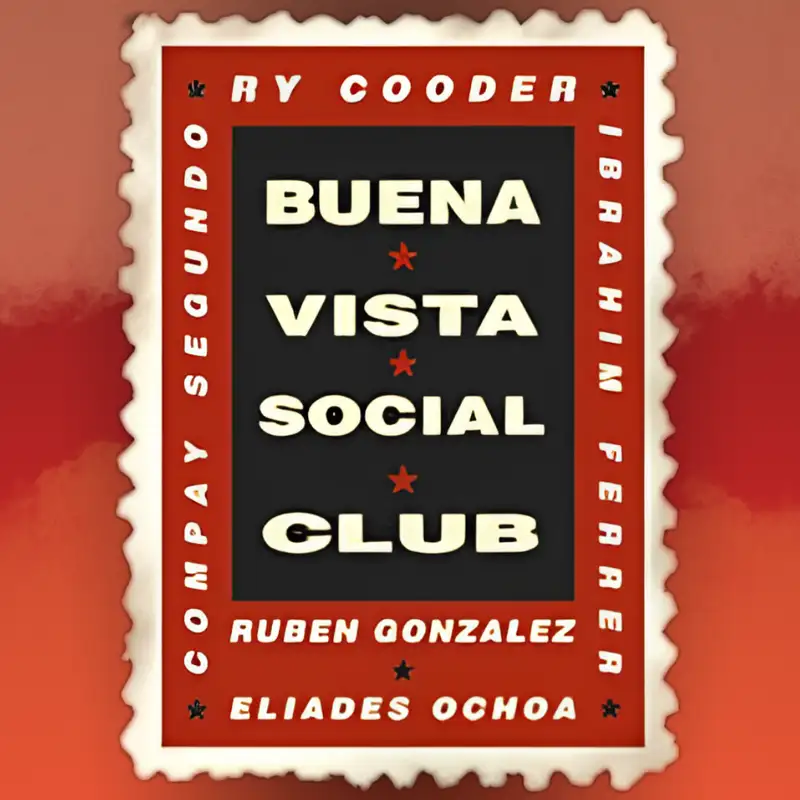
This is, of course, we're talking about Buena Vista Social Club.
Look at those guys.
Is that not joy?
That guy.
Is that not joy?
Those guys.
First of all, this packaging of, what is that, the 25th anniversary or something?
This is the 25th anniversary, a couple of years ago.
Man, the CD 25th anniversary packaging-
... is amazing.
It is so good. Oh, look at this.
It's a-
I love CDs. I love LPs, but I'm not that much on the hipster train with the LPs.
I never left. But this-
Buddy, we're bringing back physical media-
I know
... here at the You'll Hear It podcast.
And I love, this was never out, and they probably made some weird
jazz wax
LP of this, but this is not that. Oh, this is a great record, a great
story, and it was a phenomenon.
It was.
Do you remember it? Were you around?
I was around.
You were in grade school or something?
And you couldn't not remember it because it was everywhere.
For a couple of years-
But you were young.
I was a teenager.
Yeah, okay.
It came out in June 1997.
Yes.
And then a documentary came out two years later in 1999, and then it blew up.
It blew up.
It blew up twice, basically.
Yeah.
And actually, the second time might've been bigger than the first.
Yeah.
Because all of a sudden, I think the documentary was nominated for an Oscar
even.
Yeah.
And all these people saw-
It's a major motion picture
... and heard this music. And also just the story of these people, as we mentioned
in the intro, is so unbelievable-
Oh
... that it makes for a compelling album.
Then, on top of it, you got some of the greatest music recorded, maybe in the
20th century. It's pretty good, man.
And I think that's what makes this
work, is the, I mean, the documentary's great. The story is great.
Wim Wenders, the great, I believe he's German, documentarian.
The footage-
Wim Wenders is German, yes.
Wim Wenders. Sorry.
Wim Wenders.
The cover. We're going to get into that.
Oh, put your monster off.
But I think none of that matters if the music isn't killing.
And upon going back to this record, I realized, first of all, just how important a
record it was for me.
Yeah.
I got to see them live a couple of times. Actually, a bunch of times.
And in fact, there's still a touring group with...
I don't think there's anybody still...
Well, Juan de Marcos is around, who we're going to talk about a little.
I think Omar's still around.
Yes. Right. And look, there's a lot.
Remind me to tell you my Omar story in Chicago.
Oh, sweet.
But there's a lot of just personal things.
We talk about nostalgia with different records and stuff.
This was my daughter's first concert, Saenger Theatre, New Orleans,
1999.
Wait.
She was still in Mom's belly.
I was going to say.
Literally her first concert. But she was big.
I mean, she was like-
Wasn't she born in '99?
She was born in 2000.
She was 2000.
Yeah.
How she-
It was like December or January.
One of the most incredible... When you go to a concert
and you're either introduced to that artist for the first time, I already knew.
I mean, the record, I'd seen the documentary, I'd seen them
play, but this was the first time seeing them live with my family.
It was one of the most stunning, exciting, authentic, grooving, everybody
was on their feet. This is New Orleans.
Yeah.
So, maybe the one place in the States that has that kind of
cultural attenuation to be able to connect with something like that right
across the Gulf into the Caribbean.
Yeah.
Man, it was just one of the greatest cultural moments of my life.
So, check out some of these stats. Eight million copies sold.
Damn.
Eight million copies sold. I believe it makes it the best-selling
Cuban music album ever.
And did you see what's right under that?
Eight million, seven million of them were sold in Starbucks.
That's what's crazy about it.
And then 5,000 in Barnes & Noble. No, it reached number
80 on the Billboard charts as an album.
Which doesn't sound like a lot-
Yeah
... but if you think about it, every song is in Spanish.
Yes.
Sung by usually an octogenarian.
Yes.
And that is crazy, because this isn't like today, where there's still, by the
way, big battles over music in Spanish-
Oh
... playing in English-speaking countries, which is kind of silly.
But that just didn't happen at this time.
No. And, I mean, the fact that it reached 80, this was
selling for years.
Years.
So, I don't think it was ever... I mean, I'm shocked that it was even that high.
It was a huge five-year window.
Yeah.
And this wasn't just popular in America.
And I think-
This was popular all over the world
All over the world.
In France, in Germany.
Yeah.
I believe it made it to-
Africa. Especially West Africa, yeah.
Africa, Asia, all over Europe.
Yeah.
And, of course, the Caribbean and South America, but
man-
What do you mean?Of course
Because it's Caribbean.
Oh, got you.
What are you talking about?
This is a little pressure test there. You passed.
And because the songs are in Spanish.
Right. Speaking of Spanish-
Yeah
... full disclosure-
Oh, boy
... we are going to-
I'm so nervous.
We're going to
say all these words, we're going to make some mistakes, but it's out of love,
shout-out to-
Shout-out to Brenda Tull, my 11th grade Spanish teacher
Yeah. What we're not going to do is call it, "The recording was made in Havana,"
because that sounds like I'm saying banana.
Buddy, I'm just trying to get the vowels right.
I
really did not do well in Spanish in high school, and I'm super nervous.
And the word that I can pronounce the best in Spanish is
gringo. So please take everything with a little bit of
kindness today.
What I realized was a lot of the Spanish, the little bit that I do know comes from
listening to this record so much.
I know. I was going to say.
And then just trying to figure it out or connecting some things.
Chan Chan.
Yeah. Chan Chan.
You got that.
So anyway, I can't wait to get into this.
Should we sort of jump right in and then just talk as we go?
Well, let's go into maybe one of the greatest opening tracks of an album ever.
This is Chan Chan and-
Chan Chan
... it's magical.
Ah.
Written in 1984.
Yes. I know, that's crazy.
Not in 1920.
No. By Compay Segundo.
Yeah, by Compay.
If it's just something like...
This is such
primal, melodic, and rhythmic content, but it's so
It's so perfect and
authentic.
It's
a little
dirty, isn't it? The lyrics? I could be wrong with that.
No, it does get into a little bit, yeah.
A little sexy?
Well,
loose translation into English here, "How her bottom shook, and Chan
Chan was aroused."
I love it.
That works better in Spanish than in English. Baby.
It does.
Man.
Yeah. It just f***s everything up.
It really does.
It sounds so beautiful.
Yeah.
But this is Compay Segundo, and is it Ibrahim Ferrer? No, no.
Who is he singing with?
I don't know. We're going to figure all that out.
The one thing that I do know is we're going to talk about Cachaito,
the bass player who's all over this record.
Honestly-
Killing it
... not to be too controversial, but English as a
language for
song-
Yeah
... really does pale in comparison to all the romantic languages.
Yeah. Absolutely.
Spanish, Portuguese-
Yeah
... Italian, French.
Yeah.
And to most others, actually.
Taylor Swift and Beyoncé might argue with you on that, but-
This is so beautiful.
I know, it really is.
"So
I can get to that trunk, I want to sit down."
That's what they just said.
Ooh. Yeah, raccoon is playing himself.
Yeah. Right.
Oh.
Compay.
This is a son, and I hope I'm saying that right, S-O-N,
which is a style. This is the groove, it's the vibe, it's
how they're doing this. This is not from Havana, although they did it
there.
This is from the country. This is a vibe.
And what I love about this record is you've got different Cuban styles, and
there's definitely influences from different places.
In fact, later on in the record, there's quite a bit of American jazz and even
country music-
For sure
... really cool influences. But Cuban music, and
this is what... I'd heard, actually, some of these players before this, and I knew
a little bit because of the connection with American jazz over the years.
There's a deep connection there, isn't there?
There's a deep connection and-
To New Orleans, too.
Yeah, to New Orleans. But
there's something culturally magnetic about this
music. So even if you don't speak Spanish and you're having to pore over the
English, which I don't even usually do, I don't need that.
The music-
No, it's poetry, man
... Yeah.
Yeah, just let it happen.
It's poetry, but there's such
a non-adulterated vibe to this music.
For sure.
It's so authentic, and I think some people would be like, "Oh, this is
whitewashed," or the tourist view of it.
Maybe, but as I dug back into the story of this and how it came
together, there was definitely some serendipity of how all these legendary
musicians came, but many of them were forgotten.
But a bunch of them didn't know each other. That's the crazy thing.
That is kind of crazy.
Because they were trying to make the story, and it was a little Hollywood or
whatever. Like, "Oh, they'd all been lost and off the scene." A lot of them
weren't. A bunch of them were still playing and touring.
Yeah.
But some of them were, like Ibrahim Ferrer, Rubén González hadn't been playing.
But Compay Segundo had been playing, but he had
fallen off the map before that.
He had fallen off earlier.
Earlier.
In the '70s, he quit, but then he came back in the '80s and-
But a bunch of them had never met, which is crazy because we think, "Oh, everybody
in Havana..."
Of course.
No, some of them were from Santiago. It's a 15-hour drive.
Also, it sounds like they've been playing together for 50 years.
I know.
You know what I mean? Also, by the way, the production on this album is so
beautiful.
Shout-out.
This is really rich production.
Shout-out to Nick and Ryan, the whole gang, and the-
The sound-
... local engineers
... the sound of the bass-
So great
... the sound of the percussion, the sound of the guitars-
Yeah
... the sound of the voices is so gorgeous.
You could hear the room around the percussion, which I love so much whenever
there's heavy percussion on albums.
And this is percussion driven as opposed to...
There's a little bit of drum-
Man
... set later, but it's percussion. And you're right, the sound of it.
So EGREM, Egrem Studio, which was Pinard.
I don't know how you say that, but that was, I remember-Reading legendary stuff
about this studio, because that was before the revolution, Nat King Cole and Dizzy
Gillespie, all the American musicians would go down and record there.
But they've kind of preserved it, I believe, to this day.
Yeah.
Analog, old school, great sound. I mean, it matters,
right? It matters. You get the legends together.
They had a problem with the tape machine the first day, a little serendipity.
Yeah.
So they had to fix it, so all the musicians had to mingle and get to know each
other better.
Well, let's go just a little bit before this all, Peter.
Yeah.
So, the sort of story of the album is actually incredible.
The whole thing was an accident. In '96, Nick Gold brought Ry Cooder to Havana
to record an experimental fusion album with West African musicians from
Mali and Cuban trova players. And when
Cooder arrived, the African musicians were nowhere to be found because their visas
hadn't come through. So Cuban band leader, Juan de
Marcos González, instead rounded up a group of veteran Cuban
musicians and recorded what would become one of the most unlikely crossover albums
of the 20th century. And it really is.
And the fact that it was such a huge hit is just so mind-boggling.
Yeah.
But it really is a testament to, A, the music of that island-
Yeah
... which is so deep and so rich.
Yeah.
And, B-
Just the tapestry of culture and connection and
excellence in terms of you hear everybody-
You can-
It's known, especially for pianists, but for every instrument of the highest level
of musical-
Excellence is a great word
... education.
Yeah.
So you get all these elements that come together.
But then there's also, you can feel the way people are dressed and the
way-
Yeah
... this food smells. You know what I mean?
Yeah.
It's-
Is it hot and humid? It feels like it.
It should be.
And actually, shout out Nick Gold. So this was, I was trying to remember the name.
It was World Circuit
something, was the name. This was not a major label thing that was planning to sell
eight million copies.
No.
And I love when these stories, this is an indie label.
I think they're bought up or it's whatever, UMG or something now.
But this was not a slam dunk to be eight. I mean, how could it be?
No.
First of all, they didn't even plan it.
Oh, and they also made three records in this same couple of weeks.
Oh yeah, there's the Rubén González album.
Three incredible. Introducing Rubén González.
Hilarious because he was like 80 years old.
And I told him, "A Toda Cuba Le Gusta," which is with Juan de Marcos
and the Afro Cuban All-Stars, who I've seen many times perform.
They're incredible, were still touring up until a couple of years ago.
Right.
So, what they did was amazing, and shout out to
do that. And I love it when-- And look,
shoot me down and call me an optimist. Call me, what was it?
Rose-colored glasses if you want, Adam.
Sure.
You're my friend. Be honest with me.
Sure. Yeah.
But I think that this record became a phenomenon because
it's so darn good.
Of course.
So great.
Some of the best music ever.
Yeah, but that doesn't always happen.
Sometimes it's like the story or people see it at Starbucks and the p**a m***e
thing-
I mean-
... like, "Oh, I want to get this. Maybe we'll go to Cuba someday if they ever open
up again, honey."
To be fair, though, the name of the album, Buena Vista Social Club.
Yeah.
The cover and the sound of the music captures you.
Yeah, it does.
It does capture you.
It's magnetic, man.
Yeah, it does.
And-
They did a great job at all that, by the way.
Yeah.
And that's important.
It's important.
Agreed. Let's do go to the next track, which is-
Please play
... "De Camino a la Vereda."
Great music and albums and sound is important.
Do I sound like Peggy Hill when I say "De Camino a la Vereda?"
A young Peggy Hill.
Oh. Woo. We're going out of the country again.
Man, how do you just
fall into vibe?
Can
we start with the chorus? Nothing wrong with that.
Listen, friend, don't stray from the
path.
Ibrahim Ferrer. Composition. This is
another
song.
I remember seeing Ibrahim do this live.
He stretches out on this song, too, but...
What a voice, man.
Man, his rhythmic continuation.
Listen to that bass, too.
Man,
rock solid. Big round of Cuba.
Come on. Like I said, it was a challenge, but he's unbelievable.
"Cachaito," right?
Yeah.
Amazing.
So great. So yeah, that's written by...
And that means on the path or on the way to the path or stay on the path.
And Ibrahim Ferrer was a
devotee to the Santería religion, which has
a big presence in the Caribbean and Cuba, and was very--
This one is not as much about the racy lyrics.
And so this is a little stay on the path, do the right thing.
Got a little bit of overtones of that in the lyrics.
Can I take you back to the city?
Please.
Can I take you back to Havana?
Oh my God.
With El Cuarto de Tula.
Oh, this is
Manuel. Trumpet. Oh, killing it on this record.
Listen to that bass line.
Yeah. Manuel "Guajiro" Mirabal.
This
is also a
song, but it's descarga, which is the Cuban jam style.
That's where that sound... Yeah.
I don't do nearly enough- ...
nearly enough sirens in my writing.
I know. Oh. Oh,
these lyrics are great, the translation. It's Chula's bedroom.
It's gone up in flames. She fell asleep and didn't blow out the candle.
Oh.
Woo.
I know. It's crazy, right?
I
think that's Eliades Ochoa.
Eliades,
yeah.
Yeah.Man, do you hear the
timbales in between?
Julian Sanchez, 13 years old, the timbales.
No way.
And apparently, they were in the studio.
He'd already done a bunch of sessions and tours and stuff.
I mean, some of the hip is percussion.
Damn. So he's-
Man.
I don't know if people who aren't super familiar with Cuban music know that
their reputation of instrumentalists is at the top of the
heap of the world.
Yeah.
The piano reputation of this country-
Yeah
... is insane.
So before this, early '90s actually, I got a chance to
meet and hang with Gonzalo Rubalcaba, who's one of the greatest jazz pianists-
Greatest jazz piano alive. Yeah
... yeah, from Cuba, and that's when I first got it.
I'd
heard
Chucho Valdés and his father and a lot of these great pianists, but that was the
first time I'd been around a Cuban pianist that was just like...
I mean, because he's classical jazz, Cuban stuff.
Yeah.
And he's definitely more, I mean, he can play all this-
When I got to The New School in New York
... but I was just shocked.
When I got to The New School in New York, there was this pianist named Manuel
Valera, who-
Oh, yeah. I remember. Yeah
... and I was like, "Oh, damn. What's going on here?"
Yeah.
It's crazy. But so good. Also, Pete, I
don't know if you know this, but this podcast is brought to you by Open Studio
Jazz.
Never heard of it.
Go to openstudiojazz.com/yhi. And I want to say,
speaking of Cuban pianists-
Oh, man
... we just, a couple weeks ago, had in the studio to record a new course on
Cuban music and Cuban piano specifically-
Yes
... Harold López-Nussa.
Yeah.
Incredible Cuban pianist, and his brother, Ruy.
Yeah. Incredible drummer.
And they were in here and tore it up.
Man-
I can't wait to take that course
... all this stuff about on tunos.
Yeah.
Incredible course.
He actually covers one of the songs from this-
I know
... in the course.
I know. It's amazing.
It's so cool.
It's amazing.
Yeah.
So go to openstudiojazz.com/yhi to sign up and become a
member. Start your free 14-day trial at
openstudiojazz.com/yhi. Let's
get back to the show.
Okay. So we can move on to the next song, but I just want to say, we're going to
come back to, because
I have the feeling we're going to be coming back to-
To
... "El Cuarto de Tula" for some of our categories later.
Okay.
We'll do that.
Okay. Next up is "Pueblo Nuevo."
Danzón.
And this is by Israel López. Cachao on the basses.
It's so cool.
That picture.
Oh, I love it.
Danzón. Oh.
So beautiful, Rubén González's touch,
for someone who hadn't played piano for decades.
I know. Yeah, so he had arthritis, apparently, didn't have a piano, and kind
of just like that part is done, and when they invite him to this, he's like, "Let
me try it." And it just was so, oh. Man,
he has chops in the jazz stuff. Oh, and I love when they go into this,
we've got to play it, Lisa, they go to the mambo, kind of mambo-esque groove.
Is that mambo? Yeah.
Oh, a little minor with a major seventh. Maybe six-nine.
Oh.
Hold on.
Yeah.
Yeah.
Man, this is like you've walked into the greatest hotel lobby ever.
Literally greatest.
I don't know why I said that.
You always use that.
Man, I would love, I would just be like, "Thank you." I would just sit down.
I would get on the ground and just-
You spent a lot of your life in hotel lobbies, haven't you?
I used to.
Yeah.
But we've got to keep playing. I know we've got to go places, but oh.
Oh, man.
We've got to keep going.
Oh, sorry.
We've got to keep going. What are you doing?
Oh, that's what I'm saying, man, Monk.
That influence.
I
think
they go-
It's so funny, these danzónes too, there's such a, it feels
so-
Oh
... such a cousin to Argentine tango.
I played in a lot of tango bands around here in St. Louis.
Right.
Until this part.
Yeah.
Oh. Man, they just slide into it.
Woo.
Oh, man.
The taste-making of this piano player.
Man, I heard him do this live a couple times right in this band, but I was like...
Sorry.
Throwing s**t all around here?
But to slide in and out of the time,
a little blues, a little bebop there.
I mean-
Oh
... this could be so self-indulgent by a lesser pianist,
but with Rubén, it's just
thrilling.
Oh, his dynamics.
But this groove,
and here he's just dancing on top of it. Man.
Man, I could, dude.
Oh. This has everything.
How are you-
This checks all my boxes
... how are you feeling? So after last week's
Money Jungle-
Mm
... talking about out of tune pianos, you seem to be okay with this one.
Because it's so well... That was an out of tune piano that was badly recorded.
True. That's true.
It played very well.
This is killing.
Yeah.
All right. We're going to save a little bit of this.
And it kind of fits in, I'm not saying they did it on purpose, but it fits in with
some of those,
what are those guitars called? Not the lute one. There's another one.
But the Santiago guitars that they played on here
and-Barbarito we're going to hear. Barbarito Torres is killing it.
But it's like they have some of those double strings, like the G and the D.
It'll be six or eight strings, and then they double certain ones, and we get that
sound. And those strings would always, like you just heard it there, like a little
bit out of tune with each other.
Yeah.
I mean, that was like that part of that vibe.
It's a rub. It works.
Oh, man.
Yeah.
And so for me, the piano here is just...
Next up is "Dos Gardenias," this hidden item.
Oh, this is a big hit on you.
This is good. This might be
my desert island.
This is one of the greatest, simplest trumpet intros ever.
I'm still undecided on this.
Oh, this is in E
flat, I think.
What?
Yes. I think this is E flat.
"Dos Gardenias."
This is a bolero, of course.
Oh.
Rubén González
all over this too.
Los
Gardenias, kind of like.
Man,
Ibrahim's harmonic intuition, ooh.
Oh, man. There's
nothing happening that's not right.
And although, as we've said several times how bad my Spanish is-
Yeah
... I somehow
know exactly what this song is about.
Right.
You know what I mean?
"Two gardenias for you."
Well, yeah. But also just the way that he's-
Oh, so amazing
... singing it.
Yeah.
I know what's going on.
Yeah.
We all do.
Oh. Man,
some of the greatest instrumental comping.
Manuel. Man,
it's
magical.
"Dos Gardenias,"
amazing.
Yeah.
Amazing.
Tasty.
Next up,
"Y Tu Que Has
Hecho?" How would you say that?
What are we on now? "Y Tu Que Has Hecho?"
Thank you.
Yes.
Another bolero.
This is an old song from the '30s.
Yes, we in Delta Trading.
Compay
Segundo and Elián Solís.
Ooh.
Things like shift. That shift happens.
Oh.
Man, he's so...
I love stuff that's so simple, like you see this written out, and you try to play
it, and you're like, "Man, you better be all you."
And the effortless flow that they can hit.
So Compay Segundo is actually playing an armonico,
which is a small guitar with seven metal strings with a third double strung,
which he invented-
Compay invented that
... yeah, and built the first one. He wanted to combine the
characteristics of the tres. That's the other one.
The tres, like the Cuban guitar-
Oh, yeah
... that's got some connection with West Africa and Spain.
But guess when he invented this instrument?
19-
So this was in 1996, the record was made.
Can I legit guess?
Yeah.
1955.
Well, it was a little older, so they're not sure exactly, but it was in the 1920s.
Oh, wow.
So, that's the cultural connection
going back with this record, that it still sounds so
vibrant. He invented the damn thing. The '20s.
What were you doing in the '20s? We're in the '20s now.
We're in the '20s. I was going to say, what am I doing?
I'm doing a podcast in the '20s.
Oh, come on, man.
Next up is "Veinte Años."
That's culture.
That's culture.
So is this, Pete.
So it is. This whole thing is.
Podcast culture, buddy.
Killing it.
Absolutely killing it.
Mm.
So this is a string, another bolero
form and vibe.
You know, "Veinte Años," 20 years.
20-year itch, ever heard of it?
Thank you.
Yeah,
this
is Omara Portuondo. I'm going to tell my Omara story.
She's a beautiful
human. I mean, you hear it.
I heard her and Ibrahim sing this together live.
Really?
Yeah.
Oh, man. Funny.
She was
always performing, though, right? She was a little younger than everybody else.
Is that right?
She was a little, yeah.
She was actually in the recording studio doing another album downstairs.
Oh, no way.
Yeah, at EGREM in Cuba, and then she came
out, and she's like, "Oh, I heard you might be looking for a vocalist or
something."
Can we just say that it's so great that there's so much happenstance-
I know
... involved in making this masterpiece.
Yeah.
And that happens sometimes, right?
You can plan and plan, but sometimes it's like, man, let the universe do
its thing.
Yeah.
You know?
So Omara was
with the Buena Vis- actually, I think it was Afro Cuban All Stars was
officially called at Symphony Hall, Symphony Center in Chicago, and this
was eight or nine years ago.
My wife Kelly, my partner-She and I were up in Chicago celebrating
our 20th anniversary, and we had tickets.
I don't know if I surprised her, but we had tickets to go see them at Orchestra
Hall, and Omara heard that I was there and that it was our 20th anniversary.
No way.
Because we have a mutual friend. I knew her a little bit, and I'd met her before.
And our mutual friend who was on the tour mentioned, he's like, "Oh, Peter's here."
And she announced from the stage, congratulations to
us in English. She said it in Spanish, then she said it in English to Peter and his
beautiful wife-
Come on, man
... 20th. And I was like-
You got some-
Yeah
... you got some points for that one, I hope.
I got some points. Yeah.
That's going to carry you all the way through 30 probably.
It was a magical thing going back to that concert in New Orleans, and then-
Yeah
... we've been through a lot in our life, as we all are.
Yeah.
But to have this presence of this amazing artist.
And I
saw her at different jazz festivals.
She did some tours on her own and was just really a
beautiful
person and an incredible artist.
So shout-out.
Very cool.
Next up is El Cartero.
El Cartero.
I don't think either one of us-
That's the cart driver. That means the cart driver.
I don't think either one of us nailed that one.
Nailed it. Oh.
Yeah, this is great.
Eliades Ochoa.
Started playing guitar when he was six.
This is the tres guitar,
with the double D and the double G.
Man, is that a thick-ass groove?
Yes, that's a thick-ass groove.
Holy smokes.
That bass, man.
This
is some country stuff right here, the lyrics.
I love it. I love the country stuff.
"Along the track, by my house, a cart driver passed with his
sentimental songs
that guajiro sang. I'm going to the crossing to unburden my
load. I'm going to the crossing to unburden my load.
There I'll reach the end of my crushing labor."
That might as well be some Delta blues.
I know. Very blues. "Right up on the mountain, I work
without..." Man, no, this is better in Spanish.
Yeah, I was going to say-
You want to hear me recite all the lyrics in-
... you want to recite El Camino?
El Camino. I always wanted an El Camino.
In a St. Louis accent.
Next up is Candela.
Oh.
Man, highly recommend the pictures, the lyrics, 25th
anniversary edition,
all remastered.
Candela.
Candela.
Oh, man.
Let's go dance this night
together, man.
I'm down for
this.
Come on.
I've got a
volcano off Kings Highway.
Let's do it.
Let's do it.
This is Tumbao, and so this is actually, I didn't know
about this. This is in here. The guayabero style.
Guayabero just means passion fruit, but this is like when you
got that kind of groove going and you're talking about, the lyrics are very
everyday life type stuff, but they all have sexual innuendos to
them. So it's like, "Oh, fire, I'm burning.
A rodent put on a dance for some great amusement.
He chose a mouse as his drummer to play for the whole day.
An elegant and amiable cat came along, too.
'Good evening, my friend,' he said to the drummer.
'I can play, too, and you can take a rest.' The mouse left the room half
crazy. Now I'll have to go and rest." And the cat played,
anyway. That sounds ridiculous. This is why we got to-
Keep going.
Should I put some-
But man, that-
... should I put some new chords under that?
It's like some-
It's so incredible, man
... some Motown s**t. Man, thick. Killing.
Next up. You got this one. That's your turn.
Oh, what are we getting into now?
Amor?
Oh, Amor de Loca Juventud. Yeah, okay. So yeah, this is cool.
This is getting into like-
So it's Juventud?
I don't know what that... Juventud. I don't know.
This is like getting into... Right.
Let's listen to this because I'm trying to remember which one it is. Yeah.
This is getting a little Americana.
We're getting very cowboy-ish.
Cowboy.
Yeah.
I love it.
This is from the 1930s.
This is real Havana stuff here.
You hear the chorus?
Let's kill it.
Almost like gospely kind of tone.
Yeah.
Like American songbook type stuff.
Love
it.
Oh, man. It's almost like like
those-
Yeah
... the harmoni-
Sweet Georgia Brown. Yeah
... yeah.
This could be a standard.
Augmented
triad.
Timbale, 13-year-old timbale.
I love that they just let the 13-year-olds go nuts on those little-
Killing it.
Yeah.
And then the next one, I'm not even going to try to say this. Yes, I am.
Orgullecida, yeah. Orgullecida.
Orgullecida.
Yeah.
Yeah.
Oh, this is a cool one.
Ruben plays some great stuff.
This gets real jazz adjacent, but this is an old song, too, I think.
It feels like an old song, doesn't it?
Oh,
I think this is when Cooder's song, why can't I...
Little bit of drum set.
Oh. And
normally,
this kind of tune, it would come up as a quibble
bit, like varying a little bit, and maybe a little too much
pedal steel or whatever, but man, it just works.
And the vocals and the vibe-
Something-
And the pacing on this record's great
... they captured something with this.
Yeah.
They captured something with this. Okay, next up.
Like because you can take stuff that maybe not be the strongest...
No, actually, it's a great song, it's just,
man, it just works. Yeah.
Murmullo.
Murmullo.
Wow.
Yeah. This is so sick.
Man, the sound in that room.
This is very like Royal Studios in Memphis kind of vibes.
What a sophisticated player.
Yeah.
Oh.
Details.
All those little crunchy things that he's doing.
Oh,
let it flow, baby. Let it flow.
Woo. That
sounds like something you might do, Peter.
Man, it wouldn't happen.
I definitely was influenced by it.
When I heard his playing, I was like, "I love it.
I want to try it."
I wrote a song very much influenced by it called "Cuba New
Orleans."
I know it now.
Oh, right there. Oh.
Man, this music is so-
But the way he floats
... how amazing. Yeah
... the sort of out of time floating things he does. You know who else does that?
Who?
Gonzalo.
Absolutely.
Yeah.
Absolutely. I can see why
maybe there's some pushback, that it's some idealized version of something.
It's like a Hollywood movie where everything's just right.
But you want that, you know what I mean? It's so romantic.
Yeah.
It's so pristine. It's so masculine.
It's so feminine. It's so life-affirming.
In the research leading up to this, I did find some pushback by
some Cubans who were saying this is sort of like
a memory of an era with rose-colored
glasses-
Yeah
... that didn't actually exist in the sort of romantic way that they're
portraying it. But-
But you know what else they say?
What?
Haters going to hate.
Haters going to hate.
Your girl said that.
In English.
No. Look, I don't know enough about that.
I don't either.
I can tell you this. To me, art, and this is art, high art,
great art, great culture, whatever you want to call it, this is a
document, and not just this book, the music, the sound, that is
here for posterity. And it's like uplift so many people.
Me, every time I listen to it. It's top shelf.
Mm-hmm.
Maybe it's not for everybody, that's fine.
But I'm saying,
and
it wasn't AI, it wasn't trickery, there was no
over-dubbing.
No.
Not that you can't make a great record.
Absolutely.
We've listened to a lot of over-dubbing.
But however they got there, this one got there very authentically-
For sure
... analog,
and the story behind it supports that.
But even if you don't know any of that, you shouldn't have to know that.
Does the music move me?
The music is-
Yes
... is moving.
Yeah.
For sure.
And from beginning to end, and we're getting towards-
We're at the penultimate track.
Yeah.
This is the title track, "Buena Vista Social Club."
Oh. And this is written by Cachao.
Ooh.
Wait, can we go back and just listen to the beginning here?
Wait, before we play it,
okay, we're moving along in the record, like you
noted how "Chan Chan," the way the record starts is so
powerful and arresting, but also it's kind of dark.
Taunting.
But it's haunting, but the groove, it's just
pulling you into something. That there is joy, but it's like, where's it
going? The way this starts, this is just a little moment on the record.
I'm not saying this is the greatest moment or apex moment, but it's just an
example of many different things. It's kind of weird.
It almost reminds me of
D'Angelo
at the beginning of-
"Untitled"
... "Untitled."
Yeah.
Like the way they play that chord with rock out.
Yeah.
It's kind of weird, but it's also like, pay attention. So, okay. Sorry.
Yeah, I see that now.
Yeah.
It's so good.
Orlando López on bass, man. Intonation off the charts.
Perfection.
Ry Cooder.
Yeah.
Imposing as well, but
subtly, actually. And well done.
He doesn't overdo it, and that helps.
Yes.
Yeah.
Woo.
He was born to lie there.
One too many?
Ooh, quibble bit. No.
Yeah.
Okay, this is crazy. So
Cachao, and then Cachaito, the bass player on here,
Orlando López, comes from a whole family of musicians which
includes over fill in the blank number of bass
players in his family.
What's the most number of bass players a family could have?
If you have more than five,
the family is lifted to a new economic level- ...
because everybody's working so much, right?
Exactly.
And the family disbands because there's no time to spend with each other- ...
because bassists work all the time. But what do we got here?
40.Over 40. Bass players.
It's not even a family anymore.
But this is what I'm saying. This is culture to me.
A culture that could support 40 bass players in
one family, loves music.
Oh, for sure.
On one island, and I think that's the stunning thing.
Look, I know Cuba's got issues. There's so much stuff.
We're not getting into any of that because we're talking about the music.
We're here to talk about the music. We ain't talking about practice.
I'm going to tell you,
every culture, every place, puts
things into the world, and it's not about better than the other.
But I just want to acknowledge and thank when a culture puts
something out there to the world that's so great and so inviting.
You know what I mean?
Yeah.
I bet you put this on, these grooves, this kind of playing, or musicians playing it
now, like Harold and Ruy and all the young guys, and you do these
songs. I bet 80, 90% of Cuban people know how to dance to this, know the
songs, in a way that speaks very highly
to cultural integration.
Oh, I bet we'll get some older Cuban listeners in our comments here who's saying
that, "No, the young people aren't dancing to it like they did."
I don't know. That's a good question.
I'll tell you this-
Just because it's fun for generations to know each other.
Yeah. And I want to shout out,
Morris Tamsky, who was my father's best friend for many years.
He passed a couple of years ago at the age of, I believe 96 or 97.
From Havana,
came to St. Louis in the, I believe, early '50s,
and was a son of Cuba to the point when I was at his funeral two years
ago. He was laid to rest, his coffin was
there, and as he wanted, the Cuban flag.
Mm.
He said, "That's what's going to be covering me," as he
departs. And I remember my dad telling me about, he went to see the same tour.
We were living in New Orleans. Powell Hall, right around the corner from here.
Same thing. Everybody's on their feet, and Morris is a
son of Cuba, but that's that kind of thing.
I don't think it's just with the older people.
I'm sure everybody's like, "Oh, they're not like they used to be." But there's a
connection with
the culture being so magnetic and
absorbed into the people and the education there that's stunning, I think.
Are we on the last track?
Last two tracks?
Yeah.
You over there writing? Are you planning next week's episode?
I'm just kind of making some notes here. No, this is the final track.
Yeah.
This is "Bayamesa."
"Bayamesa."
Oh, we're in three. Only song in three.
A criolla.
I think.
It was written by the Bohemian troubadour, Sindo Garay in,
yeah,
guess what year.
1992.
Let's listen to little bit of it,
I guess.
This is
crazy.
Okay.
So, "Bayamesa" was written by the great Bohemian
troubadour, Sindo Garay, as I said, in 1869.
Amazing.
Composed in the criolla rhythm, a
precursor of the son. It is a patriotic hymn to the Republic of Cuba.
The lyrics tell the story of a woman from
Bayamo, the first town to be
liberated in the Revolutionary War of 1868, who burns
her house rather than let it fall into the hands of the Spanish.
This version features a new ending arranged by Compay Segundo, who's
on this record, who had clear memories of a time when, as a boy of
seven, Garay would visit his family home-
It's amazing
... from 1869.
Oh, man.
So great.
Amazing. Well, Peter, let's do some categories.
What do you got for desert island tracks? What have you landed on?
Okay.
Oh, is this the special one?
This is the especial.
Oh, gosh.
Especial.
Don't ruin the show, man.
Yeah.
This album is my desert island album.
Oh. This is the only, if you were like-
Yes
... you can only bring one album.
Yeah. And experiencing it with you and our dear listeners today, I feel even
more. I was wondering, like, should I? I'm thinking of other things.
I feel even more emboldened.
This is a very special day.
Man, I love this. This would be my desert island.
Now, can I be on the island of Cuba? That would even be better.
Then I'd have a little space to spread.
It's not a desert island.
That's true.
But yeah, this is unequivocally. I love this record that much.
Now, some of you might say, "Oh, you said that about some other thing," and I love
a lot of albums. Sue me. Okay? Talk to my attorneys DeBosier and
DeBosier, Esquires. Both of them.
But the thing is, this record, for me, it's the intersection of
nostalgia, family, love, Morris,
being able to, Omaro. There's so much
connection, but I also just love the music.
I will never get tired of listening to this record. There. Said it.
Well, I really wish I would've gone first because I can't top that.
My desert island track is Dos Gardenias, because I-
Paleki? Palemi?
Paleti.
Palemi.
Paleti.
Okay.
Apex moment, what do you got?
Okay. So, we listened to, what is that, the third track?
"El Cuarto de Tula."
Yeah.
Tula's the
young lady who likes to have a good time, apparently, if the English translation is
correct. So, if you start at about four.
So, Barbarito Torres, who we haven't talked about enough.
At that Sanger show in New Orleans in '99, he
played some of the most incredible solos, and I just want
to get the...
Yeah, here it comes. This guitar solo is one of the greatest-
Oh, this is really killing it
... improvised solos.
This is killing it.
And this is like a laúd. This is like a Cuban lute.
The way he builds it up.
Oh, just that double string.
This is a great call, Pete.
Oh, blue scale? Come on.
Oh.
Sharp nine? Come on.
It's killing.
You might have won this. You might have won this. That's great.
What are you doing?
No, really, what are you doing, dude? Dan, you done? Okay, go ahead.
Man, that solo is-
It's so funny, because-
It's one of the greatest improvised solos
... it's incredible. I actually picked another solo, but I picked Rubén González
solo on the next track-
Yeah
... "Pueblo Nuevo."
Yeah.
Right around here.
Woo. Oh, yeah, when they go into the mambo.
When they go to the mambo, feel how.
Oh.
The
flavor.
Ooh. All that stuff, man. So good.
Bespoke playlist, what do you got?
Goats.
Goats?
Goats.
Goats.
Yeah. The playlist would have other albums like KOB and just
top-selling, but top level, just greatest of all times.
Yep. I've got Barnes & Noble endcap all-star.
Maybe the Barnes & Noble endcap goat.
You always win this category.
I can't imagine another album crushing at a Starbucks
counter.
Oh, my God. Yes.
Crushing at a Barnes & Noble endcap.
Right.
This destroys.
The good folks at Mile might have a problem with you.
Put inside an NPR tote bag as a giveaway. You know what I'm saying?
This had to have cleaned up in the early 2000s-
Oh, yeah
... for
middle-class moms-
Right
... in their minivans, for...
New York Times readers?
New York Times readers, for-
PBS?
French teenagers.
For mayors?
Just amazing. Okay.
I love that. That's great. You always win that category, man.
Quibble bits, what do you got?
None.
I have, my quibble bit is I can't pronounce the title.
Snometer.
Is that a quibble bit?
Snometer, what do you got?
Okay, I think I got this right, and I think I haven't seen yours, but can we say
them at the same time?
Sure.
Because I think we might say the same thing.
So I was going to say one, two, three, and then the number.
Okay, ready?
Okay. One, two, three. One.
Yeah.
Okay.
Finally.
I can't believe this. This might be our first-
I almost went 10, though. Which would've been weird.
Are you serious?
Because it's so great. It's so great. 10's better.
So tell me about your one rating on the scale.
So for those of you who don't know-
It sold eight million records. It's the greatest-selling world album of all time.
Yeah.
So it has to be a one.
Snometer is like if it's a one, it's not snobby at all. It's very accessible.
And 10, it's very snobby, and it's hard to listen to. It's not very accessible.
If you want me to explain my one, see above your bespoke playlist.
Right.
That tells you.
Is it better than Miles Davis's 1959 masterpiece, "Kind of Blue"?
Yes.
No.
Oh my God.
Accoutrements.
We're just going to just jump right past it?
That's all we need to say.
Okay. Okay. 10.
11.
I have 11.
You s*n o* a b***h.
There's a freaking two-hour long documentary and if that is-
That's as part of the Accoutrements, the album
... that is part of the accoutrements of the whole album.
You watch them make the album, dude.
I thought I was going to stretch by saying 10 because of this beautiful 25th
anniversary, because the-
Oh
... original I might've said nine. The original's great.
The original's great, but the 25th anniversary is so sick.
Yeah.
But the documentary-
You can go 11, so it's appliable one then.
If you can go desert island album, I'm going to go 11 on Accoutrements.
Good. I'm not mad at you.
What do you got?
Afro Cuban All Stars.
The first rec-
"Con Calma"
... I totally, "A Toda Cuba Le Gusta,"
that's an incredible record. Or "Introducing Rubén González," another great record.
I have, and hear me out.
I'm hearing you.
Okay, computer.
"Two Against Nature," Steely Dan.
Ooh.
Now, we've talked about how this album, "Buena Vista Social Club" is an
amazing comeback album for all these artists.
Yeah.
And around the same time, just a couple of years after the album came out, and just
a couple months after the documentary came out, Steely Dan's "Two Against
Nature" came out, 20 years-
Yeah
... after "Gaucho."
After "Gaucho," yeah.
And-
And then they did the first tour, ever, or since then.
It was also a Barnes & Noble endcap all-stars.
Oh, of course.
But it just-
Steely Dan, yeah, there's going to be some overlap.
I know. I just have "Two Against Nature" and this album as like,
a lot of people probably were listening to these two albums around the same time.
Absolutely.
You know what I mean? I also have, and I don't know why, this doesn't make total
sense, but I kind of mentioned Argentine tango before, but the way that some of the
Astor Piazzolla tango albums are recorded-
Yeah
... remind me of the way this album sounds.
Mm.
And I know that those Piazzolla albums, a lot of them were a lot earlier than this,
for sure.
I had to share that?
Piazzolla.
Okay.
How do you say it?
I thought it was Piazzolla.
Piazzolla.
Piazzolla.
There's an A on the end.
There is. A.
Do you pronounce A's as Z's?
You say it A. Go. You keep going.
Astor Piazzolla, of course, genius Argentine bandoneon
and composer. Bandoneonist and composer.
I don't know, it's not-
Bandoneonist?
Bandoneonian?
No, but there's something about the way those-
I have bandoneonian columns on the front of my house we're installing currently.
Excellent.
Yeah.
Something about the way those Piazzolla albums were recorded,
and-
You want to flow from this to that.
Yeah.
That makes sense.
It would-
Totally
... I don't know if it would fit musically.
Certainly, the danzones remind me aesthetically in the form of some of those
tangos, but just like the way that the
instruments are tracked feels very at home in this album.
Damn, that's a good cover, man. That's beautiful. It's an 11. 11 out of 10.
It's an 11. All right.
Damn it. I wish I had known that. Oh, I'm surprised, so for your Up Next, you
decided not, we have some other big records from 1997, you did not go with Puff
Daddy and the Family, "No Way Out" as your next one.
No, but that's a banger.
Okay.
That's a banger.
Is it?
It'd be amazing to go to Elliott Smith, "Either/Or," but you are asking for
it.
Right.
All right.
Man, this was fun.
This is great.
This was great.
This is great.
Thank you
guys for being here. Until next time.
You'll hear it.