I'm Adam Maness.
And I'm Peter Martin.
And you're listening to the "You'll Hear It" podcast.
Music: explored.
Explored, brought to you today by Open Studio.
Go to openstudiojazz.com for all your jazz
lesson needs.
Yeah.
Peter, things are popping off over at Open Studio.
I don't know if you know this, but we've got a bunch of new courses in the can.
We got a new course coming from legend Larry Goldings.
Yes.
So anybody who's interested in those beautiful triads that Larry Goldings likes to
play-
Yes
... we have a course coming on that.
We've got a new course featuring you and I called Jazz Piano for the Bandstand,
where we teach you how to play with other people on the
bandstand from our two beautiful pianos over here.
I prefer to use the alternate title for that course.
Yes, sir.
Two Bad MFs Teach You How to Live a Musical Life. But we didn't go with that.
Marketing, can we change it, please?
And then last but not least, we introduced our Pathways-
Yes
... to Open Studio just a couple of months ago.
So we have our Jazz Foundations pathway-
Yeah
... where I teach you the very beginnings of jazz piano, the Jazz Piano
Expansions pathway, where we talk to intermediate players about how to
expand their skills, and then, of course, you're the host of the Jazz Piano Method,
which is our ongoing crown jewel pathway for advanced players.
And-
That's a very nice way of just saying that I only know how to do the advanced stuff
because I somehow forgot everything on the way there.
So I brought in smart cats like you. But yeah, it's great.
And you're burying the lede, as we say.
Go.
We have a brand-new platform.
We do have a brand-new, beautiful-
Which is like a platter. It's like a digital platter in which the courses and
pathways are stacked up.
Yeah.
That thing is so fast, it actually loaded a page before I clicked on it.
It's-
How did it know what I was about to click?
It's intuitive. Go to openstudiojazz.com.
That's openstudiojazz.com for all your jazz lesson needs.
Peter, it's a big day today.
It is a big day.
This is one of our most requested albums on the show.
Right. Does our audience skew fusion? Because if so, they're going to be happy.
There's a pocket of our audience that is the fusion pocket.
Yes.
And they are there.
Right.
They've got pockets on their pants.
Whoa.
But they-
He's coming in hot. I like it.
But they want more pocket, they want more fusion pocket.
Yeah.
And this is a classic jazz fusion album.
I know the guys in Weather Report don't like that term, but when you think
of jazz fusion, you think of Weather Report.
Yeah.
And I
am very excited because, like I said, we've had a lot of comments, a lot of angry
comments about-
That we haven't done them. I know
... why haven't you guys done "Heavy Weather"?
And so today, we're doing a 1977's "Heavy Weather." But before
we get into "Heavy Weather," Peter-
Yeah. Yes
... let's start at the beginning.
Let's do it.
So this band was-
Louis Armstrong, 1928, beginning of the recording industry.
So it's New Orleans, 1916. No.
A young Joe Zawinul gets off the boat.
So the beginnings of Weather Report start with-
Yeah
... a very familiar name around here at the "You'll Hear It" podcast, Miles Davis.
Yeah. Right.
So just before this was happening, Joe Zawinul and Wayne Shorter,
who had known each other for years, but they had just played on together "In a
Silent Way"-
Yeah
... and "B*****s Brew," two enormous albums in the grand scheme of
jazz history and, I think you could say fusion history, too, although they aren't
exactly fusion albums, for sure.
Yeah.
But-
Precursor
... they get together with a few other musicians, and they start
this band, this project, called Weather Report, and they record a
self-titled album in 1971. And it's not like the album we're about to
listen to. It sounds more like this.
Ooh.
Woohoo.
That's Miroslav on the bass.
Yeah.
Czechoslovakian at that time.
Bass master.
Yeah.
So you could hear how this is straight out of "B*****s Brew." I mean, it's not
exactly-
And "In a Silent Way."
And "In a Silent Way."
I feel like.
It has more of that tone to it than what Weather Report would
eventually become.
Right.
Weather Report would eventually lean into the funk a little bit more.
Yeah.
And just a few years later, in 1974,
they released an album that you and I agree is one of our favorites.
Yeah.
And we should redo this album. I don't know if you remember, we did-
Ooh
... "Mysterious Traveller" from 1974 from Weather Report.
We did it during the pandemic. Do you remember?
COVID-
Right. Which pandemic?
The COVID pandemic.
COVID pandemic.
I don't know if you remember, because-
COVID-20
... your brain is fried now.
COVID-19.
I think it was COVID-19.
Right. Didn't hit us till '20.
Till 2021.
We're a little behind things.
Yeah. But we did-
Yeah, I do remember that
... in that Tuesday night series, we listened to "Mysterious Traveller," and you
could tell that something is changing by this point.
Right.
Mm.
Well, it's not Miroslav anymore, that's one thing.
Yeah. It's a rotating cast of bass players, drummers, and percussionists at this
point.
Alphonso Johnson.
Alphonso Johnson.
This is "Cucumber Slumber" from "Mysterious Traveller."
Damn.
Huh.
Woo.
Uh.
Woo.
That bass is high up in the mix. It's like the bass is above Wayne, but it
works.
Yeah.
Right?
And that's not
Joe-
What are you doing?
This is a great song.
The way they come out of it. Oh,
you know what? That'll be good. We'll come back and do that record.
Yeah. We should do "Mysterious Traveller" at some point.
I think that might be artistically Weather Report's peak, but it was not their
commercial peak.
Right.
So, like I said, up until this point, it's mostly been Joe and
Wayne.
Yeah.
And this rotating cast of drummers, bass players, and percussionists, and it
happens again. They find a kid from Florida-
Mm.
... named Jaco Pastorius.
Shout-out Florida. I'm a kid from Florida.
This is-
Fun fact
... this is keyboardist and founder Joe Zawinul, talking about when Jaco joined the
band.
Mm.
It was July 1975 exactly. We just came back from
Boston. Cannonball Adderley had died.
Mm.
It was a very hard thing for me,
and I wrote a song, it was called "Cannonball." I had this little melody in the
beginning, which I thought this guy's tone would be perfect for this
kind of thing.
So we started right with this particular tune, and in the
beginning, he was busy. So I just
stopped the band for a minute and said, "You know what?
We already know you can play. Forget about that.
You are here with us now, with the veterans, and you have a
beautiful tone. Use that tone." And what happened at that
point is on the record.
Yeah. So he's talking about Jaco Pastorius, the bassist who
would make his debut with the band on a couple of tracks of their 1976 album,
"Black Market," when he was just 24 years old.
Everybody else is in their 40s or 30s.
Yeah.
Jaco-
And Joe Zawinul and Wayne, they were the same generation.
They were almost exactly the same age.
But here's-
And the generation before Jaco
... here's that track.
Jaco.
That track, "Cannonball" with "Black Market," with Jaco taking the lead.
Oh, yeah.
Oh,
perfect percussion.
Oh.
Jaco famously plays a fretless bass.
Yeah.
Fretless electric.
That he defretted, I believe.
Is that true?
Yeah, I
believe it's...
We're not journalists.
A Fender Jazz Bass.
Oh, yeah. He took the different frets off.
Shout out Scott's Bass Lessons.
SBL.
I think I watched a video on that.
So this is the first Jaco recording, right?
Yeah.
I mean, first time he recorded with them.
Exactly.
Yeah.
Yeah.
Oh, man. Man, Weather Report, I forget, so from the first
album,
"Cucumber Slumber," "Black Market," what we're about to get into today, "Heavy
Weather," and then I'm going forward, I'm skipping over some stuff,
but I got to see them live in '85. We'll talk about that a little bit later.
But I'm remembering now, and that was the final band, actually.
Yeah.
Omar Hakim on drums. Great.
Yeah.
Powell Hall, two blocks from here.
Oh, beautiful.
Crazy. They had crazy lights and stuff. It was a rock show.
Yeah.
But they really were a band. I
mean, the thing that held the band together, the only constant was
Joe and Wayne, right?
Yeah.
Through that whole period. I mean, we associate, especially what we're about to
listen to with "Heavy Weather" as,
am I allowed to say it? Almost a Jaco record, right?
Jaco-
Jaco
... takes over-
Yeah
... the band for a couple of years here.
Right. But it's such a small-
He's such a huge personality. I mean, listen, Joe and Wayne are giants.
There's no doubt about it.
And they let him.
Yeah.
He wasn't a hostile takeover.
But he's 25 years old.
Yeah.
He's bringing some energy that-
Yeah
... I think is... You know how it is when you get to your 40s, you're like, "Whoa,
this kid is on fire."
He's like a bolt of light and energy.
Let him cook, right?
Yeah.
Weather Report had never had a hit, though, Peter. We've skipped over some albums.
Right.
After six albums, they'd never had a hit, and then when Jaco came
fully on board
with "Heavy Weather," the band recorded this album in a matter of weeks, and the
result was one of the best-selling jazz albums of all time.
It went on to become a crossover hit, reaching, get this, number 30 on
the Billboard 200. That's not the Billboard Jazz 200.
No, that's the album.
That is the Hot 100, the... Well, I don't even know.
No, it's the albums.
Hot 200. No.
Yeah.
Cold. Is it the Mild 200? It's the Billboard 200.
The Lukewarm. The Tepid 200.
All right, the charts people are really p****d off now.
But it reached number 30-
Yeah
... which is insane. Specifically, this first track.
And number 35 or something on R&B. I don't know why it was lower, but, I mean, the
fact that it made both those charts-
Is insane
... but, yeah, the Billboard 200 is.
So the first track is the hit of the album.
Yeah.
It's one of the biggest jazz crossover hits ever.
Legend has it, according to an interview with Jaco, and according to a
few other sources, that it was recorded in a single take.
One take.
Yeah.
And it's "Birdland."
And apparently, that wasn't true, but it was close enough.
Was it not?
Well, I don't know. I've heard it both ways, but...
I set it up all nice, and then you knocked it down.
No, I'm sorry.
It was possibly recorded
in one-
It was a minimum of one take. We know that. No less than.
It's "Birdland."
That's Joe.
I always thought that was Jaco when I was a little kid.
I was like, "Man, how is he doing that and then the next one?"
Let me shut up.
So sick.
Harmonics.
Yeah, that's harmonics on the bass.
I believe. Yeah.
Yeah.
On a fretless.
Which is crazy.
Yeah.
I mean, he was the Stanley Jordan of the bass.
Man, I messed up that bass line in
stage band.
Every high school jazz band in the '80s and '90s played this song.
Alex Acuña.
Yeah. Interesting story about Alex.
Yeah.
Ooh, Joe Zawinul, the master of the suspended fourth
resolve, boom, boom, boom, boom, and then back.
So good at it.
That's the fourth, that's the third.
Man, Zawinul with the sound.
Woo.
Uh.
Four.
Is it a little bit of vocoder or something?
I always thought a little bit of Bee Gees or something.
I don't know.
There, it comes a little later.
Oh, maybe.
Hear that?
Some kind of early sampler.
Okay, whenever you're ready. I have a hot take on this.
Go for it.
Are we ready for this?
We're ready.
I think this is one of the weakest songs on the album.
Ooh.
Yeah.
Hot take indeed.
Scorching hot. And I really love the playing on this,
and there's so much cool stuff, and I played it in middle
school jazz band, badly. And then when
"Manhattan Transfer" came back in 1980 or '70, or late
'70s, that was huge. Because of my age, I didn't
remember this record. But by that time, I was starting to hear it in stuff.
Quincy, in the late '80s.
I feel like this song is just a bunch of vamps.
Played so well and grooving, but what's the melody to "Birdland?"
This.
No, what about
This is the melody.
There's like four different melodies, each section.
This is the weakest of all the melodies.
You think this is the weakest of all the melodies?
I mean, it's fine. It's no "Mercy, Mercy Me," that's all I'm saying.
Which was a bigger hit, also.
"Mercy, Mercy, Me" or "Mercy, Mercy, Mercy?"
"Mercy, Mercy, Mercy."
"Mercy, Mercy, Me."
Yeah.
"Mercy, Mercy, Me" was the-
It's 11:00 PM in here. You got me contracted here all day long.
It's a full eclipse out here.
I... Okay.
Did I get too hot for you too early in the hour?
Restate your hot take, because I want to make sure that I got all the points and-
I got to hot ball. I think this is the weakest-
... debunk all of them
... composition on this album. I understand why it was the biggest.
So you're saying Jaco sucks?
No, Jaco is incredible.
Wayne is overrated, is that what you're saying?
Wayne just doesn't play a lot on this record.
That's true.
What he plays is great. There's a couple really cool solos, but this is not a big
Wayne record.
No, actually, a lot of the Weather-
This is not on the apex mountain of Wayne Shorter solos.
I think a lot of the Weather Report records are not Wayne showcases.
No, but he's got some moments.
He's got some moments.
On everything.
But you're right.
"Black Market."
I kind of agree with you. I feel like "Birdland" is,
for lack of a better phrase, it can't get out of its own way.
Yeah.
In a sense. And it's become so ubiquitous for musicians
learning how to play this music-
Yeah
... that it's almost like it's hard to separate the middle school,
high school jazz band versions. The
first time I heard it was my high school jazz band's version, right?
Yeah. Right.
And then they're like, "Go check out the album."
Man, me too.
But it feels, just as a concept,
maybe a little bit more dated than some of the other Weather Report things.
Yeah.
And I think that's due to its own success.
Because-
I think even more dated than anything on this record, in a way.
No, that's what I'm saying.
Yeah.
But I think it's because it was so popular, right?
It became kind of like its own genre,
"Birdland."
Yeah.
People did so many different rip-offs of it.
It's hard to not associate those
watered-down versions of this with "Birdland." So I see what you're saying.
The connotations are, I have the same kind of thing.
I don't need to listen to "Birdland" a lot-
Yeah
... anymore.
And I always think too, a great composition means not just
the performance, and the performance is stunning, especially Jaco.
It's awesome. Jaco is-
Jaco on here
... crushing
... Alex Acuña.
Yeah. Alex Acuña.
But, I mean, Zawinul's sounds, that's probably the ARP
2600, right?
Probably the ARP, yeah.
But that Oberheim, when he-
Yeah.
But I
always feel like a great composition you can take to other great musicians.
Yeah.
And they can really sink their teeth into it.
And this is like, you don't really want to hear anybody else.
Well-
Although Manhattan Transfer did.
That's on there
... but to be honest, Peter, your-
But that was great lyrics, too
... take holds up with the fact that you don't hear a lot of people
covering this anymore.
Right.
It was something that was covered a lot in the '80s by people.
Yeah.
But you don't hear a lot of people doing covers of "Birdland"-
No
... like in small group settings, when you totally could.
Yeah.
You totally could. But I've never thought, "I'm not going to cover it." You know
what I mean?
I don't think it's on even the top five Zawinul compositions.
I agree with that.
So.
I agree with that.
Yeah. And I just think it's detached from this record.
Now, having said that
If this wasn't the first song on here, would this record have been one of
the first and only platinum jazz records?
If you consider this jazz, which I do.
Yeah.
That's going to be another little thing.
Okay.
Because you love to get into the genres.
But if
this song wasn't on this record and the rest of the album, which I think is
stronger, I don't think this album is any bigger than any other Weather Report
record.
Interesting.
I think this is such an accessible thing. I know I'm saying that there's no melody.
There's four melodies.
Yep.
That's so... And when it goes
That's just simple and-
Yeah.
And simple. And when almost anybody else plays it, it's corny.
They pull it off because there's so much
fusion virtuosity going on.
It's got a little shoulder shake.
It does.
Like it makes you
You know what I mean?
A little sassy.
A little sassy.
A little sassy.
Yeah.
But it could cross over into corny.
You talked about Alex Acuña playing the drums here.
Yeah.
He had been playing percussion in Weather Report previous to this-
Right
... while Chester Thompson was playing the drums.
One day after rehearsal, Jaco said, "Let's play some more." And Alex had his
brushes, playing on the table and the chair, and they're playing
Miles Davis and Wayne Shorter stuff.
And Jaco was surprised that Alex knew all these tunes on the drum kit, apparently.
"Nobody knew I played drums," Alex said. "I respect that.
I was hired as a percussionist. I'm going to play percussion." But then
later, they all realized he's an amazing drummer-
Right
... at the kit, and he records on this album.
Yeah.
Yeah.
Incredible.
It's kind of awesome.
He's from Peru, isn't he?
He's Peruvian, yeah.
Peruvian.
Yeah.
Right. Which is a cool thing because we don't come across that a lot.
And it's-
But he played on... Wasn't he playing with...
Maybe he wasn't by this point, but he played with Joni.
He played with everybody.
Right after this.
Yeah.
Yeah.
And it's Manolo Badrena on percussion.
Right. Hearing an album is one thing, but trying to play this stuff
is a whole other thing. But that's exactly what we do and teach at Open
Studio. World-class musicians, real instructors, all in one
place. Go to openstudiojazz.com.
That's openstudiojazz.com. Start your free trial today.
Back to the show.
Your pronunciation leaves something to be
desired.
Okay.
But we'll talk about that another time.
So not a fan of "Birdland," but I got to imagine you are a fan
of the second track, which is-
Because another Zawinul comp. I love this
... a beautiful song called "A Remark You Made."
Yeah.
Ah, ethereal.
Ooh.
Zawinul, a master of the keyboards.
Truly an innovator, maybe doesn't get enough credit for pushing synthesizers
forward.
The Wurlitzer. Maybe the all-time master of the Wurli.
Oh, this.
That little walk down in the bass.
Oh.
Woo.
That's some Joe right there. But I mean, the way Wayne phrases
it.
And the piano sound I think fits so good on this track, and most of them, except
for "Birdland," eh.
If you think about it too, that fretless bass is such an original sound at this
time.
Man.
Not many people are doing it.
Oh.
Oh.
I forgot. I think that's one of the best played
synthesizer melodies. Phrased.
It's so beautiful.
He's phrasing it like Wayne. Not like Wayne Shorter, but with the same kind of...
It's stunning.
Oh, yeah.
Especially those instruments were hard to control back then.
Listen, I love the pads on this one-
Yes
... that are happening here.
Yeah, Zawinul orchestrating.
He knows how to mix the piano in.
Man, we didn't deserve Wayne Shorter. He's just the greatest ever.
Yeah.
The greatest melody maker.
And I think for
Wayne and Joe, they obviously bonded musically.
They came up on the same... I mean, they were guys from the '50s.
Zawinul was in the US, I believe, if
not in the late '50s, no later than 1960.
And that was Wayne cutting his teeth, and then with Art Blakey.
They came up.
They played together for a while in one of those big bands.
Oh, okay.
I forget which one. Put in the comments.
Where did Joe and Wayne play together? I'm spacing now.
But they played together-
Yeah
... when they were kids, basically.
Wow.
When they were young.
Yeah. And then I think Zawinul's long association, which is
basically all the '30s
to the '60s with Cannonball Adderley and Nat Adderley,
and wrote for them and played in the band, I mean, for a
big part of that.
And then, of course, Wayne in the '60s developed.
Art Blakey went on to what may be considered the best Miles Davis quintet,
and then in "A Silent Way," which I don't know if Wayne was on that, but I think
Zawinul wrote "In a Silent Way," actually.
Wayne's on there.
Yeah, Wayne's on there.
And "B*****s Brew."
Yeah.
They're both on "B*****s Brew."
Okay.
And then that leads to this. So they had this kind of simpatico in terms
of how they approach things, and as you said earlier,
being able to, the good fortune of Jaco coming along, but then
recognizing that a generation behind, and then this idea of
folk music of the future.
Right.
And I think Zawinul came-
Which is how they
described this.
Yes.
Or how Zawinul described this.
Yes.
Yeah.
And he talked about that when I got a chance in the early '90s to
hang out with him a little bit and some great times in an airport on a
layover when we were all stuck there, and he was-
He and Joe just two musicians?
Well, it was a bunch of young musicians and Joe and him.
Oh.
But then I saw him. We were on the same sort of tour with the festival, so we'd see
him every couple of days. Super nice guy.
But he talked about this folk music of the future.
He had a band called the Zawinul Syndicate.
Yeah.
It wasn't the next Weather Report because Wayne wasn't part of it, but it was
Paco Sery was playing drums, and he had a very interesting
view. I never heard him talking about fusion a lot, but he was definitely the
master of
what became world music in a little bit of a dirty word.
Well, apparently these guys didn't like the word fusion.
They didn't want jazz fusion to be part of their-
Did it cause some confusion for them?
It did.
Okay.
So a remark you made.
Yeah.
Gorgeous.
Yeah.
Gorgeous track. And it's followed up by, I think, the
next track is, this is the musician's musician track.
Yeah.
This is the one that every bass player geeks out over, and every
drummer geeks out over, which is interesting, because this is not Alex Acuña on the
drums.
No.
This is Jaco Pastorius on the bass and the drums.
You know how hard that is to do that at the same time?
This is "Teen Town."
Oh.
The Jaco composition, by the way.
Those pads are sick too.
Oh.
Wayne on the counter melody.
Oh.
Ooh.
Is that a timpani
instead of a bass drum?
I don't think so.
It sounds like.
I think it's a floor tom.
That's a big-ass floor tom
Maybe
... low.
Maybe it's a timpani. I don't know.
And this backwards hi-hat pattern.
Woo.
Just the greatest band sounds, man.
Man. Zawinul phrase that synthesizer.
That's some badass right there.
Desert Island?
Jimi Hendrix
influence there.
Woo.
Man.
Oh, this is great.
And that hi-hat.
Come
with.
There's so much space. I forgot about that.
For Jaco, as much as he's playing, when he's not playing, he ain't playing s**t.
Well, that's what makes those-
Yeah.
... those things.
It sounds like... What it sounds like is the bass drum.
Woo.
Such a stupid ending that works so well.
I know.
Why does that work so well?
I know. That's another thing that if anybody else plays it like that-
Oh, so-
... stop it. Don't do it.
Don't do it. But it works, so I would never change it. It's so great. Oh, yeah.
That bass drum sounds like those big...
Not the ones in the march, man, the ones in the symphony orchestra.
Yeah.
You know, with the felt-
It might be something weird
... like a big furry.
I know we've got Weather Report nerds who know what that kit was made of.
They're probably like, "That's the Bendolino Bendero-
Yeah
... Cinco de Partico."
Yeah. That's a flag in the
ground right there for Jaco. That's like, "Yo, I wrote this. I'm playing bass.
I'm playing drums." It's all bass and drums-
Yeah
... aside from some textures from Wayne and Joe.
Yeah, and they're all in the background doing the perfect stuff.
Yeah.
Oh, like-
But it's just such a banger, man.
Yeah. And it's the third song on the A side. I think too...
On the first side. What's interesting about this too,
like
it's almost like a swing beat turned backwards.
Yeah.
You know what I mean? Can you play just the beginning of, if you don't mind?
Oh, first of all,
you know why I like to pause it with... This is a great drum intro.
This is a theme for the show.
We forgot about this. Yeah.
An off-kilter drum intro.
Yeah, off-kilter. Man, he's just like-
But it feels amazing
... it's almost like Stevie Wonder playing some fast fusion on drums.
Oh. And then, oh.
I mean, I guess that's just a kick drum.
Man, maybe some, just a weird lead tune.
Well, we'll talk about-
And that beep. Is that like...
Joe was so good at getting the brass-
Yeah
... sounds on the keys on, which was not easy at that time.
It wasn't like-
Yeah
... a few years later when the DX7 came, you could make trumpets.
But Joe had it dialed in.
Yeah.
Yeah.
But he gave it that brassy orchestra, like that
Yeah.
I think that
it's so diabolical, right? And then
and his command of that. But we forget how
influential... I mean, yes, all the incredible left hand,
just incredible technique that Jaco had. Everything.
But with that fretless, with that, not vibrato, but
yeah, it's like the slides-
Yeah
... or vibrato-
Yeah
... that you can do. So if the fret's there, you can't really do that.
That's right.
Or it's a different kind of sound. But the fretless open...
And he wasn't the first one to play fretless, but it was like pre-Jaco-
Yeah
... on electric bass, and after.
Yeah. No one plays fretless like that.
The most influential, maybe of all time-
For sure
... on electric bass.
Yeah, not the first, but maybe the best.
Certainly for soloing. I mean, you talk about James Jamerson, obviously huge
influence on electric bass players.
But there's something so unique about the sound of a fretless bass.
Yeah.
It sounds like a bass, but
what's so different about the tone?
And it's got that sort of like
thing that naturally-
Right
... happens because there's no fret.
And you can play it out of tune. He didn't tune them.
We should have Scott and Ian tell us about it.
Yes.
It'd be great to-
Yes.
I'm sure they've already made tons of videos about it.
Scott's Bass Lessons. Shout out Scott and Ian.
So now Jaco's going to switch to steel drums to play "Harlequin."
Oh, he plays too. I never knew that.
Another great, oh, another great off-kilter insert right here.
Okay. So, I was so confused over this.
Okay, at the beginning, do you know...
Count it off with the intro how it feels to you.
Okay, you ready?
Just count.
Two, three-
Wrong
... four.
Wrong.
One, two, three, four.
And a half.
One, two, three-
Yeah, that's what I thought
... four.
It's not.
What the what?
Yeah, so do it again. And, I mean, this is the great thing.
You don't have to know this, but it's kind of fun, and don't feel bad.
I didn't know this for years. But you play it again.
One-
Four
... four. One, two, three-
No, no, no. Start again, guys
... four.
One.
Ah.
Hold on. We're gonna get it. We're gonna get it. Ready?
And two, and three.
And four. And one.
And two.
And three.
And four. And one.
And two.
And three. And then they-
Got it.
And then, but you know what's so slick about it?
Is Joe just switches over during the big drum thing, so you don't notice.
You think that that's constant.
Yeah.
He slides back that chord from off the beat to on the
beat. It's kind of seamless, but it gives you a little bit of...
It is a Zawinul.
A Zawinul. The javelin?
Zawinul.
More great phrasing, melodic, synthesized.
I think Jaco slipped the mixing engineer a couple of hundred dollars to
protract, to push him up in the mix.
Yeah, we'll talk about the production at the end.
I've got some notes.
Slight quibbles.
This is a little
Secrets headhunters-y a little bit.
It definitely is.
Ah.
That's the jazz guys messing it up with too much stuff, right?
I love it. Love it. Yay. Hercules, Hercules.
Ah.
A lot of overdubbing on this record, obviously.
I'm assuming.
Man, Joe Zawinul, big influence on Joe Sample.
You hear it in his phrasing, his lines, harmonic approach. I don't know.
It just hit me. I never thought about it.
Oh, that's a badass line he just played.
That's what I think is like another vocal kind of thing.
Ah.
I think that's a synthesizer there.
Yeah, I think it is too.
A one.
I'm so stupid.
It's great.
Mm.
Whoa.
Ah, it's Acuña.
Woo.
Hey.
Ah.
That's a Stevie fill.
Ah, Wayne Shorter.
This is some of the multitrack playing.
I don't know. I just realized I had my notes here.
"Features steel drums played by Jaco."
I don't hear any steel drums in that at all.
I don't either.
I don't even know why that's in there.
People are saying that there's steel drums.
People are saying there are steel drums in there, but I don't think that's the
case. That must be a mistake.
Maybe that's what he was playing on... No, that wouldn't be steel drums, though.
No. The next track is interesting, because-
This is a fun little aside.
I was just...
Shout out to St. Thomas. We love the island.
Hey. This is written by Badrena and Acuña.
Recorded live at the Montreux Jazz Festival.
By Badrena. By Badrena.
Jazz Festival, July 8, 19-
Montreux. Montreux.
Montreux.
July 8, 1976.
Okay. Can we talk about this track before we play it?
Okay, go.
We'll talk.
Well, it's very different from everything else.
It's weird, right?
Well, let's listen to this.
And isn't this at the beginning of the-
Side B?
Yeah, the second... Isn't it?
I think so.
Yeah. I remember it being a little bit.
I was like,
you know what? Can I be fully honest?
Go.
I used to skip this track.
"Rumba Mama."
On LP.
It's great, but it's just me.
Badrena? Badrena? No.
You got in my head now.
Badrena?
I
don't
know. It's, uh,
a Badrena. A Badrena.
I can't believe you used to skip this.
I was a stupid nerd kid, because I was
obsessed with
piano. So-
You didn't have piano.
Yeah. No, it was just like-
Not much for passion or soul, I get it.
Yeah. I mean, I was 12 years old, or 13. I don't know.
I was killing it.
Damn.
And I remember when they, not this band, but when they used to have the drum
tune interludes with Weather Report, it was stunning.
Come on!
And this became very influential for bands in this time, all the way up through the
mid-'80s, to do these, especially at live festivals.
I remember doing this with Dianne Reeves a bunch of times, with
the drummer, Munyungo Jackson, the percussionist.
Yeah. Pretty great beat. Pretty great.
No, of course, it's great. But it's weird placement on this record.
And to me, it's like a live track. It's not...
I don't know.
It's two minutes.
Yeah.
What are you going to do?
No, it's fine.
The next track-
It's just filler
... is the only-
Great filler
... the only track that was composed by Wayne Shorter.
Yeah.
This is called "Palladium."
Woo!
Now, here's a little shades of "Secrets."
You think?
Yeah.
No.
Herbie?
Okay.
When's the "Secrets" vibe?
Did we do it?
We didn't.
Oh, God. What are we-
This is an unusual Wayne tune, but it's got some Wayne-isms in it.
Woo. Yeah, like the...
I think this is killing, too.
It is killing.
I
just want to go back to your hot take.
Yeah.
You're absolutely right. "Birdland" seems very
not as heavy-
Right
... as the other stuff on "Heavy Weather."
Or, as you said before the mics came on, we were outside,
don't speak.
Vaping. Damn.
"Birdland" sucks.
Don't leave.
Woo.
Huh.
Man, Wayne, the logic of his compositions is
off the charts, man.
Woo. The way that the melodies resolve, the architecture
of it.
Oh, it's so satisfying, man.
Is that Rhodes? That's Rhodes, isn't it?
Yeah.
God, yeah.
It's a real crispy Rhodes.
It's crispy. It's a little overdriven, just a little bit.
Yeah, a little bit.
Oh.
I love Jaco's playing on this. Just-
It's so great
... relentless, man.
Oh. And busy, but great.
The sound when he goes up.
Yeah.
To those-
That brassy keys that... Oh.
Woo.
Wayne Shorter, there's something about his compositions.
Man, he's just so in command of the elements of music.
It's very much Thelonious Monkish,
where you're like, "Oh, I could've come up with that." No, you couldn't have.
It's a...
Okay.
Speak, man. Speak.
All right. I'm going to do my equivalent now.
Okay. Let's do it.
Only because the synths on "Palladium"-
Yeah
... are so f*****g amazing.
Yeah.
They sound so good. Joe has them so dialed in.
The production on this album bothers me a little bit, in that-
Yeah
... it feels kind of thin, in that it feels very
top-heavy. There's a lot of high end on things.
Yeah, even the bass.
Even the bass. And I wonder what it would sound like if it was
recorded in Stevie's classic run-
Mm
... with those guys, or if it was recorded with
the Headhunters.
Yeah.
Dryness and warmth, right?
Yeah. There's just maybe a little more consistency, too.
You mentioned "Secrets," the synths, I don't think sound
quite as good. Herbie doesn't have them as dialed in as
what Joe's able to do.
Yeah.
Joe has so many textures on this album.
Yeah.
There's just an amazing array of textures.
But I feel a little cheated, I wish it was a little warmer, and that's-
Yeah
... just a personal preference. I'm sure some people love the way this sounds.
I honestly think the only track it really works well on is "Teen Town."
I think, for whatever reason, that high-end reverb that they have on "Teen
Town"-
Yeah
... it's on almost every track, actually.
But it really works in that scenario because it's kind of a sparse arrangement.
Yeah.
A sparse orchestration.
Yeah.
But on "Palladium,"
on "A Remark You Made," on "Harlequin," on
"The Juggler," I want to hear the full richness of those
analog synthesizers-
Yeah
... that Joe's playing, and I sometimes don't feel... And the bass too.
Right.
Sometimes I don't feel like I get it. That's all.
Yeah. I almost feel like Wayne's sound is the most consistent.
I'm not getting- One of my quibble bits, since we're throwing these around,
is just always just more Wayne. You know what I mean?
Yeah.
But that's also not what this record's about. I get it.
There's plenty of other Wayne. But I would agree on the sound.
But what he does is so beautiful.
Oh, it's so great. Yeah.
But, I think
I would agree on the sound. I do think that there are times, I actually think a
remark you made, I'm pretty much cool with almost all the sound.
The single line synth stuff is stunning, that Zawinul
does. And I'm sure if you listen to it, yeah, could-
The pads are stunning.
Yeah.
Everything is stunning. It's so precise.
And Birdland is a kickass mix.
But I don't-
That's part of the success of it.
I guess so. But I don't know if I agree, honestly.
I think-
I just feel it's uneven. I think Palladium is one.
When it goes down to that base, to that low-
That big base synth?
Oh, man, it's
off, it's not even off mix, it's like disturbing to the
architecture of the tune.
It doesn't use what's so good about that sound, in my opinion.
Yeah.
I'm sure, again, I'm not an expert on production, but I just
feel like, I don't know, it's-
Yeah, I couldn't say this is an incredible sounding record.
I think, yeah.
Yeah. But I do at times. I don't know, to me, it doesn't
ruin the experience. That's what I mean.
No, not at all. No, we're talking about a very, this is a B plus.
It's not like-
Yeah. There are times, though, like what we just heard, that it does kind of like-
I just wish-
Get in the way.
You just wish you had a little bit more
oomph to those sounds.
Yeah. And I never-
Because I know they're there.
Right.
If we were in the room with it, the oomph would be so with you.
Right.
When those big analog synths can make those huge sounds.
Maybe they just did not record them great yet.
No, '77, buddy. They-
Oh, that's true
... they're doing it. This is like-
Robert Margouleff and Malcolm Cecil knew how to record.
Asia's the same year. They knew how to record them.
75 times.
Yeah.
Well, I think too,
one thing that I do think is
consistently subpar is the piano sound.
And there's actually, in going back and preparing for this, I had forgotten how
much, the synth stuff and the Rhodes and Wurli stuff that
Joe does is so amazing. He plays a fair amount of piano on this record.
Yeah. He's such a good-
And none of that is a great sound.
Yeah.
The acoustic piano's not great. But this is not the era for great-
It's not that kind of thing, though.
Yeah.
But he's playing such great piano, too.
Yeah.
Yeah. Next up is "The Juggler." This is another Zawinul.
Oh, I know this song.
This is...
This always reminded me of Bartók when I first heard it.
Ooh, dynamics.
Wayne on soprano.
Such a cool idea.
This is an epic
vibe, right?
Yeah.
Some high-level shaker work.
Yeah, man.
That melody.
That's gutsy to play after Wayne Shorter on soprano's playing the melody.
And he pulls it off.
Oh.
The percussion's recorded really well on this record.
Hey, come on.
Woo.
Folk music of the future.
Good call.
Ah.
This has the feel of
being through composed.
Well, is it?
Yes.
Oh, man.
That's kind of their thing, right?
A remark you made-
Yeah
... is like, if you can go search and find the lead sheet for
that-
Right.
... it's wild, man.
Yeah.
That's, I think, Weather Report's strongest gear-
Yeah
... is like these semi or truly through composed pieces
that-
Well, at least they come off that way to the listener
... or they come off that way, but they're very special.
Yeah.
And it's got to be hard to put together.
These are so intricate.
Yeah.
You know what I mean?
And it takes you on a journey. It's got an epic feel to it.
It's very cinematic. It's very atmospheric.
Cinematic is a great-
It's like, this could've been the greatest
gaming music ever. Could you imagine going to different parts of it on a
quest?
It's a story. It really is.
It feels like it could be like, this song could be on the Blade Runner soundtrack
in 1980.
Yeah. This could be great mood, high-level movie music.
Yeah, for sure. I think-
I got one for you.
Yeah.
I got a question for you.
Okay, what do you got?
Which has aged better,
Wayne's soprano sound on "The Juggler" or
"Birdland" as a composition?
"Birdland."
No, of course. Of course, it's Wayne's soprano sound.
So that's my thing with this record. I have to say this.
This is a little bit of an uneven record because the highs are so high.
I'm not even going to say for fusion.
To me, this is '70s jazz in the same way that
"Headhunters," the same way that "Symphonic"-
Yeah.
Same way that "Mwandishi."
That's right.
Like this.
I agree. But I don't agree that it's an uneven record.
I do agree that "Birdland" is the weakest track, but the rest of the album,
every track is pretty amazing.
Yeah.
I think. I mean-
But
we're talking about some sound issues.
We're talking about
just a little bit-
But that's a preference. I'm sure some people love the way this sounds.
Right, but because there's such high...
I mean, some of the greatest synthesizer, at least single-line synthesizer, I would
say, on any record ever.
Polyphonically synthesizers.
And poly. Yeah, of course. But I'm saying, specifically, literally, best in
class.
Yeah.
Best in class soprano sax playing.
100%.
And "Birdland."
Drumming this off, by the way.
So that's uneven because the high-
Alex Acuña's playing is underrated.
Oh, absolutely. Oh, my-
Bro is thrashing.
And we're burying the lede. A gentleman by the name of Jaco
Pastorius.
Jaco Pastorius. Yeah. Crushing it.
Some of his best playing.
Absolutely. Yeah.
And composition. So that's what I'm saying.
The highs are so high, so to me, the lows...
Right. That's what I mean. It's fine.
It wouldn't be as much with-
I see your shoulder twitching.
I see my
jorts. Slipping on my jorts.
Jorts.
We joke because we love.
Okay. The record goes out. I always thought the name of this, Sumi,
I got this wrong, was "Havana."
It's not.
It's "Havona."
"Havona," no.
No? Maybe.
It's "Havona." Yeah.
"Havona."
It's a Jaco Pastorius composition. A lot of people like to play this song.
Yeah. It's a badass.
Woo.
Epic.
Oh, here's another one. Slide right into the time.
Woo.
So killing.
Immediately hitting at the double time.
Oh, when he goes up to this major seventh.
Joe right here.
Oh.
Man, the drums are way down in the mix.
The bass player, too.
Simple, beautiful melody. All the action's on the bass.
Bass players love this album.
Yeah.
For good reason.
This and the Jaco-
Christian McBride loves this record.
I'm going to tell you my Christian story about this.
The Jaco Pastorius self-titled.
Yeah.
Bass players love it.
Of course. We should do that at some point.
"Columbia Records." That's a great album.
Was that before this one?
Oh.
Man, this is a killer solo here.
This is another gear for Zawinul.
What a player, man.
Jaco piano sound.
Sounds like it was recorded through a telephone.
Yeah.
Yeah.
Ooh, all those slides.
Woo.
Yeah.
Little
piano.
Piano mic.
Somebody call.
This is
an
actual microphone that our engineer, Sam, sometimes likes to use.
That's what the piano sounds like on here.
A little bit, yeah.
Killer bass sound, though.
Ah.
Oh, my God. How many gigs you been on with a bass player such as this?
Trying to play like this.
Hey.
Come on.
Joe's pads.
Damn.
Hey.
Woo.
Wee.
Guys.
Yeah.
Oh,
man.
Gah.
The lack of backbeat on this, but then,
sort
of pattern.
Yeah. It's a great ending to the record.
So I remember playing. Have you played any of these tunes before?
I mean-
Yeah, of course
... except for "Birdland."
No. Yeah.
The only time I have, I did a tour in
2000-ish, maybe even '99. I subbed for Geoff
Keezer on a little tour with the Christian McBride Band,
CMB at the time. You remember when it was Terri Lyne Carrington-
Totally
... Ron Blake. Great band. One of the best quartets.
I came in, and they were playing a lot of this music.
So we definitely played "A Remark You Made," "Harlequin," "Palladium," "The
Juggler," and "Havana." We did not play "Birdland" by the way.
Or "Teen Town."
We did not, which is crazy because of McBride. We might have.
I don't ever remember playing that. I know McBride knows all that stuff.
Sure.
But McBride has these awesome charts, not that Real
Book crap that's 94% accurate.
Yeah.
You talk about intricate charts, multiple pages for all these.
Yeah.
And that's where I learned most of this music.
Oh, that's great.
And it was so fun. The only problem was, at least the gig I remember in particular,
we were playing at
the Jazz Showcase in Chicago, right up 55 from here, 300 miles
north. Joe Segal, shout out, RIP Joe Segal,
used to be called the Joe Segal's Jazz Showcase.
Joe Segal was an amazing jazz club impresario.
I just realized this thing is shedding little-
Well, that's why it's taped up a bunch, Peter. That's why it's taped up.
Production, we have a problem.
He's holding up a phone.
Thank you. Shout out to our audio listeners. But we played.
Joe Segal, famously, he hated fusion music.
Oh, excellent.
It was.
So it was uncomfortable.
And Joe used to always be at the
front of the club when you'd come in. He would greet people and come in.
And when we came in, he made it like the whole run we were there for those
five or six days. I think we did six. This is back when you used to do full runs.
We were playing all this music and some other stuff. Christian had written...
He was playing mostly electric. It was jazz, but it was-
Yeah
... whatever.
Yeah.
It was this kind of stuff.
He had headphones on, big headphones, the entire time we were
playing, and he claimed he was a big Cubs fan.
Okay.
In Chicago.
Okay.
Because he loves Triple-A baseball. Oh. Well, just...
Uh-oh. He got scared.
Anyway, just kidding. Oh, no, I'm a Cardinals hater. Okay.
You can't say that anymore. We can't say that.
We can't say that anymore. No, but he would listen to the Cubs games.
I was like, "Wow, they're playing always while we're playing."
Wow.
But he wouldn't listen to what we were playing. But I thought we were killing.
The crowd liked it. Christian-
Cubs must have been winning
... killed it. Yeah.
Hey, Peter.
Yeah.
Remember when we got that Herbie Hancock flexi disc in the mail?
I am still thinking about that.
That flexi disc. Oh, that was such a flex. Yeah.
It's from a 1974 copy of DownBeat magazine, where Herbie
plays a bit of "Actual Proof."
Herbie Hancock?
Yes. Before it was even "Actual Proof."
Well, we recorded the whole thing, and we're sharing it for free with all of our
newsletter subscribers. Sign up at You'll Hear It.
Oh, shh. Don't tell them where.
No, I got to tell them where.
It's a private newsletter.
Sign up at you'llhearit.com/newsletter to hear it for yourself.
That's you'llhearit.com/newsletter, and you're going to get a newsletter
from us every single week.
Awesome.
Categories, Peter.
Categories. All right, let's do this.
What is your apex moment/desert island track? What do you think?
Desert. I think it's a "Remark You Made."
Good call.
For the track, and for the moment, there was...
I made a note somewhere here. Oh, on "Harlequin," there's a...
Could we maybe play, would that be hard if you got to around 1:30, 1:40 on that?
Oh, it's going to be impossible to get to around 1:40.
There's all these little cool lines, but there's one in particular that Zawinul
plays.
Just a bunch of cool little easy piano stuff for him.
Little riffs.
Yeah. So him.
Oh, this one is perfect. But I'm going to show you one.
That's great.
This one.
Ooh.
Oh, it's the next one. Sorry.
That one, man. To me, that's just like-
Yeah
... It's such a cool bluesy-
Yeah
... just very overt, and then when he plays after it, it's kind of the peak of
these cool little countermelodies that he's playing in between his own synth sounds
and the bass stuff.
My-
But there's
a bunch of apex moments on this record, I think.
My desert island track is "Teen Town."
"Birdland."
Is "Teen Town." And my apex moment is Jaco's entrance on the bass
on "Teen Town."
Oh, yeah. It takes a while for him to come in.
I will never forget the first time I heard that.
I was like, "I didn't know you could do that."
I know.
I had no idea a bass player could do that.
I didn't know you were allowed to do that in music.
Right.
I didn't know. It was so
mind-blowing.
That's awesome.
And I still love that. Quibble bits, we already talked about my quibble is
with a little bit of the production.
I wish there was a little bit less of that reverb on it, except on "Teen Town,"
which I think it really works on.
Mm-hmm.
But I think most everything else-
Because the bass is dialed in, especially on that
... and it's also very sparse.
Yeah.
It's the drums, and it's the bass, and there's some textures from Wayne
and
Joe, but accoutrements, what do you got?
Well, I can't do my quibble bit?
Oh, sorry. What was your quibble bit?
"Birdland."
Of course.
Okay.
Accoutrements. I have a four. I'm not a fan.
You know what? I have this record at home, and I apologize.
I could not put my hands on it.
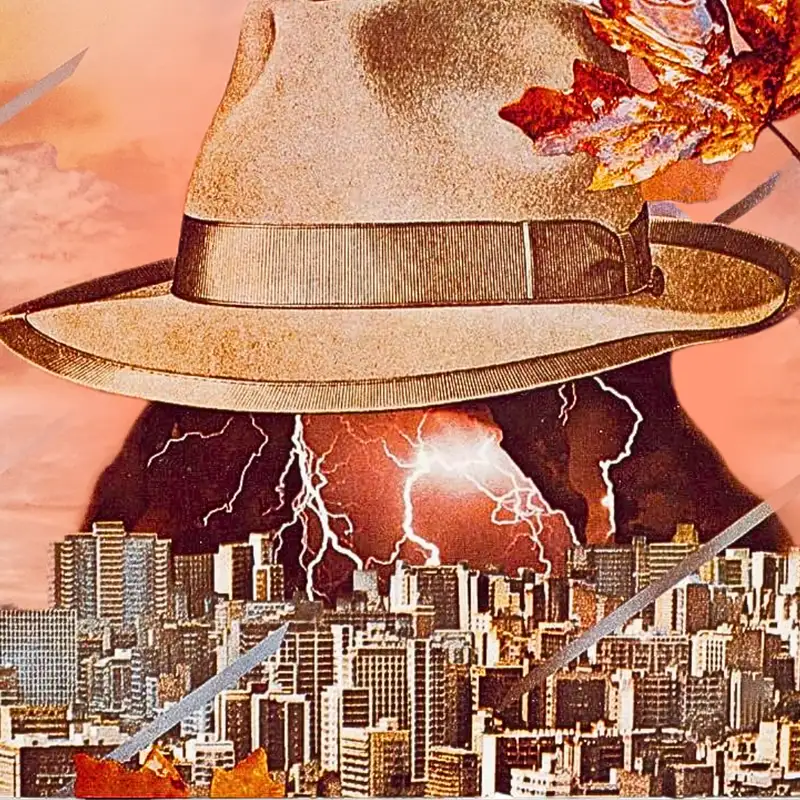
You wear your hat.
My hat. Exactly.
Yeah, I don't know if I'd go as low as four, but it's fine. Seven, six, it's fine.
Oh, wait, which is it, Peter?
Well, it's not four. Four is like, we've never gone as low as four, have we, for
accoutrements?
I've never. It's okay. It's a hat that's got a
thunderstorm coming out of it, and there's-
Oh, well, it is just like my hat.
It is just like your hat.
Oh, I forgot that.
Yeah, and it's over a city. I don't know.
Yeah. It's one of those ones.
Oh, yeah, we talked about it. This is
one of the top five selling jazz records of all time.
It is.
I believe it's "Kind of Blue" is first, actually.
Mm-hmm.
Now, this is not counting like Norah Jones and
Kenny G.
Sure.
Shout out both of them.
Sure.
But "Kind of Blue," let me see if I get this right.
What would number two be?
"Headhunters"?
I think so. Either two or three. So yeah.
So top five is "Headhunters," "Time Out," which I believe is number five.
Oh, interesting.
But this is number four. So there's one else that we're not thinking of.
As far as over a million, over a million.
You'd think there'd be more than that, but there's not a lot of that.
But yeah, "Headhunters" for sure.
Is this Weather Report's best album? That's our new category.
No.
No.
No. It's very good, though. But it's no. It's clearly not.
Yeah. I think "Mysterious Traveller" is probably.
That's my favorite album.
Which we should do again.
Yeah.
Snobometer.
Snobometer. This is two,
right?
No. This is five.
No way. Okay, the Snobometer is broken.
I know other people have said that, but it's, "Hello, Snobometer."
How is it a two? I know "Birdland" was a popular song.
What?
Okay, I hear what you're saying.
Because we've gotten... Here's the thing, Peter. The show has changed.
We're talking about- ... "Bad" and "Thriller" in the mix.
You know what I mean? This compared to "Thriller," this is an eight compared to
"Thriller."
But that's not what we're comparing it to.
Do I have to remind you about the Snobometer? Number one, Aunt Linda.
Number 10, Ethan Iverson.
Right.
At number five, Allen Iverson. Okay? So there you go.
Okay. I'll concede. What do you have up next?
I have Herbie Hancock's 1976 masterpiece, "Secrets."
That was a year before.
I know, but we kept talking about it, and I would love to hear it now.
Well, I like doing stuff from this year.
I'm going to go Herbie Hancock, "VSOP," the original one.
Okay, good one.
That's a great record.
Love it.
I love that record. Double album.
But Asia came out the same year, too.
Asia.
Ever heard of it?
Should we do an Asia show? We should do a re-Asia.
"Nightwalker."
"Nightfly"?
"Nightwalker."
We should do the "Nightfly"? You heard it here, folks.
Shh.
Peter wants to do the "Nightfly."
Don't say it.
Peter wants to do the "Nightfly."
This is awesome, man. Do we have any other housekeeping to do?
That's all we got.
Okay. Well, until next time.
You'll hear it.