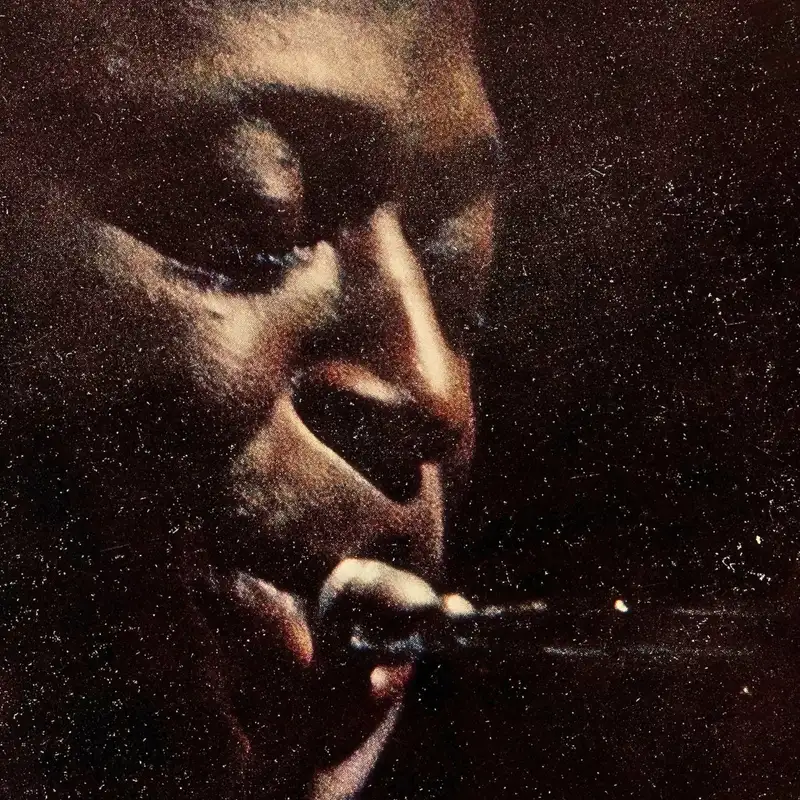
I'm Adam Maness.
And I'm Peter Martin.
And you're listening to the "You'll Hear It" podcast.
Live. Exploring music.
Exploring music.
Brought to you today by Open Studio.
Go to openstudiojazz.com for all your
jazz lesson needs, and brought to you live at the beautiful Sheldon Concert Hall in
lovely St. Louis, Missouri. Give it up, everybody, for the Sheldon.
Yes.
Well, Adam-
Yo
... it's a big day. It's a big live.
You know, it's-
It's a big night, actually
... I was going to say. It's not a big day.
This is a big evening, Peter, because we rarely do a live
show. We've never done a live show in our hometown of St.
Louis, Missouri, where we've recorded all 1,200 of these episodes about a
quarter mile down Washington, just east of here, a couple blocks away
in our beautiful studios. But we play-
You and I always by the light of day. We're like the anti-vampires.
I know.
But tonight, we're going in there.
I really might fall asleep by the end of this.
I mean, we're coming up on my bedtime already.
But not only is it a big night for us to be live, but it's a big night
because this is, I don't know if you know this, but as this is being broadcast,
it's the night before Miles Davis' 100th
birthday.
Yes. The centennial.
That's right. That's amazing. Miles Davis, everybody.
Miles Davis, of course, from just a few miles, was born in Alton,
Illinois, which is, what, four or five miles from where we sit, and
grew up in East St. Louis, and is most closely associated with East St. Louis.
Went to Lincoln High School there, continuing on the
tradition of the amazing St. Louis trumpet players,
and really established it in a lot of ways.
I mean, of course, we talk about Clark Terry.
We talk about many before and after, but I mean, there's nobody
really in the jazz trumpet world bigger, certainly not from St.
Louis, and I would say just period.
Period.
I mean, Louis Armstrong. Like, that's the godfather, right?
But then next, I mean, Clifford Brown, Fats Navarro, and many.
Well-
But I mean, Miles Davis, the cultural, the musical, the brass
impact, unparalleled.
But not just as a trumpeter, though, Peter.
Miles was one of the great artists of the 20th century of any
medium. Not just music, not just jazz, but art in general.
One of the most influential, groundbreaking
artists who literally invented about four or five
genres-
Mm
... by just being unsettled. Just always
shifting, never being satisfied with where he was.
We're going to be listening today to perhaps not just his most famous album, but
perhaps the most famous album in the entire jazz canon, his
1959 masterpiece, Kind of Blue. And this album, I think, marks
the start of Miles saying,
"I'm not going to do what we've been doing.
I'm going to go my own way," and pulling in influences and
people that other
of the artists, of his contemporaries, weren't doing.
Right.
And just having the courage and the confidence to be himself and
not rest on his laurels, not always just go back to what got him
there.
Yep.
But realizing that when you're making great art, you have to reach deep all the
time. And this album, I think, is the first time Miles really
reaches down deep and he makes something that is a
standalone single achievement, and it is one of my
favorite albums. I don't know about you, but I could listen to this
once a month for the rest of my life and be happy.
I totally agree. It's an amazing record.
It's kind of a rare intersection
between
huge sales, millions of copies, platinum however many times
over,
great commercial appeal, the intersection of great commercial appeal, and
extreme artistic virtuosity, on a number of different
levels that we're going to explore.
And you did a great job of kind of outlining the pivot point that
Miles, one of his several beautiful pivot points of his career that he was
at in 1959 when this record came out,
as an artist, as a leader, as a writer, as a trumpeter, but
also as the beginning of this
amazing network effect that he had, the
tentacles of which go all the way to today.
So on this record, along with Miles Davis, are a couple of slouches by the name of
John Coltrane.
Yeah.
Ever heard of him?
I've heard of him. I've heard of him.
Cannonball Adderley.
Yeah.
Bill Evans.
Yep.
Wynton Kelly.
Yep.
Paul Chambers.
Come on now.
Jimmy Cobb.
Yeah.
These are titans of the music, some of which already were
beginning to, some of which weren't as known, but they would become more known
later. But I think Miles' ability to put
the right people together in the right room or the right recording
studio with the right music was one of his most
amazing... And I mean, you hear that from musicians.
You talk about Herbie Hancock, Chick Corea, countless others
that came up. Joey DeFrancesco-
Yeah
... who played with him when he was 16 years old.
That's right.
Would talk about his taste-making abilities as a band leader.
The greatest.
Yeah. He's the greatest.
The greatest taste maker.
Yeah.
Okay.
So what we're going to experience here on Kind of Blue is Miles Davis, the
trumpeter, the conductor, the
leader, the mid-level manager, maybe the micromanager.
We're going to delve into a little bit of-
Definitely the micromanager. Also, the composer.
The composer.
These are all original songs.
The co-composer.
The co-composer-
As well
... as we'll get into.
Yeah.
Well, let's back it up, Peter. If we're going to say that Miles is reaching deep
and he's going for something new, let's talk about where he was coming from.
So-
Yeah
... when Miles is a teenager, he moves to New York, and he starts to play with a
saxophonist who's originally from Kansas City, Missouri, named Charlie Parker, and
that music is called bebop. And that music is very ornate.
It has a lot of fast-moving chord progressions that
really direct the improviser, "Go here now. Here's where we're going.
This is how it is." There's very structured, almost a baroque-type
sensibility. It sounds like
this. Charlie
Parker, of course.
Now, here's a young Miles.
So you can hear-
That's Miles. It's Miles, but it's like-
It's still Miles.
It's Dizzy Junior, right?
But you can hear in the form of this, that you have these
Yeah.
Chord, chord, chord, chord, chord, chord. Right?
And all of the chord, too, are these functional chords.
It's not quite paint by numbers, but it's like you do this
on this, and that goes to here.
Yeah.
And it's a very logical structure system.
It's actually great for learning how to improvise because you
have these boundaries, these rules in place that help you learn how to do
it.
Yeah.
And Miles continues this through the '50s.
This is "If I Were a Bell" from "Relaxin' with the Miles Davis Quintet." We just
covered this on an episode a couple of weeks ago.
Yeah.
And this is a Frank Loesser standard, Great American
Songbook standard, but that kind of structure of those chord changes is still
there.
I'll play it and tell you what it is later.
Miles.
Oh, great.
This is the beginning of the Harmon-
Chord,
chord
... period too. Chord.
So you can still hear all of those dominant chords, those diminished chords-
Yeah
... leading the soloist where they're going to go.
Now, just a year after that-
Sorry, let me just ask, what would you call...
That's not straight bebop in that style.
No, we're kind of past the straight bebop stuff.
Right.
That's more like-
I know you love names of genres, so what would you call that?
Genres are one of my favorite things, Peter,
because you don't have to think.
No. Right.
I notoriously hate genres because I don't think artists think like that-
Yeah
... as they're making the stuff. People put the labels on it later.
It's great for marketers and for record stores and things, but in general, I don't
think Miles is thinking about, "I'm going to make a straight-ahead jazz album."
Yeah.
He's just making his own music.
No, he said it. "We'll play it and tell you about it later."
Yeah, exactly. So a year later, Miles
has incredible broad range of taste in art.
He starts listening to a lot of Ravel, a lot of Debussy, a lot
of Rachmaninoff and Stravinsky.
Yeah. And a lot of Bill Evans.
And a lot of Bill Evans, who's a piano player who's not yet in his band,
but when he makes this album, "Milestones" in 1958, the title track sounds
like this.
Now,
it still sounds like jazz, right? But that's all happening
over just one chord.
Yeah.
It's just one chord that he's moving around.
There's no like
we're moving-
No
... all these places. It makes it a little bit more challenging for the
improviser because there's not as much of a structure.
Yeah.
And also, no jazz musicians had really gone, especially as famous as Miles,
had really gone down that road up to this point.
Yeah.
Another person who was really into this was a pianist named Bill Evans,
and Miles really loved the way Bill Evans
brought Debussy, Ravel into his own
playing. And when Miles and
Bill got together, they talked a lot about that kind of stuff.
They listened to a lot of music together, and Bill joined his
band. They started making music that had more of that impressionistic
sound into the band, and then Bill left.
Yeah.
Bill was getting famous, and Bill left.
But before Bill left, Miles had booked the session for "Kind of Blue," and even
though Miles had already hired Wynton Kelly to play piano, he brought Bill back
to make one more album, the third and final album they would make together,
and that is "Kind of Blue." And that starts like this.
Now.
Hey.
Hi.
Now we're going
up.
C triad over that D minor.
And then right to the D minor blues.
Ah.
Hear me call
it.
All those little clusters. Those little
W. C. Clusters, Bill Evans.
Bill Evans and Miles, the way they...
John Coltrane.
Back down.
Reaching.
Oh, right here.
Oh.
Yeah.
That's the rare Aeolian.
Right here.
Just two choruses.
Cannonball.
Such beautiful language, man.
What's amazing is how all three of the soloists are approaching
this completely different.
Yeah.
They're playing over two chords each.
There's just D minor for 16,
E flat minor for eight, D minor for eight.
Yeah.
But the variance between the three of them is amazing.
And it's
one take.
This is the first take and-
This is the first take
... the only take.
No edits.
Nothing.
They just laid down master solo after-
They'd never seen this music before either.
And they'd never seen the music before.
Yeah.
That's all right.
In the blues.
Crescendo.
Good ear, Pete.
Thanks.
I've heard this record before.
And now we're going to
close out with-
Whoo.
An improvised-
Yeah
... revel.
And this is just
two triads, G triad and F triad.
With three horns, alto, trumpet, alto, sax.
Tenor sax.
Dude.
Second inversion.
And a nice piano solo along with it.
Up a half step, same thing.
Oh.
All those clusters to make these melodies.
What sounds like this in 1959?
Nothing. That's why it kind of hit people like, "Whoa!"
Yeah.
You know?
And then this is a little bit of
a meandering section where-
How dare you?
No. I think, and that ended up being some extra
bars, and I love that they didn't redo it.
Yeah.
Because Paul Chambers wasn't sure, and then Miles was like, "Exactly."
And then he'd swing in and then went right into the line
and just counted it as the first eight bars. You know?
Oh, and leaving off those last
horns on the last E flat, that's genius, right?
Oh, and I love the way this ends. Check this out.
Oh, it's faded out.
Give it up for six geniuses, everybody.
Yes. Okay.
Just doing.
Hearing an album is one thing, but trying to play this stuff is a whole
other thing. But that's exactly what we do and teach at Open Studio.
World-class musicians, real instructors, all in one place.
Go to openstudiojazz.com. That's
openstudiojazz.com. Start your free trial today.
Back to the show.
Okay, I just realized we can do a whole episode just on this
one tune, and we've got, oh, this album has five songs,
but it's so epic to me. I think it's 38 minutes long, but this
record always feels like, well, especially as you're going to hear it on this
episode, it's going to feel like a lot longer than 38 minutes.
But to me, it has such a dramatic
arc to the whole album.
And look, the way we're doing it here is not
necessarily the recommended way.
Hey, don't sell us short.
No, I'm not.
Come on, man.
This is a good-- This is like you're in the kitchen, you're learning how to stuff,
but to sit down and listen to this album from beginning to end, maybe turning it
over on the LP.
So-
Here's a-
It's got such depth in terms of the overall
narrative, dramatic flair to it, but also within each of the
compositions. So like, to me, they're going between the different solos and then
coming back, and the stuff like Jimmy Cobb at the drums is the one who just
holds it together. I mean, PC for sure, but he's not always walking.
And the melody's in the bass.
Yeah.
Like this is not really
There's really not much melody.
No. In the bass.
I mean, there's a melody, but I mean, if we go back to like
Yeah.
"Moose the Mooch."
Yeah.
Where you have this like flowy-
Get me out of that. Get me out of that.
So here's a couple of things. So if you don't have Miles Davis' autobiography, you
are missing out in your life because this thing is salacious.
He got it yesterday, by the way. Don't let him make you feel bad.
I didn't get it yesterday. These pages are a deep tan because they've been
in and out of the sun for
20 years.
Thrift shop.
So Miles writes, "I didn't write out the music for 'Kind of Blue,' but brought in
sketches for what everybody was supposed to play because I wanted a lot of
spontaneity in the playing, just like I thought was in the interplay between those
dancers and those drummers and that finger piano with the Ballet
Africain. Everything was a first take, which indicates the level everyone
was playing on. It was beautiful. When I tell people that I missed what I was
trying to do on 'Kind of Blue,' that I miss getting the exact sound
of the African finger piano up in that sound, they just look at me like I'm
crazy. Everyone said that record was a masterpiece, and I loved it, too,
and so they just feel I'm trying to put them on, but that's what I was
trying to do on most of that album, particular on 'So What.' I
just missed." Can you believe that?
Yeah, totally. I totally can because I've read the book.
But also-
Come on.
No, because this is not a perfect album.
What?
No, it is not a perfect album.
That's literally the name of the playlist that I came up with is Perfect Album.
No, because it's a great
album, maybe the greatest. But by perfect, I mean like the fact that
Paul Chambers played eight bars because either Miles didn't cue him or
they weren't sure. It came out, I mean, I couldn't imagine-
Can we define terms a little bit? What about, what's perfect?
There's mistakes on this album.
Okay.
But you know what I mean? And that's part of the beauty, the way that they played
them. Let me just read you something from the liner notes, Mr.
I've Got Something to Read.
Are we having a read?
I got a little thing called a printer, buddy.
Are we having a research-off right now?
Yeah. No, so this is the liner notes that was actually
written on the original album. This has unfortunately been redone in a
bunch of different times, but originally, Miles
had Bill Evans write the liner notes. And this is picking it
up part of the way through. "Miles conceived these settings only hours
before the recording date and arrived with sketches which
indicated to the group what was to be played.
Therefore, you will hear something close to pure spontaneity in these
performances. The group had never played these pieces prior to the
recordings, and I think without exception, the first complete
performance of each was a take. Although it is not
uncommon for a jazz musician to be expected to improvise on new material
at a recording session, the character of these pieces represented
a particular challenge."
And then he describes very briefly each of the compositions.
I'll just do the first one because that's what we've heard.
Briefly, the formal character of the five settings are, "So What," what we just
heard, a simple figure based on 16 measures of one scale,
eight of another, and eight more of the first, following a piano and bass
introduction in free rhythmic style.
And that's what really sets the tunes like So What and Flamenco
Sketches apart is because if you remember the bebop with all that structure and do
this now-
Yeah
... this is completely open, which you might be like, "Oh, well, that must be
easier." But the thing is, is when there's no restrictions, when there's no
boundaries, when you can do literally anything, it becomes very
hard to make a cohesive statement.
It would be like if I stripped the rules of grammar away
and you had to do freeform poetry, we could all kind of do it,
but would it be good?
No, probably not.
No. Let's try.
Not at first. No, but
great poets spend a lot of time with rules and with structure and learning how
the-
Yeah. But this speaks to Miles's-
And then you can be free, yeah.
Right, and this speaks to Miles's acumen as a leader and a
visionary that he could bring in these sketches-
For sure
...
that they never-
Well, and the band.
Yes.
The band can take it.
Right. But also, they could bring their personality, their
improvisational skills, to a situation where-- Look,
this was kind of the norm at the time, actually, to do single takes.
You could certainly do more, but tape was expensive back then.
And
we're going to maybe listen to a little bit of the legacy stuff where they're in
the studio. Once the producer says the tape is running, it's like,
"Okay, come on." It's not rushed, but there's always a little bit of tension
because Miles will be like, "Hold on a second." The intention,
it's not like today where it's just megabytes that are free, which
has really changed the music. But-
Before we move on to Freddie Freeloader, Peter, I want to play a couple clips.
The first is Miles talking about this relationship with Bill and their love
of Debussy and French impressionistic music.
Bill
Evans
is one of my all-time favorite pianists. Bill Evans.
His approach to the piano just
brought that piece out
because he used to bring me
pieces by Ravel.
The Concerto for Left Hand and Orchestra.
You hear that. What's the piece? Ravel's friend went bombing
and came back. He was a pianist, but he lost his right hand, so he wrote
a piece for left hand and orchestra for piano.
And Bill used to tell me about different modes, which I
already knew. And we just agreed on something, and that's the
way the album went. We were just leaning toward
Ravel
and
playing a sound with only the white keys,
Dorian minor modes, and
it just came out. It was just a thing to do.
You know what I mean?
It's amazing to hear. Now-
So this is that sound when he's talking about all white keys.
All white keys.
And then it goes up in that first tune up a half step.
Same relationship, very open.
Obviously, it's like what did they do with it, though, right?
So, I started to do some research on some of the classical elements of this, and I
realized that I am 100% ignorant of all of that.
However, one of the advantages, Peter, of us being jazz piano
YouTubers-
Yeah
... is that we've met a lot of other-
It's called influencers, by the way.
Okay, go ahead.
But go ahead.
We've met a lot of other piano influencers,
and one of our favorites is a guy in San Antonio, Texas, named Daniel
Anastasio.
Yeah.
He's a great classical pianist. He's got a great YouTube channel and a
great social media presence. Follow him.
He has loads of interesting stories about classical music and the
structure of some of that music. And I was texting Daniel last
night as I was working out at the gym.
I was like, "Hey, buddy, we're doing this podcast. What about Kind of Blue?
What are some comps to that? Where were they getting these sounds?" And he sent
me back, I swear to God, five voice memos
right away. And they were so good, because he's a really good
YouTuber, that I just texted back.
I was like, "Can I just play this
at the show?" And he was like, "Sure." So, I'm going to play the first one.
Okay.
And Daniel's going to explain some of these textures and give some examples
of things that Bill and Miles might've been listening to.
Hey, man. Yeah, I was thinking, in the Debussy preludes, how Debussy is
using harmony is in these
modal and pentatonic shapes. So he's
often, like in The Sunken Cathedral, using parallel
octaves and fifths.
And it's not growing to anything. It's not resolving
anywhere. It doesn't have any tension.
It is just a color or an environment
or a shape.
And
it doesn't
have the same kind of tension that the music from the late romantic period does.
It sounds like the intro to So What.
It's about this-
Yeah. Totally
... coloristic exploration. So, Girl with the Flaxen Hair,
for example.
Which does have a little drama in it because it has this cadence.
Oh, f****d that up. But later on, listen to these voicings.
Yeah.
Parallel fifths, parallel fourths.
And I feel like you get that in the album, too.
In Kind of Blue. Isn't that great?
So good.
The best piece of advice is always get friends that are smarter than you.
Wow.
That's why you're here.
Yeah.
No, it's so good. And what we're going to hear on the next track, too, which is a
straight-up blues.
Yeah.
Miles is already sort of the master of making these
connections with his artistry, when he's doing the modal stuff
over So What.
And at that one point, he's just like,
so bringing the blues in. He knew how to combine, which
it hadn't not been done before. And in some ways, Louis
Armstrong did this in the late '20s.
We kind of heard some of this, where you're taking some of these,
maybe more concert band, John Philip Sousa kind of influences with the New
Orleans thing, and then the blues, and putting it together with this
improvisational flair that was revolutionary.
Absolutely.
And they literally took the world by storm, and it's right when recordings
and radio was coming out and stuff.
But Miles really sat in that tradition in a way with
this modal stuff and his love of the Ravel and the Debussy and
stuff. And it's just genius the way it's all kind of
the tapestry that it became.
So, this second track is called Freddie Freeloader, and this is the only track that
Wynton Kelly plays on on this album.
Again, Wynton was already hired as-
He was the new pianist that Miles-
... the pianist in this band. But he showed up to the session and Bill
Evans was there, and he was like, "What the..."
And he almost left. He was like, "Oh, I-"
And he almost left.
Because I guess I'm not starting yet.
But here's, again, how smart Miles is as a band manager.
Yeah.
As managing his people and getting the best out of it.
Could you imagine this song-
No, of course not
... with Bill Evans instead of Wynton Kelly?
Yeah.
It would be so different. I'm sure it'd be great, but this
is a lot of people's favorite track.
Could you imagine us listening to this track without me playing along with Wynton
Kelly?
Please.
Okay, I'm going to try.
Try to restrain yourself.
I'm going to try.
12-bar blues. We're going back to the top. Repeat.
Yeah.
Right?
All that stuff Wynton's doing there.
Yeah.
Yeah.
It's just like counterpoint to the main, very simple melody.
Yeah.
Man, this is a simple record.
Now check out Jimmy Cobb's going to make a snare drum hit here.
Oh, hi-hat, sorry.
Yeah.
Yeah. We'll fix it in the edit.
Careful.
There's some bebop for you, right?
Sure.
Little flashes of bebop on this album.
Hell, there's the snare.
Oh.
It's so good, dude. It's so swinging. It's so amazing.
It's like a whole generation of piano players that owes Wynton Kelly-
Yeah.
... a lot of money.
Yeah, this is probably the most transcribed, learned
solo of everybody from Herbie Hancock, early '60s to
today.
No, say that again. That's-
Here's Miles.
This is-
Ooh.
Bass.
This line here.
Okay, the solos are perfect on this record.
That much I'll give you.
We're going to arm wrestle over the perfect later.
No, they are, which is rare.
I'm coming at you.
That's rare, though.
Defend yourself.
Everybody's solo, there's nothing that you'd want to change.
Ooh.
There's a lydian dominant chord there.
This is some of the most complicated
snare playing that Jimmy Cobb plays on the whole record, which is, his
restraint
is impeccable.
A lot of drummers could've screwed this whole record up.
This.
Just strolling through it.
Yeah. Take our
time. We're
about to have one of the greatest handoffs-
Oh, yeah
... in jazz history between soloists.
Right. Yeah.
When John Coltrane comes in.
I think it's the end of this chorus. Is that right?
Yeah.
Here's
Abs the Ab.
He just comes in on fire. He's already played more notes than Miles plays on the
whole record.
Like, he has.
Woo.
Man, they're listening. Oh.
Oh.
It's so good, dude.
Man, Trane's blues playing is effortless.
Like, he throws that in like he's just
tossing some tissue out of his pocket, man.
Oh, true. It's true.
And that contrast between Miles is this sophisticated-
Yeah
... sounding, he drives a Ferrari.
Trane just comes in like a train on fire.
Yeah.
Just like...
The Chevy Silverado up in there.
I mean, just like-
I don't know.
What?
I don't know.
Is that a minivan? I can't remember.
But he just comes in and reminds you of everything raw about being a human being-
Yeah
... after you develop this sense of, like, "Well, aren't we fancy?"
With Miles.
Yeah.
You know what I mean? It's just like-
And the connective tissue.
Jimmy Cobb.
I think-
This is Cannonball Adderley
... Cannonball Adderley.
Woo.
Cross-stick.
I mean, Jacksonville, Florida.
Does Cannonball Adderley have the most singable solos on this whole album?
Yeah. So lyrical.
For sure.
Miles is pretty good, too.
Trane did, too.
Oh, it's also swinging from beginning to end. There's that.
All
right.
Okay, this is incredible. We-
It's going to be a real challenge to get this into a tight 90, my man.
This is going to be a challenge because I want to go back and listen to stuff, but
we don't-
Well, hold on. Before we leave Freddie Freeloader, though-
Yeah
... I do want to play just what I think is one of the most amazing moments, and
it's Wynton Kelly's solo. Just listen to a little bit without anybody else.
Oh, yeah.
And notice how he's like a drummer.
You can feel the groove so clearly.
Everything's so precise.
Oh.
In the pocket.
The left hand, so simple.
He lays those back a little bit. Man, so beautiful.
Okay, next up-
Man, so much just, like, two notes in the left hand.
Oh, yeah.
Ah.
Yeah.
Why don't you do two notes in the left hand ever?
I do sometimes.
You do four, buddy. Let's be honest.
Oh.
I'm just kidding. I'm just kidding. I'm just kidding. S**t.
Next up is, this has got to be in the argument for one of the greatest
jazz standards of all time, right? This is Blue in Green.
What comes next? Oh, Blue in Green. Yeah.
And
a long time-
A little controversy on this composition
... controversial for a while. It was credited to Miles Davis.
Yeah.
I think in 2002, Miles' estate settled and-
Yeah, it was post-Miles of-
Post-Miles passing
... being alive
... that Bill Evans got credit for writing it.
Yeah.
Whoever wrote it, it's one of the great ballads in jazz history.
This is Blue in Green.
He's painting.
Yeah.
Unbelievable.
Paul Chambers, the unsung
hero of this album at the bass. 23 years old when this record was made.
Nice. Yeah.
Yeah.
PC.
Yeah. Just amazing.
Jimmy Cobb was-
Ah, train.
Yeah.
Yeah. Good, glad you turned that off.
Here's-
Give it up everybody, come on.
No, it's, yeah.
Here's
Bill's perspective on making Kind of Blue.
Of course, Kind of Blue was the
most popular of the-
Yeah
... three albums. But how was,
I have heard you made Kind of Blue in one day in studio.
Yes, that's right. Mm-hmm. Very quickly.
Was that a special experience for you?
Well, yeah, of course, anytime you play with musicians like that, it's a
special experience. But I think we all just
do our professional best. Mm.
And perhaps that day, the chemistry
was maybe a little better than usual or something. Yeah.
Because that you can't predict. What you can do is to be a
good professional, always do a good job. Mm.
And sometimes things come together so that it's
even a little better than professional.
Do you have contact with Miles Davis these days? Some. Yeah.
I
saw him,
well, now it must be a year ago. Yeah.
Because I had heard these rumors. There were so many rumors around about Miles,
and somebody told me he was very sick. Yeah. And they thought he was going to die.
This was in the '70s when Miles-
Yeah, late '70s
... was kind of out of playing, yeah.
That, I love his, that's like the ultimate understatement.
"Yeah, I think it was a little bit better than professional."
Yeah.
Yeah.
Yeah, Bill.
That's what I strive for in this show, bud.
Yeah.
Yeah, just a little bit better than-
Slightly better than professional.
No, it's actually stunning. So let's talk just a little bit before we move on
about the sound of this record.
Oh, please.
Columbia Records,
Fred Plaut-
That's right
... was the engineer.
That's right.
Irving Town, was it Irving Townsend was the producer?
Irving Townsend, yeah.
Yeah. And Teo was already kind of involved, but more as an apprentice, of course,
would become-
Teo Macero
... Teo Macero would become Miles' producer through the great Columbia years.
But even what we heard on that -
On Milestones.
Yeah, that was already on Columbia.
Yep.
That's already that new sound, and I think as musicians, we don't
always give enough credit. Like, the sound of a record like this, had it not been
recorded as it was, and so brilliantly.
Although, talk about imperfections again, the piano's a little bit out of tune.
We heard that.
The piano goes out, especially when we're going to listen to-
Yeah
... all the blues. It's pretty out, and you're just like-
Which is surprising because Columbia was putting a lot of money into, like-
Yeah
... when Miles left Prestige and Blue Note.
Junior pianos.
Yeah, Impulse.
Yeah.
Columbia was Frank Sinatra, Dave Brubeck, all these big
artists.
Yeah.
And Miles was like, that was a big thing.
But the way that they recorded this was a little bit unusual.
It had been done before, but it hadn't been done a lot.
Normally, on a jazz session, you
set up just like on a gig in a jazz club. You're right next to each other.
And they were in what they used to call the church.
It was an old church on 30th Street in, I believe East 30th Street.
It's long gone now. The Columbia recording studios in New York
City, it was an old chapel church, and they had a lot of room.
And they separated the instruments, not in different rooms, multi-track,
but enough where they could isolate and get that particular sound on each of
the instrument, which is really breathtaking.
We take it for granted, and we're like, Miles coming in with that harmon mute.
Yeah. We got a little clip here of Jimmy Cobb actually talking about that.
Yeah.
The drummer.
The drummer.
His drums were in a place, like
baffled-
Yeah
... with some stuff around it, so he wouldn't feed into the
rest of the stuff.
Yeah.
Then the piano was in some place with a cloth or something over, so it-
Cloth over it
... the rest of the band wouldn't feed into that.
So it was all separated from each
other.
Yeah.
But so to get the right sound that the engineers want.
He's just coming, that's how simple it is.
So instead of being real tightly packed together-
Yeah
... with the mics all close together, they were in different parts of the room,
separated from each other-
Yeah
... more isolated, which is now very much the norm-
Yeah. Oh, yeah
... whenever you do anything.
But I think that it had an effect on the way they play, because you see the
pictures. There's no video footage of it.
There is of them playing "So What" from another session from that NBC thing.
But you see pictures of them, and Miles is at the piano, and Bill Evans, these
classic, beautiful pictures. We'll have them on the show.
But it's like they're very much together, kind of learning
this new music. Miles' just little sketches and stuff.
And then they go to record one take. Now, there were some false starts.
We're going to hear-
Yeah
... a few of those.
They're shooting a lot of darts. There's a lot of-
Yeah
... cigarette smoke.
Yeah, but there's also, they're kind of far away, so they have to listen.
So I've always thought that this was... I actually asked Jimmy Cobb.
So Jimmy Cobb, the drummer that we just heard, was by decades the
longest living memberIn fact, he only passed away within the last
10 years. But he was the one member that was
still around, and his memory of that session, although I'm sure he was sick of
people going, "Tell me about 'Kind of Blue.'" He had this long career, thousands of
records.
Yeah.
But,
I think that that really had an effect, that they were a little bit,
they had to listen. They were a little bit out of their element.
So they had to maybe play a little bit more simple.
And,
I don't know that it's just one of those things that happened, but that
also enabled, as he said, the engineers to get this incredible sound on each of the
instruments, which is really unmatched in anything Miles has done, I think.
Yeah. Next up is, "All Blues."
Ooh.
A blues in G, in three-four.
Yeah.
Second blues of the album.
Of course.
But, they're both blues, but you know what the thing is, man?
Miles rubbed the edges off of these.
I know.
Harmonically. You know what I mean?
Yeah.
Even this has this suspended sound-
Yeah
... where it's like, it's not just like-
It's a modal blues.
It's just, it's not that.
Yeah.
It's-
Yeah
... sort of like,
pastel nature to it almost.
Yeah. It's like a Long Island blues.
No? I don't know.
Is it?
I haven't been there in a while.
Is it?
And then those chords.
Yeah.
Very unusual.
And Jimmy Cobb is using brushes on the snare drum, so it's that
texture. That micing of this is stunning.
It sounds so amazing.
Yeah.
It sounds so amazing.
This is pre-internet, by the way, just to let you guys know how long ago this was.
1959.
Pre-Adam.
Pre-Peter.
Yeah. Well, yeah.
Another melodic bass line.
Yeah.
While the horns are
...
On the start of Miles' solo.
Oh, when Jimmy Cobb goes to the sticks?
Just take a minute. Just take a second.
Yeah.
We got to switch.
Little bam.
Jimmy Cobb goes to the sticks.
He's getting into those.
Yeah. Oh.
Woo.
Excellent.
Oh.
It's excellent.
Oh.
Talk about not missing a beat. Damn.
Also, Miles took the harmon mute out.
Yeah.
Oh.
There's just four chords in this whole...
Man, Miles knew when to reach.
Falls off that so beautifully.
Woo.
Man, to be so far in your solo
and still leaving all this space.
Yeah.
I bet Trane's not going to do that.
But that's why it works so well. That's why Miles and Trane are such an
unstoppable combination.
Oh, okay.
Because they,
just when you're mesmerized here by Miles'
charisma-
Yeah
... and sophistication,
Trane comes in and punches you in the nose.
Yeah.
And
Bill Evans is using a very
limited number of chords.
Yeah.
Of voicing.
That's right.
Even between this and "So What," a lot of
overlap.
He's comping with colors instead of with melodies.
Yeah.
He's-
And it's very much like in the, and Jimmy Cobb, they're playing
as a band. Nobody's like, "I'm going to do all this." It's just like every little
part-
Yeah
... they're listening at a level.
Yeah.
Cannonball.
Oh.
Come on, man.
Yeah.
And he's dancing back and forth from that
straight blues and more modal blues, right?
Yeah.
Ooh.
Oh.
Cool. Let's show them just a little bit, like we talked about, there's just four
chords on this. There's this chord, the G seven, but it's
got, like you alluded to this, like-
Yeah
... it's got that little bit of suspended thing that Miles really articulates.
Yeah, so instead of like a-
And then Bill Evans is supporting it
... instead of like a-
Yeah
... like a blue, quote
unquoteYeah.
Instead of the cartoon version of that, it's got this like-
Yeah
... it's like a charcoal drawing almost.
But what fits over it-
It blends into the paper.
What fits over is...
It's that same sound, right?
Mashup time.
Come on, mashup. Hello. Miles Davis 100.
One thing-
Miles Davis 100.
Woo-hoo.
One thing I want to point out, Peter, is-
But that's like a thematic thing, because we're 20 minutes-
The whole thing. Yeah
... later in the record.
Well, and the same thing with-
And they're calling back to this. Yeah.
All of those chords. Even the first chord of Blue in Green
is this beautiful-
That's another sus.
It's a G minor 13 chord. Ever heard of it?
Actually, it's a G minor 6-7.
Stop.
It is.
Would you stop with that s**t, please?
It is.
Don't ever.
That's the six and that's the seven. Hey.
I'm about to leave. All right.
But it's this chord, which
it's like
Blue in Green. It has this like-
It's got a nostalgic, forlorn, kind of
pensive-
And then franch?
Yeah.
Yeah. For sure.
Je ne sais quoi.
Adam.
Okay.
But just real quick again. So that's the first chord, and then the second chord,
C7, but it's-
But it's not
It's not.
Yeah.
Well, it's the same as the G, but up a fourth, right?
With that same sussy.
The same sussy kind of thing, yeah.
And then these two,
very obtuse sharp nines.
Right?
Yeah.
And then back to the same.
Oh, yeah.
There's four chords, and it's just like they created this world.
Which, by the way, this is not-
And if you don't know chords, you're probably like, "Who cares?" And I get it.
But it's like if you think about a painter that just, four colors,
but creates this incredible world with it.
Yeah.
But a group of them doing it together.
And this-
Funny
... that move that happens on the five?
Yeah.
That's not like a standard move.
No.
That's like the Miles move, you know?
Yeah.
One thing I want to highlight is just how long Bill Evans just
trills.
Yeah.
I took all the horns out in the beginning. He's just trilling forever.
Yeah, yeah.
Listen to this.
That's discipline right there.
Yeah, I'd be like...
Oh, I know.
I know. I know what you'd be doing.
You could put on that.
Noodles over here.
He's still trilling, man.
I know.
He's still going.
That's the gig, dude. Come on, man.
By the way, that's not like da-da-da-da. Those are in time.
Yeah.
Yeah, it's just four notes.
He's still trilling.
Right.
He's still trilling.
He got carpal tunnel from all this trilling.
Straight up chill is trilling.
Still trilling.
Yeah.
We're 40 seconds in.
Yeah.
Not trilling. Okay.
Yeah. Nice. Thank you.
The last track on the album is one of the most beautiful
pieces of music ever recorded.
Mm.
It's called Flamenco Sketches, and it sounds a lot like this.
This is not Flamenco Sketches.
No. Wow.
This is Peace Piece by Bill Evans, which came out a year earlier on Everybody
Digs Bill Evans.
Yeah. Riverside Records.
And Miles took that little intro, made this.
Sounds similar.
Sounds similar.
It's also the same pianist, so there's that.
There's no melody to this song, right?
This is-
No.
There's no melody.
It's just a sketch.
Five chords, essentially.
Five chords.
It's a sketch.
Mm.
See? Imperfection there.
Small, but beautiful.
And this is the pivot chord.
Little Sketches of Spain vibe.
This is the most
tension, right?
And the resolution.
Absolutely gorgeous.
He already went back to the C.
Yeah.
Yeah, see?
He's going to go with it. That's the top of the form right there.
John Coltrane.
Oh, he found it. He found it.
That's one of the
greatest... Yeah. Give it up for John Coltrane.
That's one of his most unique
solos,
for sure. There's elements that are almost out of character for Trane, in
a beautiful way. And this Cannonball solo is amazing.
I just wanted to point out that three times on this,
somebody went to the next chord at the "wrong time."
Yeah, that's right.
And what's so exciting about this, this song, it's not played a lot because
it doesn't have a melody. You have to create the melody. That's the whole thing.
It's just five chords.
Yeah. Also, it's really hard to pull it off.
Yeah.
It's very difficult to pull that song off.
Right, without Paul Chambers and Bill Evans.
Yeah. You do a great job of that one.
Yeah.
It's one of my favorite songs to hear you play, Peter. I think you just nail it.
But did you notice that
Paul Chambers went to the C at the wrong place?
Yeah.
But the way that he went to it, he didn't, oh, jump off of it like he
made a mistake. He played the wrong note-
It's part of it, man
... and then went right back.
It's part of it.
And it became... Yeah. And so that's what I meant by it's not a perfect album.
But if they had done another take and said, "Okay, we're going to fix this.
Come on, look at the charts, guys."
That's right.
"You missed it. Eight bars. One, two."
Then what would they have lost from that vibe?
So that's the Miles genius. He's making his biggest budget
record, Columbia Records, of his career.
He
was already famous, even beyond the jazz world.
But-
But he was at the cusp of like-
Just to push back now.
Yeah.
Can we have this conversation now?
Yes.
Doesn't the fact that Miles and this band is
leaving room for that kind of allowing-
Yeah
... for that kind of being with each other and being with everybody's
"mistakes"-
Yeah
... letting it happen, leaving it in the music.
One take, we get what we get because this is about us in this room
right now.
Yeah.
That is perfect, right? That is perfection.
The imperfections of that make it perfect.
Well, yeah. What you just said.
Come on.
The imperfections of it make it perfect.
The imperfections. Absolutely. No, but we
highlight that because it's like in nature.
It's like finding the imperfections that are perfectly executed.
It's just like in this room right now, as we record this show.
We've yet to make a mistake, but when we do-
No
... we're going to leave it in.
It'll be perfectly executed. Should we get to some categories?
Let's get to some categories.
Okay. We always do these on every episode.
If you've been listening, you will know this.
Hold on. Before we get off-
We have one, two, three, four, five, six, seven, eight categories. What?
Before we get off that, I just want to hear a flamenco sketch.
You have a piece of audio that you loaded into this iPad that says, "Flamenco
sketches, floor squeaks." I've just got to know what this is.
Oh, yeah.
The damn thing, man.
This is-
Take two. Sorry
... in the studio.
Wait
a minute.
Miles.
Wait.
Okay.
Hey, when you raise up off this stool, man, you get... Oh, yeah.
You know, your floor squeaks.
You know what I mean? Can you hear me?
Oh, literally.
Yeah.
Keep going.
Let's go.
That's hands on the strings, Paul Chambers.
Take two.
Wow. It sounds like a Stanley Kubrick movie or something.
Yeah.
It's amazing. But that's how loose it was, but it was also because there's another,
these are little outtakes. They weren't complete takes. They were false starts.
Sometimes they would start and the producer would be like, "Hold on.
Go again." Because Miles, you can see it in the pictures, was on this stool, and
he had this really cool scarf or ascot, a
scascot or something.
It was some kind of cool. He was a fashionista.
But he-
Scascot
... he's on this stool, but he's so relaxed and he would, you can hear it
on some of it-
Yeah
... like on flamenco sketches, it creaking.
And so the producer had stopped him at the end and he's like, "Start again,"
because and that's why Miles was like, "Well, you've got a creaky floor here."
And then he said, "Yeah, but the snare is making it." And Miles, on another one, is
like, "Yeah, that's part of the music.
Let's go."
Yeah.
It's just so fun to hear. And this is on the legacy edition, if you want to really
nerd out. They have a few of the
false starts and outtakes and stuff.
Okay. Peter, let's get to some categories. What is your desert island track?
If you could only take one track from this album, which would it be?
Desert or dessert? I'm always confused on that.
Oh, would you stop, okay?
Okay, sorry. Desert island track. I'm going to go All Blues.
All Blues. Great call.
Yeah. But this is the rare album where
it could be any of them, for different reasons, but All Blues has some of the
most incredible solos, although other stuff does too, but I love it.
What do you got?
I'm very basic, so I'm going So What.
Okay.
I think it's one of my all-time favorite tracks ever, honestly.
Great.
As we listen to it tonight, I realize I could listen to it
all the time.
Oh, it's so great.
Yeah.
Yeah.
What about an apex moment? What is your apex moment of this album?
Okay. So there's some really good choices on this album.
Normally, it would be the greatest moment on the
album, the greatest part of a solo.
But this album has so many, I like-This comes in waves, in a way.
It's like I said, it's a short album, but it's epic, right?
So there's a lot of really good choices, and to me, there's no one place
where you're like, "This is the greatest moment of the album." But 'Train Entering'
on Blue in Green, if you play it around 2:20 on that, we can hear just a little
bit of it. I think it's stunning.
Yeah, and then the whole solo, but the way he starts that, his tone, it's
almost no vibrato. His intonation, his sound-
Yeah
... it's so-
Very vulnerable
... touching. Very vulnerable.
Yeah.
Yeah. And it's just got a little bit of vibrato around the edges at times.
It's so direct, you know?
It's a genius.
What do you got for your apex?
I'm going to go with, and this is also my hot take, the
greatest three notes in music history.
Miles' solo on So What.
Doesn't get any better.
He just wants to show off how he can separate the instruments, which he can.
I just think-
It's such a great-
It's such an iconic moment, right?
It's like you hear that, you settle in, you know you're going to
be treated to an incredible experience, and it's just, I mean, what
a
simple way to start that, too.
I know. Damn, why didn't I think of that?
Why didn't I think of that?
But I mean, it's such-
I mean, of course I could do that, but I didn't, you know?
And think about what's happened before that.
Only a couple of minutes, but it's already been kind of epic.
Yeah, but all the rebuttal stuff with PC and Bill Evans.
Yeah. Oh yeah, it's been epic.
And then
and Jimmy Cobb. And then, but that
like now the party's started. But like-
Yeah. It's great
... it's, oh.
Okay. Bespoke playlist-
I want your apex moment.
Bespoke
Sorry.
Bespoke playlist title. Peter, if you were going to make a playlist and this album
was included in that playlist with other albums like it, what would the title of
the playlist be called?
GOATED.
GOATED?
GOATED.
Like greatest of all times.
Yeah.
Okay.
GOATED. It has been GOATED.
Okay.
And so there would be just a very small select. You're talking maybe Innervisions.
Yeah.
Maybe Songs in the Key of Life.
Yeah.
Maybe
Giant Steps.
Of course.
Same year, '59.
Sure.
60-ish.
60.
I mean, just the greatest albums that are just indisputably from whatever
genre.
Yeah. I would call it One of One, because this is
one of those albums, there's nothing else quite like it.
Not in Miles Davis's catalog. What's another Kind of Blue that he made?
He didn't turn around and the next thing he did was just like this.
Well, Miles '58.
He's like, "I'm going to live in this genre." He
pretty soon after this-
Yeah
... formed a new band.
Yeah. That's true.
Started doing new stuff with a new group of musicians.
Formed his second great quintet a couple of years later, and is onto a whole new
sound. And then a couple of years after that, he's onto like, In a Silent Way.
Yeah.
And B*****s Brew and a whole new thing.
And it's like he's never sitting still.
He made this one thing that was-
Yeah
... this sketch of impressionism that he left with
us. And that's it. And that's-
And even the songs that he did keep playing from this-
Yeah
... with Herbie, Ron, Tony, were totally different.
They would do them like 300 beats per minute.
Yeah.
And just like, "I'm going to rip your face off with this" kind of thing.
Yeah. It was almost like, "I'm going to play it for you."
Yeah.
"But it ain't going to be what you...
It ain't Kind of Blue."
But this vibe was never recreated, and not just by Miles, by the way.
What are the other Kind of Blues out there?
Some people are like, "Time Out." That's not really like this, is it?
It's kind of its own thing. It's great-
Yeah
... but it's its own thing. Nothing by Mingus.
Same year.
Same year.
Yeah.
But nothing in this year of those, like Pantheon, The Shape of Jazz to
Come,
Mingus Ah Um, nothing's like that.
All right. Well, don't talk about that too much, because we get two categories from
now, we're going to come back to that.
Cool. Snob-o-meter. Oh, by the way, the person who named-
Hold up, hold up. Quibble bits.
Oh, shoot. Okay, quibble bits.
No, none.
None. Great.
Yeah.
Snob-o-meter.
Okay, yeah. So tell them what the Snob-o-meter is,
first of all.
Several years ago, we invented a device called the Snob-o-meter.
And we thought this was so clever of us, because it was Snob hyphen O-
O-meter
... meter. You know, like back in the '70s-
Yeah
... when everything was like-
That's right
... deluxe looking.
As a way to classify an album, like how snobby is this album?
Is this album that you would show to my dear Aunt Linda, who has
very broad taste, or would you show it to legendary art
pianist Ethan Iverson?
And Substack-
And Substack
... writer.
Writer, who's got great taste, but rather snobby taste.
Snobbiest of snobby.
Who would like it more? If it's a 10, it's very snobby.
If it's a one, it's not very snobby.
However-
Yeah. Bill Martin, who's actually here, my father.
Bill Martin sitting in the front row,
alerted us about a year and a half ago.
He said, "You know, the Snob-o-meter is kind of stupid." I said, "What do you
mean?" And he said, "No, no, the idea is good, but you need to call it the
Snob-o-meter."
That's right.
And so from henceforth after that date, it has been
known as the-
Snob-o-meter. And I just want to say, Bill, before you made that suggestion, we
were not anywhere close on the Apple Podcast charts.
We weren't even in the conversation.
And we've since-
We didn't even have Apple products yet.
We weren't-
We've since peaked at number four in music since Bill changed
that.
Yeah.
Yeah.
That's right.
Causation or correlation, we don't know.
We don't know, but I'm pretty sure it's the name change. Okay, what do you got?
How snobby is this?
So, okay, I'm going to
go three on this.
That's a good call.
What? Really?
I usually-
We rarely agree on this stuff
... I usually violently disagree with you, but I'm going two.
You're going two? Okay.
I'm going a little bit less snobby than I think you are.
Tell me what you're thinking on it, and then I'll tell you mine.
One of the most accessible jazz albums of all time.
If you met someone and they say, "I don't really know anything about jazz.
I don't think I like it," what's the first thing you would hand them?
Kind of Blue.
Kind of Blue.
So wouldn't that make it a one?
It's still jazz.
Okay, fair enough.
So I'm going to tell you why I gave it a three.
I just knee-jerk put down one. I'm like, "Finally, we have an easy
one. This is the least snobby album ever made.
Everybody loves it."
But I will remind you of your family
lineage, my dear friend Adam. Aunt Linda has been
assigned to one. Is Aunt Linda here tonight?
No, I wish she were.
Well, if this was a one, she would be here. See?
That's why it was a three.
All right. Okay.
In my mind, that
came across much more successfully.
I can't wait till you and Aunt Linda meet. It's going to be a great day.
Yeah.
Okay.
No, the reason I didn't give it a one, really, was because the fact that we can
break down this stuff in the way that we did, there's got to be some level of
snobbiness to it.
So now we're hitting a little bit of a roadblock, because the next category we
have is one that we use on
nearly every single episode.
Yeah.
And that category is a question, and that question is, is this album
better than Kind of Blue?
Glitch. Glitch.
Ah, matrix. Enter him.
We broke him. I do. I have system failure after this.
I put glitch.
Yeah. The system has failed. Okay, so let's move on.
Yeah. We'll move on.
Okay.
And just to say, we've had very few.
The only time we change it from is it better than Kind of Blue is if it's a
record that we're doing that's so far out of the jazz world that it doesn't make
sense.
Yeah.
Maybe we did that with Steely Dan. I can't remember.
Yeah. If it's something from the '70s, we might use Innervisions.
Yeah. Like the equivalent kind of thing.
Yeah.
But for the record, we've had very few records that have been better than Kind
of Blue. I can only think of one or two.
One or two, maybe. Yeah.
Yeah. You've done a lot of evens, which is kind of cheating a little bit.
Come on. You've done a lot of evens.
Yeah. Okay.
Okay. A Couche-tard Monts.
A Couche-tard Monts. This is like-
How is the-
Oh, go ahead. Sorry.
The album cover.
Yeah.
The liner notes.
Yeah.
All of the photos that accompany the session.
You buy the-
Everybody speaks French here. We're in St. Louis.
This was French-settled areas, okay?
Fair enough. But you buy the record, you open it up, you look at
it. What is that experience like?
Yeah. I'm giving it a 10.
Same. 10.
This is the rare-
The rare 10.
Yeah. On the original versions.
Yeah.
Don't get these jacked-up, jackleg versions.
We got such a bootleg copy at the studio. It's ridiculous.
Yeah. And the reason, we normally have the album, and then all of a sudden, I know
we got Kind of Blue, and somebody in the studio today was like, "Yeah, here it is."
And it's like-
It's like-
... this picture.
Because the cover is, like, a Polish person. It's like, what is this?
Yeah. Because anyone can burn an LP or burn a CD.
Yeah.
But the original, I'm not saying you've got to go spend $900 on eBay and get the
original, but they've got really good pressings of this.
There are some bad pressings, too.
Yeah. For sure.
From Columbia/Sony. But the picture on the front,
iconic.
Incredible. Bill Evans wrote the liner notes.
Yeah.
The pianist. Yeah.
The typeface on the back.
Yeah.
The proportions.
It's unbelievable.
Yeah.
Okay. If this were to autoplay on-
Yeah
... a streaming service, and there was an album up next, what would be up next?
So I put...
Oh, I didn't give you the audio. Did I give you any audio
for Jazz at the Plaza or Miles '58?
Oh, yeah. This is Miles '58. Bill Evans.
This is "Love for Sale."
And this is a great record called
Miles '58. It actually wasn't released till a little bit later, but it was the
exact same band as Kind of Blue, but from a year earlier.
Bill Evans was still in the band, and Philly Joe Jones was on drums.
So it's a little bit different.
We learned today that Kind of Blue wouldn't
have been Kind of Blue without Jimmy Cobb, without anybody who was on it, but
especially Jimmy Cobb. Wow, he's the one person that was
playing every note on the entire album, I think.
Okay.
But Bill Evans talked about how much he liked, because he mostly played with Philly
Joe Jones in the Miles Davis Sextet.
Same thing with Cannonball Adderley, John Coltrane, Paul Chambers.
And so that would be a great record to go, even though you're going backwards a
little bit, a year before. But really interesting record. What you got, Adam?
So I didn't know we were doing audio for this, but I want to give mine out to you,
buddy.
Well, it's not required, man. Yeah. What?
A little competitive over here.
You want the Wi-Fi code? What's happening here? Can I help you out?
So I'm going for this.
Okay.
John Coltrane's 1965 masterpiece, A Love Supreme.
Yeah. Six years later. Right.
Also, somewhat of a singular album.
Yeah.
Also, a very heady concept. Also, tunes that Trane
brought into the session with his
quartet.
Yeah.
With them not ever seeing them before.
Impulse. Yeah.
Yeah.
So I think when we covered this album a couple of years ago, this
was one of the rare ones you said you thought was better than KOB.
Yeah, but I'm
such a John Coltrane head that-
Yeah
... the more Trane, the better. And then also, McCoy Tyner's
my favorite pianist of all time, and-
Yeah.
Yeah.
Yeah.
And
it's hard for me. Also, have you ever noticed that whenever we listen
to any of these albums on the show, we come away with it like that's the greatest
album we've ever heard in our lives?
I know. I know. It's like whatever we last listened to, so.
All right, this was awesome, Adam.
This was so great.
Finally, we did it.
St. Louis, thank you so much-
Yeah. Thank you, St. Louis
... for being here tonight.
Until next time.
You'll hear it.