I'm Adam Maness.
And I'm Peter Martin.
And you're listening to the "You'll Hear It" podcast.
Music, explored.
Explored with "Purple Fringe," Peter.
Brought to you today by Open Studio. Go to openstudiojazz.com.
That's openstudiojazz.com for all your jazz listen needs.
Peter, over at Open Studio, there's big stuff happening.
We got our summer sale going on right now.
Mm.
That won't last very long, as you're listening to this.
And if you're listening to this later and it's not the summer, you already missed
it, but our biggest savings of the year, go check that out.
We've also got a new course from you and I called Jazz Piano for the Bandstand.
Yep.
Talk about how to play with other people, give you some real concrete examples of
how to play the piano with-
Yep
... bass and drums.
Most of my contribution to that course, to be honest, is just, "This is how you
play with other people. Follow me."
Yeah. And Peter-
"Jump on my back."
And then Peter rips it. Go to openstudiojazz.com for all your-
It's not true
... jazz lesson needs. Peter.
Yes.
This has been a long time coming.
It has been. You said Purple Fringe?
Yes.
And I thought you were saying Purple Friend.
Purple-
I was like, "Oh, I'm your Purple Friend for the day," because we're doing Purple
Rain.
Like Barney the Dinosaur?
Barney the Dinosaur.
What are you talking about?
Love that dude.
All right, that dude's good.
Love that dude.
Good dude.
That's a good dude, man.
Shout out Selena Gomez.
You know who else was a good dude?
Who?
A great talent.
Mm.
Generational talent, perhaps.
Oh, not even perhaps.
Prince Rogers Nelson.
100%.
Right? I mean, this is-
Maybe the greatest dude.
Maybe. Whoa.
Perhaps.
Look at that flag, just got planted in the carpet.
An amazing talent, a controversial,
controversy, controversial, gentleman.
That's a great album.
Maybe not anymore, but at the time, kind of controversial. I mean, somewhat.
No, for sure.
But not even, well, we're gonna talk about some of the kind of pop culture stuff,
but also, I was thinking about
this. I was like, "What made Prince so unique?"
Well, that's exactly the word I use for him.
Yeah.
For a pop star especially.
Yes.
At the time especially. I think-
At a time of unique other... I'm like, if everybody's unique, who's unique, right?
Yeah, but for him to be so huge, and this album that we're listening to today,
Purple Rain-
Yes
... really is the album that made him a huge, huge global sensation.
Yes.
A huge star. Blockbuster movie.
Biggest album of the year.
His biggest album ever up to that point-
Yeah
... and I think maybe ever, right?
Yeah.
And the biggest album of 1984. This really put Prince over the top in
the global superstar-
'84 into '85
But he's a really interesting, unique global superstar.
Yeah.
Because he's so specific and so, I mean, he's
so interesting, has a really unique point of view that's different from
any other pop star. I mean, this is not Whitney Houston, right?
This is not Huey Lewis. This is like a guy-
Really?
This is a guy who's got some religious things happening in all of
his music. A little bit of sex happening in his music.
Just a hair-
Really?
... just a touch.
Really?
But, I mean-
Freaky?
... the androgyny, the-
Yeah
... the outfits, the dance, the band.
This is the first album made with the Revolution.
Yep.
And
to me, this is like an incredible pairing of Prince, who had made
basically an album
per year-
Yeah
... up until this point, since 1978.
Somewhat by himself.
Mostly by himself.
Yeah.
But on this album, the Revolution, full band on six tracks-
Right
... out of the nine tracks.
Yeah.
Which is pretty stunning for a Prince album.
And that was a big deal for Prince. I mean, obviously this record was so big, it
was such a big pop hit, biggest album of really almost
two years. I mean, almost for a continuous year from '84 to '85.
I remember that because I was a freshman in a little thing called high school.
Did you ever attend that? I barely did.
For a little while.
Yeah. But,
so a lot of people, this was their first
introduction to Prince for sure.
For sure.
And not just the scared parents that heard their kids listening to this freaking
out.
But it definitely was a lot of scared parents at first.
There's a lot of, yeah. But even for a lot of young people, it
was his biggest record, so you're gonna collect more people coming in, and then a
lot of people, of course, went back.
Yeah.
But I think, for Prince, having done so much writing,
playing every instrument, producing, programming, all those
records that he did everything, to come in with a band, I mean, they had
been playing around with it for a while before this, but
to present that, that was a big thing for him, too.
That was a
change in direction.
For sure.
You know?
For sure. Let's get into it, Peter.
Yeah.
The first track, iconic opening track.
You think?
Oh my gosh.
Yeah.
And we mentioned sort of the religion that seeps into a lot of Prince's music.
Yep.
But it starts literally in church.
Dearly beloved.
It's a sermon.
Oh, that warbly-
Yeah. Yeah
... synth organ.
We have gathered here today to get you into this thing called life.
Sus.
Yeah.
A Latin word like plan B so often times.
Lot of sus on this record.
Lot of sus.
But I mean it better.
Sus chords.
Yeah.
There's something else.
Lot of weird keys, too.
The after life.
G flat.
A world of never-ending happiness.
Lot of B major on this record.
You never even see the sun.
Day
or night.
Sus.
So when you call up that shrink in Beverly Hills, you know the one, "Doctor,
everything will be all right." But instead of that doctor-
Oh, when those drums come in, man.
That's Prince to a T.
Woo
... get in touch with your mind, baby.
'Cause it isn't like-
This is such an '80s groove, it's such a Prince take on it, right?
This is one of the tracks with the Revolution, one of the six.
You're on your own.
Where the full band is playing.
And if the elevator tries to bring you down,
go crazy.
Uh.
Dance around. Woo.
If it's so rough,
the world you live in.
Take a look around. At least you got friends.
Now, come on, friends.
Man, just-
Yeah. It's like little, like Roto, not Roto-
Like Roto... I know what you're talking about.
Yeah.
It's not that, but-
It's not timbale? Or whatever.
I'm gonna let the elevator bring us down.
Oh, no, let's go.
And I mean,
there's so many little Prince-isms that turn this...
This groove could be very corny and dated.
And some might say it is in a way, and this is certainly Prince's most pop stuff
so far.
Yeah. That's good.
The walking bass line there.
Yeah.
It's exciting.
But there's so many Prince-isms.
The baby's come. We're all gonna
die. What do we
do? What is it all for?
Yeah. Great riff-based song.
Oh, man, his riffs. The little counter melody's great.
Tell me. I'm gonna let the elevator bring us
down. Oh, no, let's go. Let's go crazy.
Let's go crazy.
Good for, for, for the man I am. That put us in the tub.
Let's go.
Come on, baby.
Let's get nasty.
Yeah.
Guitar, of course.
What is that?
It's almost like you start an engine. Click.
Yeah.
You know.
When was the last time you watched this movie, too?
Has it been a minute?
It's been a minute.
I actually, I-
I watched it a lot during one period of my life.
I rented it for this episode.
Yeah.
It is-
I decided not to
... it is an interesting watch in 2026. It's great to see.
The concert footage is amazing.
Do you have a list of things that haven't aged well from it?
That's a rewatchables-
Yeah
... category. But,
man,
I will say,
watching the movie and knowing this album-
Yeah. I always forget this is a soundtrack, technically, right?
I mean, it's technically a soundtrack.
Yeah.
The process of how they made this, basically, they had a
warehouse where they were working on script reads-
Yeah
... and also working on the album and rehearsing the band for the live sets.
It was kind of all happening in the same complex in
Minneapolis, and they were kind of making the movie and the album at the same time,
and Prince was creatively involved in all of it, as you could
imagine.
Yeah.
Very, very hard. But man, watching the movie in the
build-up to this, first of all,
there's some incredible
dialogue.
Mm.
My favorite
scene in the whole movie is one of the waitresses at the
club early on in the movie
says to Prince, "Hey, come here, I got something for you." And Prince just goes,
"What is it? A subpoena?" Out of nowhere. No context.
There's no ...
It doesn't make-
You got the voice down a little bit.
"What is it? A subpoena?" It's so good.
Heather and I have been saying that around the house a lot.
So there's great moments, but then there's also the classic, the
cleanse yourself in the, or bathe yourself in the cleansing waters of Lake
Minnetonka.
Lake Minnetonka.
And then she's like-
That's not Lake Minnetonka.
That's not Lake Minnetonka.
What is this, a subpoena? That's not Lake Minnetonka.
It's so good, man. But what is really cool, and it's
a loose story, honestly, but what is really cool is these songs
actually mean something in the movie.
Yeah.
These songs do follow.
Apparently, Prince wrote, like, 100 songs for this project.
Man, he was prolific.
And him and the director picked these nine
to help tell the story of the movie. And they do a great job.
Yeah.
What they picked was amazing. And when you watch the film, the songs actually
mean something more to me. Even something like "When Doves Cry," which I've heard a
billion times, watching it in the movie, I was just like, "This is kind of
unbelievable. This is amazing."
Yeah.
So no surprise that the movie was such a big hit and this album was such a big hit.
I think people mostly just remember now the album, because the movie,
it hasn't aged as well as the music has, for sure.
Right.
But it's still worth the afternoon to go watch the
film and listen to this movie.
I'm going to go back because I was a little bit...
Well, so we have a little bit of research on this.
By the time, the Triple Threat tour
around February '83, Prince started carrying around a purple notebook.
Imagine that.
Yeah.
I wonder why he chose that.
Yeah.
A bespoke purple notebook. He'd write down ideas for a
film that was beginning to form in his mind.
He was determined to get into the movies.
He told his managers that if they wanted to keep him, they needed to get him a
movie deal. It was a moonshot. He didn't even have his first number
one hit. A film featuring a semi-popular non-actor was unlikely to
get approved, but the head of Warner Brothers music division supported the
project. That's interesting, because a few years later, Warner Brothers and
Prince would really go at it legally.
Yeah. In a big way.
Yeah. And Warner Brothers put up $4 million of the label's money to get the project
started. Okay, so that was Warner Brothers music division.
Man, what a different time when the studios were-
Totally different time
... were connected, like that music, television, film.
"Purple Rain," the film made 10X the amount it cost to make. Won a Grammy.
Which is great.
Two singles on the album hit number one.
Academy Award.
Yeah.
For Best Original Song Score.
And it's currently still tied for fifth place for the longest run at the top of the
Billboard 200. Okay. That's good.
That's valid, because that's how I remembered my whole freshman year, even before.
I think it came out in the s- What'd it come out in the summer or in the...
Yeah, summer.
But I think even in eighth grade, maybe one of the singles had come out already.
But all the way through, like nine.
And this just dominated for week, after week, after week.
Yeah.
And I think it was four or five singles that were one,
two, three, four, five, yeah, that were spread out.
And it was just, we talk about this with
Thriller, with even up to Bad, just different stuff.
Madonna then in the '80s, where these albums would enter into the
really worldwide, but we didn't know anything. There wasn't a worldwide web.
But the US-
Yeah
... cultural zeitgeists that just reached everywhere, including some parents
that didn't know nothing about Prince.
Yeah.
You remember a mother ... named Tipper
Gore.
Well, we'll get there.
Oh, we'll get there. Okay, we're not there yet.
Let's save it.
Okay.
Let's save it. But my-
Shout out Tennessee
... my parents wouldn't be thrilled with me listing my parents.
Right.
They were not-
You were a little guy. Well, you-
I would've been too young for this.
I would've been too young. Yeah.
But so that opening track, "Let's Go Crazy" reached number one on
the Billboard-
Yeah
... Hot 100. And like I said, that had featured all members
of The Revolution. The Revolution was made up of some pretty incredible
musicians. The team really of Wendy Melvoin
and Lisa Coleman, who are still making soundtracks to this day.
Yeah.
They're still an artistic partnership.
Yeah.
I believe at one time they were actually a
partnership in life.
Yeah.
But now they're still
a musical partnership, very successful musical partnership, Wendy and Lisa.
Wendy Melvoin on guitars, Lisa Coleman on vocals and synthesizers.
Matt, Dr. Fink, on the keyboards, synthesizers.
Brownmark-
Dr. Fink
... Brownmark on bass and Bobby Z on drums.
Yep.
And then, of course,
this next track, "Take Me With U," which features The Revolution and
the co-star of the movie, "Purple Rain"-
Yeah
... Apollonia on the vocals with Prince.
I believe there's also some-
Apollonia Kotero.
Yeah.
"Take Me With U."
Man, I remember when I first heard this, I was like-
Just killing.
Yeah.
That's some rotos there, right?
Sounds like we have roto drum drummers. What are those things?
Are those roto drums?
Roto drums.
Woo. The way it slides into that tempo.
Okay, I'm going to stop right here.
Yeah.
So what's happening there? Can you figure out those chords real quick?
Yeah.
That's a little sus too, right? Oh, me go.
There it is, yeah. So this is a theme that's going to happen on "Purple
Rain." We heard it-
Yeah
... on "Let's Go Crazy" on the
. It's called a pedal point.
Yeah.
That bass note is going to stay the same, and they're going to move chords
over that bass note. It happens on four or five songs I have.
It happens on four tracks on this album.
Mm-hmm.
The first two tracks feature those pedal points, musical pedal points, where the
bass just stays on that
and the chords move over-
Yeah
... that bass without the bass moving, which isn't unusual, but the effect that
it creates, especially four times on this album, creates this feeling of
we're in the pocket.
Yeah.
There's no big dramatic harmonic changes.
No.
It's like we're zoning in to this pedal, to this-
Yeah
... to this
It's kind of set in the-
It's a drone.
But think about what it's coming off of, that epic intro with
a different tempo, and then-
Oh, yeah
... it slides into that.
Yeah.
So a lesser artist would've gone right to this pedal, which still would've been
cool.
One, two, three, four,
but play what it does before it, and then check out how it feels.
Yeah, this dramatic-
Yeah
... cinematic
intro.
That big...
And the bass is moving around a lot. It's the opposite of a...
Now we got our first major,
and it slows down a little bit. Oh. Right?
But it's just hanging out.
Same kind of thing on "Let's Go Crazy."
Let me get my...
Man, in his like clavé-
I see a sky. The pounding of my heart
... syncopation.
It beats so strong.
It's in your eyes. What can I say?
They turn me on.
And then where does it go here?
I don't care where we go. I don't
care what we do.
I don't care, pretty baby. Just take
me with you.
But it makes those bass movements.
Oh, that's such a Prince cadence.
Well, yeah. Corny if anybody else does it.
Oh, totally.
But Prince nails it.
Now I'm starting to think like that's the... Woo.
Those strings.
Yeah.
Yeah.
That's like some Synclavier, huh?
No, that's a real string section.
Oh, is that real?
Yeah.
Oh, yeah.
They did a string-
All right
... session on three of the tracks.
Yeah.
"Take Me With U," "Baby I'm a Star," and "Purple Rain," arranged by
Prince and Wendy, and conducted by Wendy and Lisa.
Nice.
Yeah.
Yeah, now that I hear...
Take me with you.
You.
I don't care-
Goes to the one
... if we spend the night.
Oh, Prince loves the bridges.
Oh, sorry, arranged by Lisa and Prince. Not Wendy.
Okay.
Lisa and Prince, and conducted by Wendy and Lisa.
I don't care if we spend the night on the town.
All I want is-
Woo. Two chord
... to spend the night together.
All I want is to spend the night in your arms.
That's a little Stevie. That's some Stevie mover right there.
Uh.
I believe Lisa's singing on this too with-
Yeah
... Apollonia.
And you know what's interesting? Prince on, it's really his whole style, but
especially this record-
Yeah.
Take me with you.
He's
very specific. There's not a lot of like...
Woo,
Wherever we're going.
He's very intentional about his phrasing, like where the rhythm lies with his
melody.
Yeah.
He doesn't do a lot of dancing on top of it. It's like built into the melody.
He'll do some, he'll use other textures.
Yeah. When he's improvising, he'll riff or whatever in between.
I don't care where we go.
And like in "Doves Cry" at the end, he's...
I don't care what we do.
But like that's a, where, what we...
It's all part of a program of rhythms.
I don't care, pretty baby. Just take me with you.
You. Woo.
Just take me with you.
One, four, one. It's like...
Won't you take me with you?
Honey, take me with you.
Now, having said that-
I'm going to tell you, the movie is worth it just for the Apollonia part, too.
Yes.
She's pretty incredible.
Slow your roll there.
Star.
Relax there, buddy.
Star right there. Yeah.
How would you grade her acting, though?
Good
... in the movie.
Good.
Okay. Anyway, I say I haven't seen it in a long time.
It's just one of those movies that I remember-
No, she's great. She's magnetic.
She's magnetic.
Yeah.
I remember the level of acting from Morris
Day, Prince-
No, Morris Day is hilarious
... Apollonia.
I won't hear any Morris Day slander at all.
Actually, he might be the best at... I mean, he's playing himself, right?
Yeah, essentially.
He's really good.
Yeah.
Prince. I mean, Prince is playing himself.
He's an scoundrel.
Everyone's playing themselves. It's just that there's some...
Okay, we're not doing the movie. This is not the Rewatchables.
We're doing the album, so-
It's not, can it be for just one day?
Okay.
Can we just get Sean Fennessey right here to talk about... No? Okay.
Okay, good. Now, having said that, can I be honest?
Yeah.
"Take Me With U" has never been my favorite song on this album.
I love "Take Me With U." You're crazy.
Are you serious?
I love it.
It's one of your favorites?
I really like it a lot.
Okay, it's not.
Yeah.
I feel like it's a little bit of a dip on the album.
This is Wendy Melvoin.
I love the intro, and I love the riff.
Oh, Peter, that's real nice.
But you know it's July, right? It's not Christmastime.
Really?
Yeah.
It feels like it's Christmas because we got this big sale going on here at Open
Studio.
Oh, I could see why you would think that.
Yeah, it is our big summer sale, 50% off Open Studio annual membership.
So it does feel like Christmas in July because you get all of our great Open
Studio courses, including our weekly lesson pathways.
I teach the beginner and the intermediate, you teach the advanced, and we've got
courses from people like Larry Goldings, Sullivan Fortner, Emmet Cohen-
Yeah
... Fred Hersch, Geoffrey Keezer, and much, much more.
Go to openstudiojazz.com to save 50% off our annual
membership. That's openstudiojazz.com to save 50% off an Open
Studio annual membership.
Well, now I feel like I should be playing
Yeah, more appropriate.
Yeah.
Yeah, but it's fine.
Here's Wendy talking about being hired to join The Revolution.
I was in Lisa's room, and I was just practicing my guitar.
And
Prince
walked down the hotel,
the hallway to get to his room, and he knocked on the door.
"Who's playing guitar in there?"
And Lisa opened the door, and he saw me, and he had
known me, and he's like, "You play?"
And I said, "Yeah."
And he said, "Play me something."
And I said, "Wendy, don't freeze. Don't freeze."
"Don't freeze."
I knew at that point I had a tendency to freeze.
The Warner Brothers frog.
And instead of like-
"I'll be a bunny."
"Wee-loo, wee-loo." I just was like, "No, that's not my gift."
Right.
I just stretched this massive, beautiful chord and just
played a progression for him.
And he just sort of went, "Hmm."
Yeah, sounds like him.
"Hmm."
And didn't speak and just kept staring.
And I was like,
"Okay."
Well, he looked at you.
Yeah.
You know, Wendy and Lisa, especially, the whole Revolution, actually, according
to a lot of stories, had a lot of input collaboratively on this album, especially
musically. I think Prince wrote all the lyrics for everything.
But he let them have ideas-
Yeah
... and do things, especially Wendy and Lisa-
Yeah
... were very much a big part of this.
Oh, massive.
And they were very free with their ideas for this project.
So I'm just remembering back to this time.
I'm a 14-year-old boy,
and I'm listening to this record mostly, at first,
through the wall into my sister's room. Shout out Nancy Martin.
Yeah.
My sister, she was a senior in high school at the time. She loved this record.
She loved Prince. She had been a big Prince fan, so I'd heard a lot of his music,
but I was also kind of a jazz nerd. But I was grasping at straws at that point.
I don't know if you remember age 14, man.
No.
You're just trying to survive out here, buddy.
I'm trying to forget it.
You're just trying to wear the right thing or play the right thing.
Yeah.
But I was doing some gigs or whatever.
So I
liked this record, and it was on the radio. It was everywhere, right?
It was everywhere.
But Wendy and Lisa, seeing them in the video, hearing them
play. I didn't really know because you only knew what
you'd heard on the radio and saw in the videos-
Yeah
... what the label was putting out there.
Maybe you'd see them on Johnny Carson or Soul Train or some-
Yeah
... variety show. But basically,
they were living the dream. They're playing with Prince.
And I couldn't tell or, like, they all...
In my mind, it was like this wild orgy all the time with Prince and his band.
That's what they were portraying.
Well, I wonder where you would've got that idea from.
That's right. But the thing was, as you learn about it, it was probably
2% that. It was like 98%, like she was saying-
A lot of work
... a lot of work and like shedding.
Yeah.
They'll try
it again.
I don't think it was an easy vanity.
Where's the subpoena for those chord changes?
Yeah, I think there was a lot of rehearsing.
Prince was probably a little bit of a perfectionist.
Yeah.
And he definitely wanted to control as much of his art as possible, which
is probably what made it so great. But man, it makes its way into-
That's the thing. They're always saying Prince was a freak.
I think he was more of a control freak than... Well, maybe both.
Probably. But when you watch the movie, that actually becomes a plot
line where Wendy and Lisa are trying to get him to play some of their songs.
Yeah.
But apparently that was-
That was happening
... art imitating life.
Yeah.
They were
feeding some ideas musically to him that he was eventually open
to, apparently.
Yeah.
Which is kind of cool because like I said, those albums from 1978 up to this point
were, a lot of them were just Prince.
Yeah.
Just writing, producing, playing everything.
And so to have more of an open collaboration on this album, and
also for it to be so huge, I think was very special.
The next track is, I mean, honestly, Peter-
And look, what I'm saying is going to make more sense, not on the next track, but
after that, "Computer Blue."
Yeah.
We'll talk about that too.
No, the next track is all Prince, and it's-
Oh
... it's just one of the most amazing songs in 1984.
It's "The Beautiful Ones."
Man, this is such a...
So gorgeous.
Those major sixes, they're so unique.
Baby, baby, baby.
Those open fifths.
Damn.
What's it gonna be?
Baby, baby, baby.
Woo.
Is it here you want to be?
Those synth swells.
Yeah.
The placement on this. On this.
Don't make me waste my time.
What a great riff.
Ooh.
Don't make me lose my mind,
baby.
The way it goes back.
Baby, baby.
We're gonna talk about that.
That little shaker.
Every Prince album contains some of the greatest vocal performances-
Yeah
... in pop music history.
Yeah.
One of the greatest vocalists.
These kind of ballads. Would you call this a ballad? Yeah, this is a ballad.
It's a Prince ballad.
I mean, if you're dancing to this, it's a slow dance.
Yeah.
Yeah.
But it's thick. I mean, there's a lot going on in there.
Just as please you right.
And this bridge.
You are so hard to find.
It didn't need that. I did it, though.
I did. That's with jazz.
Part of our new series, Jazz Musicians Ruin Prince. All that.
Baby.
Yeah.
Man, his use of major six versus major seven.
Yeah.
Bring to life a vision in one's mind.
And I think,
man, there's so much going on here.
You want to always smash the picture.
When you get that much going on, you have to nail the details and how they set
together, and what's the thing that's staying there?
Can we cut his keyboard, please?
Baby.
Ah.
If I told you.
I'm gonna show y'all that.
Ba, ga, ga-ga-ga.
That I was in love with you.
And each
verse adds a little bit more.
Ah.
A few more counter melodies.
Baby, baby, baby.
Sharp eleven.
Would that be cool?
"Would that be cool?"
Yes. It's one of my favorite moments.
You want a subpoena?
One of my favorite moments.
I want to tell you, baby.
That I was in love with
you.
This line here.
Oh, baby, baby.
If we got married.
"If we got married."
Would that be cool?
"Would that be cool?" If not, I give you a subpoena.
It's so cool. "If we got married, would that be cool?"
He's asking her for a Coke. "If I grab the Coke out of your fridge,
would that be cool?"
You will always be too good.
Okay, so there he goes up to the tonic. That's the first time.
It's always like the sixth.
Yeah.
The major seventh, the fifth.
Yeah.
Man, such an apex moment of this song.
I know. Well, it's almost like Prince knows what he's doing, Pete.
Man. Okay, can we break down some of this harmony?
Yeah.
Because this is
and then he understands-
Yeah
... how to take you to a place harmonically and then make you feel a
different way. He's a master of that.
That synth line goes down to that sharp 11 or flat five, that "Nyaaa".
Yeah, and then it doesn't go back until there again. It does it two times.
So, I think that, and I remember now, because I used to get in arguments with my
sister, because I was super judgy. Can you imagine that?
Well-
It doesn't seem like something I would be
... to be fair, you're 14.
Yeah.
And you're a young jazz pianist.
Yeah.
I'm guessing that you didn't listen to anything beyond 1963.
No.
Yeah.
No, I was super judgy. Although I was always listening to the radio,
and just because it was... and videos.
Yeah, sure.
So I wasn't-
MTV was huge.
But my thing was more like, okay, I enjoy this, but this is simple and
basic. And I remember my sister being like, "You don't understand.
Prince is a musical genius." And I was like, "No."
No, Herbie Hancock is a musical genius.
Yeah, exactly. No, that's what I was saying.
I was like, "Herbie, he plays all these different chords." And I remember my sister
playing this, and she's like, "Well, listen to those chords at the bridge."
Yeah.
"Do you know that?" And I couldn't figure it out, but I went in there, tried to
figure it out, and I couldn't at the time. I kind of could.
I thought I-
God bless you, Nancy Martin, for chatting.
Yeah
... I know, but that's when I started thinking.
I'm like, "Oh, okay." And I mean, this is the other thing.
It's never all one thing. I had been listening to Stevie at that point, and so I
understood the harmonic depth. And there's a lot of Stevie imprint, actually, on
this record. I always thought it was more, I mean, certainly
"Sign O' the Times" we talked about it, for sure. It comes out in there.
But there's a lot of compositional stuff.
But I think this bridge, there's a couple things happening.
At the beginning.
And I can't remember the voicing, but it's definitely like a major six, which is a
dangerous, corny chord to play.
Well, but we already established this.
Prince can do things that in other hands might be kind of corny.
Yeah, just like, say-
But they never are when he-
"Do you want a subpoena?" But because he's all in on it.
Just like with-
What is it, a subpoena?
What is it, a subpoena? But I'm saying, because he keeps doing that, and he's
relentless with those two. F major six to B flat major six.
Yeah.
Would be so corny, but then he's combining it with these big fat
parallel fifths, right?
Yeah.
But then the bridge-
And these sweeping textures, too.
Yeah.
These sweeping synth textures.
So that's that moo chord.
But I love the way he comes out of it, two different ways.
And then back to that. But the second time, every other time,
it's like a little false five, then to the one, and it feels...
And it's usually there or there. But that last time it goes up to the tonic. Okay.
You want to hear-
I'm getting my a*s out the nerd nook.
You want to hear a couple of other albums that were released in 1984?
Yes.
Bruce Springsteen, "Born in the USA."
Oh, that was a big one.
Tina Turner, "Private Dancer."
That was a big one.
Madonna, "Like a Virgin."
Damn.
Sade, "Diamond Life." We used to be a real place, Peter, with real music.
And the fact that this was bigger than... Is that possible?
It was bigger than any of those.
It was.
In the fall, for sure.
This album.
Damn. Yeah.
Huge album.
Yeah.
Next up is "Computer Blue," which starts with a little-
Okay, this is what I'm talking about.
When I heard this-
Yeah
... I was just
drawn in by the voice, and I was just like, "I want to be in that pool." I
thought it was a hot tub.
They talked about it.
In my mind, it was.
I think Wendy and Lisa talked about it, and Prince just handed them a script.
Because
someone asked them, "Do you know what that meant?" And they were like, "No, we had
no idea what we were talking about.
We were just reading the lines that Prince gave us."
Wendy?
Yes, Lisa.
Is the water warm enough?
Yes, Lisa.
Shall we begin?
I still don't know what it means.
But I'm curious.
I mean,
now I probably know what it means, but when I was 14, think of all the different
permutations of what it could mean when they're going through your stupid little
brain.
So hip, though. The song is so hip.
Hey. Man, how did he take a Huey Lewis groove and
make it hip?
Shout out to Huey Lewis and the News.
Specifically the news.
Where is my love now?
Yeah. When's the sports podcast, Pete?
Man, this is totally...
I forgot how "Up and Down" this record is Prince's
most pop record.
Where is my love now?
Like the grooves and the band sound, right?
The original version of this song was 12 minutes long.
Damn.
Till I find the right response. Ca-do-do-do-do.
Till I find the right response.
Ca-do-do-do-do.
This is another track with the full revolution recording.
And he still messes with that sus back and forth, dominant seventh.
Nope.
Such a killing harmonic move that happens there in this.
Yeah.
This little interlude, this guitar interlude.
Woo.
Man. I mean, we've talked about what a great songwriter he is, what a great
producer he is-
Yeah
... what a great vocalist he is. Incredible guitarist.
Oh my God.
Incredible guitarist. Just one of my favorite rock
guitarists.
I know.
Because that's what he does, man.
Yeah.
He throws on that distortion pedal.
He rips these shredding solos. We listen to that, "Let's Go
Crazy" at the front. There's a great video of, and Kaleb,
as you're editing this, maybe link to this in the show notes, but
it was the SNL 40th anniversary afterparty, right after
the SNL 40th anniversary show.
And this would've been
pretty
close to the point where he was
about to pass away.
Yeah.
So not too long before he died. But he played that afterparty, or he sat in on
that afterparty, and they do a version of "Let's Go Crazy" that's just like-
Oh
...
Right.
It's so happening.
Yeah.
And he just crushes this guitar solo.
And of course, the famous Super Bowl halftime where he plays "Purple Rain."
Yeah.
And it starts to rain-
Yeah
... in the stadium.
Purple.
Well, from the lights. But then he's just shredding one of the greatest solos.
Yeah.
There's all these great moments on YouTube, him sitting in at
George Harrison's memorial concert-
Mm
... and just grabbing the guitar and coming in and just schooling everybody.
Yeah.
Incredible.
No, I totally agree. It's not really underrated, because obviously everybody knows
he's a great guitarist, but I think this is the Eddie Van Halen rock
guitar era, right?
Yeah.
Sammy Hagar.
Did Sammy Hagar play guitar?
No, he was the vocalist.
I know you're an expert.
You know what I'm saying?
And I know you know that. No, but yeah, you got like-
This was the era of-
Sure. You got Van Halen. You got guys like Steve Vai and Joe Satriani are doing
these like-
I don't know about them.
Yeah, of course.
But yeah. But this is the thing, what I was going to say is Prince is very much a
rock guitarist, and he's a blues guitarist.
I mean, those are the influences, and then he's his own crazy thing.
Yeah.
And I mean, Jimi Hendrix is sort of the guitar personality that hovers-
100%
... heavy over that.
Over all of us.
But he's not really a jazz guitarist.
No.
He has jazz sensibilities, and he has a big interest in jazz.
And you hear that in some of his keyboard work and some of this stuff,
sort of how his voicings work. But his approach, and this is not a good or bad
thing, but I never hear, and I think that would kind of mess it up as far as that
influence being in there.
You mentioned Hendrix, and I think that's the sort of-
Yeah
... direct lineage you can hear in his playing.
Yeah.
Next up, so this is "Darling Nikki." Now, this is the track that Tipper
Gore heard her daughter listening to.
This is the actual one.
And-
Is that true?
Yeah. Tipper Gore, Vice President Al Gore's wife.
He was senator at the time, I believe, from the great state of Tennessee.
That's correct.
Wasn't he? Yeah.
Heard her daughter listening to "Darling Nikki," and she then looked up the lyrics,
and she was so shocked, she formed a group that created the parental
advisory labels that would appear on albums thereafter.
So this-
Also known as 1985 Karen, genesis of Karen.
Exactly. This track, "Darling Nikki," is the reason
why when you buy Dr. Dre's "The Chronic," it has that parental
advisory.
What's crazy about that, though, is there actually any vulgarities
on this?
Well, let's listen.
Well, no, I know the
lyrics, but-
Oh, man, this is such a... Oh. Wait, can we come out of "Computer Blue"
on it? This is one of the great LP trends.
I don't know if they're going to screw it up.
Oh, yeah, it doesn't work as well, but let's try it.
Man, this is such an-
And this groove, man, this crazy s**t in "Computer Blue,"
the way it segues is-
I love this segue.
Oh.
Yeah, it's a great transition.
Yeah. And that's a very Stevie kind of synth sound. Man, those...
Oh. Boop-clackoom.
This.
The way the drums hit in the reverb.
Yeah. It's great.
So compelling.
I knew a girl named Nikki, I guess you could say she
was a sex fiend.
I met her in a hotel lobby, masturbating with a
magazine. She said, "How'd you like to waste some
time?" And I could not resist when I saw little
Nikki grind.
There goes that blues minor.
Woo. Do, do, do,
do, do, do, do.
Oh.
That's so killer.
Man, that syncopation. Woo.
I'm going to back it up.
Yeah. Okay. And can we just talk about real quick,
so this is B major, and I
don't know if he actually goes to the B major seven, but B major is
such an optimistic... And this is such an interesting thing because of how the
lyrics sort of start to erode very quickly-
Yeah
... and get very weird. And then it's down, so there's two,
B major and G major, and then we're kind of hinting at the four to the
five, but not in a real heavy bluesy way.
But then when it's like, "Do, dun, dun, dun, dun."
And now it's getting nasty. You know what I mean?
It's almost theatrical the way he weaves the harmony with the lyrics.
Now, could you please explain the harmony and how the story works?
No.
Ah, wails so hard, man.
Castle and I just-
Second verse
... couldn't believe my eyes. She had so many
vices, everything that money could
buy.
Woo.
She said, "Sign your name on the dotted line." The lights
went out and Nikki started to grind.
This has a bit of Sign-
See that minor? It's not major anymore.
This has a bit of Sign o' the Times vibes.
Very.
You know what I mean?
Absolutely, and
the way he's-
The castle started spinning-
His vocal. Vocalising? Vocalising
... around in my brain.
Third verse.
I can't tell you what she did to me, but me body will never be
the same.
Same.
Oh, heaven
when you kick in the door.
Now he changed up the harmony.
I want you to show you no mercy.
Ah.
Just shout now, shout now, shout it out again.
Man, synth so good.
Goes into riff.
Killer Nikki.
Woo.
Oh.
Woke up
the next morning-
And now we're back to the "Da, da, bee"
... Nikki wasn't there.
I looked all over, all I found was a phone
number on the stairs.
Ah.
It said, "Thank you for a funky time.
Call me whenever you want to grind."
Yeah,
Killer Nikki.
It's such a light and dark,
right?
Man, so good.
It's the Saturday night and the Sunday morning. He's weaving all that in there.
Maybe his best vocal performance on the whole album, too.
Yeah. It's incredible.
Incredible. I love the way-
Good call, Sign o' the Times
... on the tracks where it's not the Revolution, the three that are on here, he
uses bass so sparingly.
Yeah.
In a way you don't, because he uses percussion so thickly.
Yes.
The percussion gets thick when Prince is producing it from the ground up.
This happens on Sign o' the Times as well.
Yeah.
And he often will sort of let the bass stroll a little bit, but he'll put it in
at this one moment-
Oh, and then it gives you that foundation
... where it just melts you.
Boong-a, doong-a, dang, goes da-ka, da-ka, dang, wang.
It happens again on this next track.
This,
I think, is going to be in competition.
Am I going to play the backwards message at the end? With some vulgar?
No, we don't know.
Shall we do it? Hold on.
I don't even remember where.
Wasn't there something in here that's like
something sinister?
Sinister Easter egg?
Ooh, yeah.
Sounds like a Space Odyssey.
Ooh, the kid was
sure dead.
Yeah, this was something played backward.
I think we tried to play the-
And
then all the monkeys touch the monolith in the Space Odyssey,
and then
we're in space.
I think I remember this being, this was not a single.
They wouldn't have done that, but I definitely remember them playing this on the
radio, but it was late at night. They had to play it after a certain time, or maybe
I'm confusing it. But I remember this sometimes where they would
normally be the end of the radio edit, but sometimes they would play it longer and
people would try to record it if they had the LP or whatever.
Yeah.
But then we went and listened, but yeah, I just think it's weird because I don't
think there's any vulgarity unless it's in that.
He says masturbate and he says grind.
Can't talk about that.
Well, I don't know. Tipper, were you ahead of your time or behind your time?
The next track-
Trad wife in '85 or loving wife of our future
inventor of the internet. Ironic. Now he really opened the floodgates.
There you go.
The next number one-
Are you nervous, buddy?
The next number one single is the next track, and we were talking about
the sparse bass, and this definitely has that same thing.
Does it have any bass?
I don't know. I don't think so.
We're going to listen.
And this is probably going to be a competition for desert island track, I think,
for both of us. This is "When Doves Cry."
Greatest guitar riff opening short? Yes.
That's so killing.
Oh,
that rhythm.
That syncopation.
Man, so important. Propels this whole... Every time it comes back in.
Dig, if you will, the picture.
Of you and I engaged in a kiss.
There's no tonality-
The sweat of your love on the tip of my tongue
... outside of what he's doing with the melody.
Well, it's implied. There's some implication.
Yeah, but nothing being played.
Dream of my darling.
There's nothing being played.
And the picture of him. Dreaming of Chanteclair.
An ocean of bodies in bloom.
So when those triads come back in...
Animals strike curious poses.
They feel the heat, the heat between me and you.
Yeah.
How can you just leave me standing.
Alone in a world that's so cold? So cold.
Maybe I'm just an accident waiting to happen.
The implication is that A minor.
Yeah, maybe.
Maybe I'm just like my father.
For sure.
But this-
That's the implication
Maybe you're just like my mother.
She's never satisfied. She's never satisfied.
Oh.
Why do we scream at each other?
This is what it sounds like when doves
cry.
Ah.
Touch me.
Triads.
In my stomach. Feel our shackles inside.
Now we're getting a little bit of
arpeggiation in the middle, but still no bassline. There's no...
No, I don't think there is any bass in this track.
But you start to hear it. You think it's there.
Yeah. It's implied.
How can you just leave me standing.
Alone in a world so cold.
Because I hear wedding bands play this, and they're like
.
Yeah.
I'm like, "Really?" I don't think it's that, yeah.
Maybe you're just like my father. A two-bolt.
Maybe you're just like my mother.
Woo.
She's never satisfied. She's never satisfied.
Why do we scream at each other?
This comes at a pretty emotional height of the film as well.
Yeah.
When doves cry.
That rhythm.
So important.
How can you just leave me standing.
Alone in a world that's so cold.
And he's just going to keep building on this and keep adding layer after layer.
And this is all Prince produced, programmed, everything, playing, right?
This is a Prince-
Yeah
... produced one, yeah.
We're going to come back to it, and actually, this is not going to be my Desert
Island Disc, this is going to be my Apex moment-
Yeah
... but we'll come back later on.
It's such a great track. It's an outstanding track.
It might not be number one-
This was number one, wasn't it?
... either, but it's got to be. Yeah, it was a number one hit.
Yeah.
It's got to be a number-
Was this the only number one?
No, the "Let's Go Crazy" was also-
Oh, let's go crazy
... a number one.
And "Purple Rain" was number two. It never went to number... Oh.
I know. It's Prince.
But that's because of those other records.
It probably got caught up in Sade or Madonna or something.
Well, our next track, "I Would Die 4 U," broke the top 10.
It reached number eight on the Billboard Hot 100.
And this is another
track that uses a pedal, but in a really interesting
way. So we talked about how "Let's Go Crazy" and "Take Me With U" and a little bit
of "When Doves Cry," there's an implied pedal that's happening.
Yeah.
"I Would Die 4 U" does a reverse pedal.
So the bass on this, there is bass on this,
and it moves around quite a bit, but Prince's melody stays
on one note, especially in the verse, and it's really, really effective.
It's like the one tone stays the same, but the thing moves around.
It's flipped from those other two songs. Check it out.
Mm.
Woo. Hang on. Can we just hear the beginning again? I love a...
Man,
play it.
Mm.
Oh, he didn't need it, but we love it. Fire.
Can we get details like that back in music?
Ah. They're there, Peter. They're there.
Okay, so here's the-
I'm not your woman.
I deserve better. I won't suffer, let you never me stand.
That pitch stays the same.
Yeah.
The bass moves. So it's like the melody is the pedal.
Yeah, I got you. Reverse pedal.
I won't give you bite by bite.
And it gives it a saucy vibe.
I won't die for you.
Darling, if you want me to. You.
And that's, oh, man, he loves the four to the one.
I won't die for you. I'm not your lover.
I'm only your friend.
So this track-
Little move
... this track-
Mini move
... this is the start of the last three songs on the album.
Yeah. Strong ending.
The last three songs were initially recorded at a live concert, a benefit concert
in Minneapolis, with a remote rig,
and then were-
... overdubbed in LA later.
Yeah.
But these last two tracks, including "Purple Rain," were all recorded live with the
band.
Right. I think "Purple Rain" is the live version, isn't it?
They're all live.
Yeah.
This is live.
Oh, right.
With overdubs happening.
Oh, it was over tracked.
Yeah.
Right.
Yeah, First Avenue. I got to tell you my First Avenue story.
You're just the sugar on my tongue. Be a fire when you're gone.
Make you happy when you're sad. Make you cry when you are mad.
Oh, man, the lyrics on this one-
His background
... are so great.
I'm the conscience I am love. All that I, I really need.
Is to know that
you will be. Never alone.
Man, he could rip off-
I won't die for you
... almost like a snare drum.
But for songwriters out there, notice that, again, going back to the pedal thing,
one
element of a lot of these songs remains static.
Yes.
Whether it's the bass-
Yeah
... or it's the drums, or it's the vocals.
Yeah.
He's just going to drill one thing-
Right
... and then move everything around it. It's really fascinating.
And then he keeps the interest going lyrically and rhythmically.
Yeah, for sure.
Melodically, it's stationary.
Well, and texturally. The production-
Yeah, the texture
... is so unique.
Yeah. But even with just if
and like
That's a little moo in there on that.
And then the syncopation keeps the groove
so front forward.
Unbelievable song.
Yeah.
Unbelievable song.
"Baby I'm a Star." Mixed feelings about this one.
So this one also contains-
How are you feeling about this one?
I love this one.
Okay.
This one has the strings on it as well, and also some pedal work.
Yeah.
That same thing with the bass being static and-
Yeah
... as a pedal, and the chords moving over it.
One, two, three, go.
I can smell the sticky beer floor of that club.
Yeah. First Avenue.
Bass is, "Dom, dom, dom, dom, dom, dom, bang,
dom."
And just moving those triads over that bass.
Yeah.
Look me over.
Tell me do you like what you see?
Hey, I ain't got no money. But honey, I'm
rich on personality.
So true.
Rich on personality.
So true.
Check it all out.
Baby, I know what it's all about.
Before tonight is through, you will see my point of view.
The lyrics are killing on this.
Even if I had to be.
He's killing it. To me, it's just, it's always been the groove that's it.
To me, this is not the grooviest
on this album. It's something-
Are you serious?
Yeah. It's fine, but...
Hard to disagree.
If everything's great, then nothing's great.
This is great.
Okay. That's what I'm saying. What's not great on this album?
We'll get to that in Quibble Bit.
Okay.
This is my Quibble Bit, actually.
Tell me do you like what you see?
Man, his vocals on here.
If so, turn you on. Just say where I'm going.
The problem is,
on tracks, I feel like tracks that we don't like as much, especially
going back, because of the way I learn. Look at him. He loves it.
I just-
I'm in the zone, bro
... I just poo-poohed on his poo-poo platter.
We don't listen to them as much because we skip them over, so we don't know them as
well.
We don't, yeah.
Whenever this would start, I'd be like, "Eh, skip."
You need to go back to cassette tape, where you-
It's fine.
It's pretty hard to skip. Yeah.
You're stuck. The A track. You can only skip to the same place on the next tune.
This never really goes anywhere, too.
Time is the time to say.
If I say nothing comes to me.
It feels like a Time track, actually.
It feels like a Morris Day and the Time track a little bit.
Oh, interesting. Yeah.
It has that flavor.
Well, speaking of the Time. Okay, so First Avenue, these were recorded at First
Avenue. I actually did a jazz gig there.
Oh, hello.
And I feel like this was so much later than this, but thinking back now that I'm
old AF, it wasn't that long after. This would've been
with the Joshua Redman Quartet. We did a little tour of rock venues.
That didn't work out great, playing acoustic jazz. Whoa, he's jumping right in.
Pardon me.
No, that's First Avenue.
Excuse me. Go ahead.
But I remember being like, "Damn, this is First Avenue from the movie.
This is the place." And I also remember being like, "Wow,
the dressing rooms at rock clubs aren't quite as nice as concert halls and
college gigs." But it's such a historic venue, such a
cool place. I don't know what's happening with it now, but First Avenue,
Minneapolis, Minnesota.
I love Minneapolis, man.
Yeah.
Shout out Minneapolis, Minnesota.
Yeah.
Incredible stuff. Okay.
There's just one more track here.
That's where we're going, though, right?
What?
"Purple Rain." This is where we're going.
Yeah. Okay.
Yeah. There's no world without you.
One of the most, I think this is probably, of all these songs, even though this
only reached number two, and there was two number one hits, this is the one that
people remember.
Yeah.
This has become the anthem.
Yeah.
For good reason.
Title track.
Another great guitar.
It's epic.
Yeah. It is epic.
It's eight minutes long.
Yeah.
Eight and a half minutes long.
Yeah.
Is there anybody more of a get your lighter in the air moment than this?
That's perfect.
I never meant to cause you any sorrow.
Sorrow.
I never meant to cause you any pain.
What does that snare sound scream to you?
1984.
1984. Yeah. Nailed it.
I only wanted to see you
laughing in the purple rain.
Purple rain, purple rain.
Damn.
Purple rain, purple rain.
So this,
definitely the most gospel on this record, influences.
Some other Prince stuff, it was a lot more gospel influences apparent.
This one, very much in the harmony and his delivery.
Of course, where he's going to go on future verses.
I only wanted to see you
bathing in the purple rain.
I never wanted to be your weekend lover.
Oh, no.
Don't want to do that.
The space.
Yeah.
The time that he leaves open.
I had quite a few rejections from the ladies during this period to dance to this
song. I had a couple of okay. That's what I learned, how to
fail.
All the boys lined up on one wall. All the girls lined up on the other wall.
That's right. Awkward.
And then you and a friend would-
Like
... take a shot?
You know
what they say is like...
Purple rain, purple rain.
Gospel. What's that thing they say?
For me-
If you don't try, you're not going to succeed.
No, even if you try, you don't succeed, too.
Yeah.
That's what happened with it.
Ours was, at my dances, it was Boyz II Men, "End of the Road."
Ooh.
That was a big one.
Nice.
Yeah.
Nice.
Purple rain, purple
rain.
All the guitar stuff going on.
Only
want to see you. Only want to see you.
That almost becomes like its own sus4 of the...
Honey, I know, I know, I know times are changing.
Every break, man, damn. Church.
It's time we all reach out for something new.
That means you too.
This is Bobby Z on drums,
killing it.
Yeah.
Man.
Oh, yeah.
That hi-hat work.
The Revolution just crushes everything, man.
The hi-hat work.
Can't seem to make up my mind.
The Revolution was an incredible band.
It was a great band.
Man, Prince kept him, whenever he had a band, several iterate, he kept him
a good band. Especially drummers, he never had a half-ass drummer.
Yeah. Bobby Z just crushing. Brownmark crushing on the bass. Dr.
Fink on the keys, Lisa Coleman on the keys and the vocals.
Wendy Melvoin on the guitar.
Purple rain, purple rain.
And he's so
curious harmonically, but he knows how to hold back, too.
He's not giving everything like a stupid jazz person like me would do.
Which you're currently doing.
It goes into that three. Listenership just drops.
Only want to see you. Only want to see
you. Purple rain.
Pocket.
He should try some of that bebop language.
Huh?
He should try some of that bebop language. He might've done better.
Might've reached number one
instead of number two.
That's what the kids want.
No one's still watching.
Hit us up in the comments if you're still watching.
Say, "Bebop lives."
Not going to be able to pull this one out, Liz. Sorry.
All the Prince heads are coming for you, buddy.
That's all right. I'm inspired.
But, I mean, the chords.
So this is my thing.
Uh-huh?
Oh.
Like Prince.
Oh, Bill.
Purple rain, purple rain.
So good, dude.
And then he keeps it there, sus. You said at the beginning, he loving the sus.
This is great.
Purple rain, purple rain.
Man, he's stacking
levels.
I mean, what a feeling this must have been to see live in concert.
Yeah.
I mean, it just must have been amazing.
I really regret that I never got to see Prince live. Did you ever see Prince live?
No.
Yeah, me neither.
But he did...
I really, really regret that, actually.
He did come to a, I think I told that story already.
You can go back to the old episode. He came to a gig we were doing and
left. There's that.
Stayed and enjoyed, but.
Let's talk about some categories.
Okay.
What's your desert island track? You kind of hinted at it.
I'm going for "I Would Die 4 U."
Okay, that's a great one. I-
Oh.
One of the most optimistic sounds ever.
Every time it starts, I just freak out.
So I'm going with "The Beautiful Ones." I think that that's-
Great call
... I think it's such an interesting thing.
For apex moments, I was going to go with that transition, the beginning of "Darling
Nikki"-
Great call
... transition. But I want to do "When Doves Cry." If you go to about
4:40 or so, this is deep into the cut,
so a lot of people aren't catching this, but this is another side of Prince.
He's harmonizing.
I think it's here.
Yeah, right after this.
Like, you think he's kind of introduced everything already.
There's a breakdown here.
Yeah.
Great call, Pete.
Yeah, great moment.
So much emotion.
And that killing keyboard line.
Yeah, great call.
Yeah.
Great moment.
He knows he gets me.
You think D'Angelo got a chance to hear that?
Maybe.
And like, there's so much automated drums, which may be-
Yeah
... a little bit of a quibble bit, but that's more of a quibble bit from the
period.
Yeah.
But, so like, the humanity of those background, like, if you
hear,
it's just some of the most stunning three-part harmony and stuff.
D'Angelo was very influenced by that particular kind of
vocal writing and execution. So I love it there.
I'm going to go when the drums come in on "Let's Go Crazy," the
opening track. The very beginning of the album.
Yeah.
Because, we have this organ intro, this sermon.
Yeah.
It means forever, and that's a mighty long time, but I'm in it.
Call to the altar.
A call to the altar. The warbly DX7.
The afterworld.
I think it's a DX7.
Yeah.
I don't know what that is, actually.
Everything happens.
But when the drums come in here-
Yeah
To orgally organize almost
Yeah.
Oh, nice.
Oh, yes. It's-
So when you call up that shrink in Beverly Hills.
Call.
You know the one, Doctor "Everything's gonna be all right." When you're sitting
back at night, wondering why.
That big gated snare.
Man, and it's interrupting what he's saying, too.
It's like, "Come on, let's do this."
Well, it's such a great line for them to come into, "When you call up that shrink
in Beverly Hills. You know the one, Doctor Everything's gonna be all right." It's
such a great moment for the
beat to come in. I think it's like-
It's just like, "Let's go."
One of the most incredible moments in pop music history, honestly.
It's great. And I mean, I love this, it's like the secular and
the spiritual and the secular.
Yeah.
Right? And he's already mixing that, and then he just pushes it all the way through
with the shrink in Beverly Hills. Then you're like, "Oh, okay, that's what's up."
Quibble bits. I have one, and that's watching the movie,
there's so much great music.
The movie is a big quibble bit.
There's so much great music that's in the movie that-
Mm
... I know this isn't technically, I guess, a soundtrack, although isn't it a
soundtrack?
I think it is.
But couldn't we have gotten a little bit of
Woo.
You know?
I'd be okay with that.
Little Morris Day and The Time.
Uh.
That would've made this a soundtrack.
It would've had to have multiple artists. Woo.
I
have been watching you.
Interesting. Yeah.
I want to know you.
But, so you're saying a quibble bit on Prince's-
There's a-
... on "Purple Rain" is there's not enough Morris Day and The Time.
Well, and there was this great Apollonia track.
There's another one,
it was like a, I forget
what the artist's name was. A new wave kind of thing that happened in
the movie.
Mm.
Hit me up in the comments. I'm spacing right now.
Yeah.
But there's some music that's in the movie that I would love if this was maybe just
at the end of the album.
Yeah.
I don't know.
Yeah. Yeah.
I mean, how can you... It is a small quibble, but-
That's our first quibble bit that there wasn't enough of another artist on the
record.
Well, yeah, but I wanted to, after watching the film, I was like, "I wish Morris
Day was on the album."
Well, it's like your thing with the reverse pedal.
This is like a reverse soundtrack.
You're right.
Right? The movie's, I mean, the record comes out of the-
Yeah
... idea for the movie, but the record's the big thing, and then the movie-
Maybe that's a terrible take. I don't know, but I really love Morris Day and The
Time.
Sue you.
Yeah.
My quibble bit is "Baby, I'm a Star." I just feel like it's a little bit of a weak
link on this record. It's fine. It's a'ight.
And I mean, I think some of the drums, actually the drum sound's not even a quibble
bit. It's just a period thing. What you got for accoutrements?
You're wrong.
Okay.
Accoutrements, I have a 10. There's literally a blockbuster movie attached to this
album.
Is that part of the accoutrements?
It created the color purple-
Purple.
... being in the zeitgeist.
Yeah.
There's all the lace and everything-
Yes
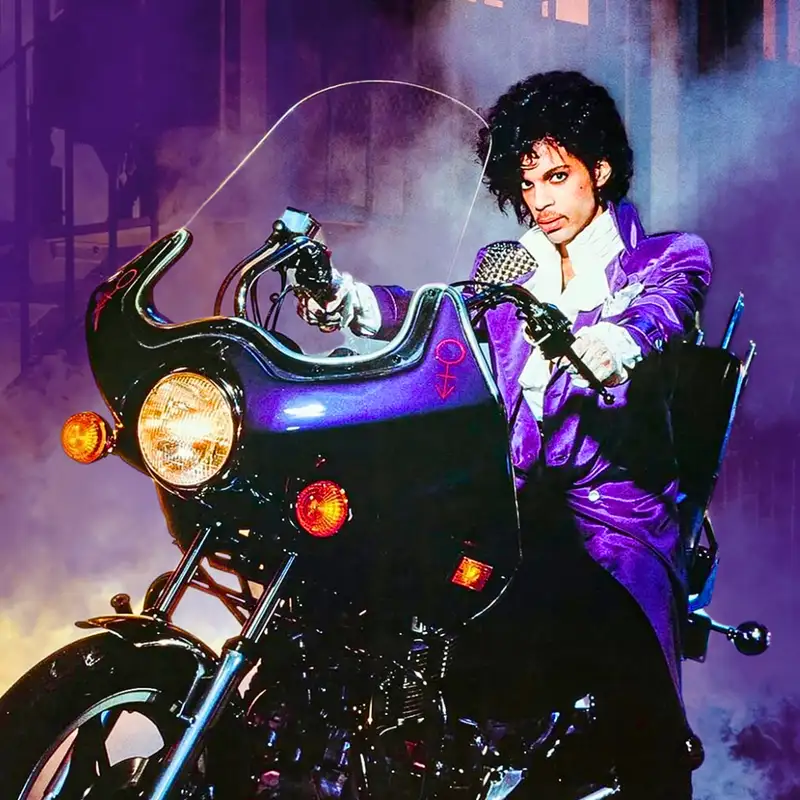
... and the look, and the motorcycle.
Oh, you're really extending. Oh, yeah.
Lake Minnetonka. There's all this stuff.
You're extending out the accoutrements.
There's so much lore around the making of it, and there's so much
legend of all the relationships that formed and were-
... burned in this making of it, and the aftermath of it.
Are you including Apollonia as part of the accoutrements?
Yeah.
Okay. Okay, I'll give it a 10 then too.
There's a great moment, by the way, after she gets out of Lake Minnetonka,
where he takes off on his motorcycle.
Yeah.
And then he comes back to get her, but she starts getting on the back, and he
mm.
Yeah.
Like he's such a jerk.
Right. But doesn't he do it like 10 times?
Like they-
He does it like 10 times
... he kind of overacts that part.
And I know, this whole movie is like him trying to figure that stuff out.
But I was just like, damn.
It was a different time.
That's cold-blooded.
It was a different time. It was a different time.
Is this Prince's best album?
I'm gonna say no. I think on the other episode, on "Sign o' the Times," I
said that
my favorite, desert island, if I had to pick one.
Yeah.
This is a great one. This is his most popular.
This is probably his most pop, which isn't a bad thing.
Not a bad thing.
But I mean, look, a lot of people are gonna say, is this the KOB of Prince's
albums? Yes.
Yeah, I don't think it's, for me, it's not my favorite.
I actually have a tie for first, and it's "Dirty Mind" and "Controversy." I think
those two that came out, '80 and '81, are perfect albums.
Yeah.
And I love, and also, I mean, even the self-titled '79,
but "Dirty Mind" and "Controversy" together are like crack to me.
I can't get enough of it. I'm just addicted to those albums.
Yeah, got it.
Snob-o-meter.
One.
Well, I was gonna do one. I'm doing three.
Oh, yeah, it's just the biggest album of the year.
No, but there's some things to your story about Tipper
Gore and the rise of the Karens, no offense to
any Karens. That would push it off of a one a little bit, wouldn't it?
Why?
I don't know. Let's move on.
Up next.
Up next. What do you got?
I think I have "Like a Virgin," Madonna.
Since this is, that's you know what I mean?
Controversial to controversial.
Interesting.
I mean, artistically, I would, look, pop-wise, it's not a big,
I mean, pop impact during that year, it's not a big
fall-off to Madonna. I mean, artistically, yeah, probably.
But I mean, in terms of defining those times, you're right in there.
I'm back in '84, '85, if I go to that.
Mm.
And I don't love
that Madonna record or Madonna period, but it's very
indicative of the times. What you got?
Mm.
I'm gonna go with
Huey Lewis, "Sports."
And that's all I'm gonna say.
Okay. Got it. Very good.
I think we did it, and then we even did a little bit more.
Maybe too much?
That was good. Prince, man.
Thank you, Prince.
Yeah, curious, a curious genius, that's what we call him.
Can we do "Controversy" next time?
Yeah, sure.
Okay.
That'd be a great next one.
Yeah, that'd be a great one.
Yeah.
All right.
If the Prince heirs let us.
Thank you.
Till next time.
You'll hear it.
I never meant to cause you
any sorrow.
Never meant to cause you any pain.
I just want one time to see you dance
To see you laughing in the
purple rain. Purple rain,
purple rain.
Purple rain, purple
rain.
Purple rain, purple rain.
I only want to see you
bathing in the purple rain.
I never wanted to be your
weekend lover.
Hmm.
I only wanted to be some kind of friend.
Yeah.
Honey, I could never steal you from another.
Mm.
It's such a shame our friendship had
to end.
Purple rain, purple rain.
Purple rain, purple rain.
Purple rain, purple rain.
I only want to see you
underneath the purple rain. Honey,
I know, I know, I know times are
changing. Huh.
And it's time we all reach out for
something new.
That means you too, baby.
You said you want to leave him. But you can't seem
to make up your mind.
You better close it
and let me guide you to the purple rain.
Purple rain, purple
rain.
Mm.
Purple rain, purple rain.
Purple rain, purple
rain.
Yeah. I only want to see you, only want
to see you
in the purple rain.
Ooh.
Let me guide you to the purple rain.
Let me guide you to the purple rain.
Oh,
oh, oh, oh, oh,
yeah.
Let me take you to the purple rain, yeah.
Honey, I want to take you,
honey, I want to take you to the purple
rain.