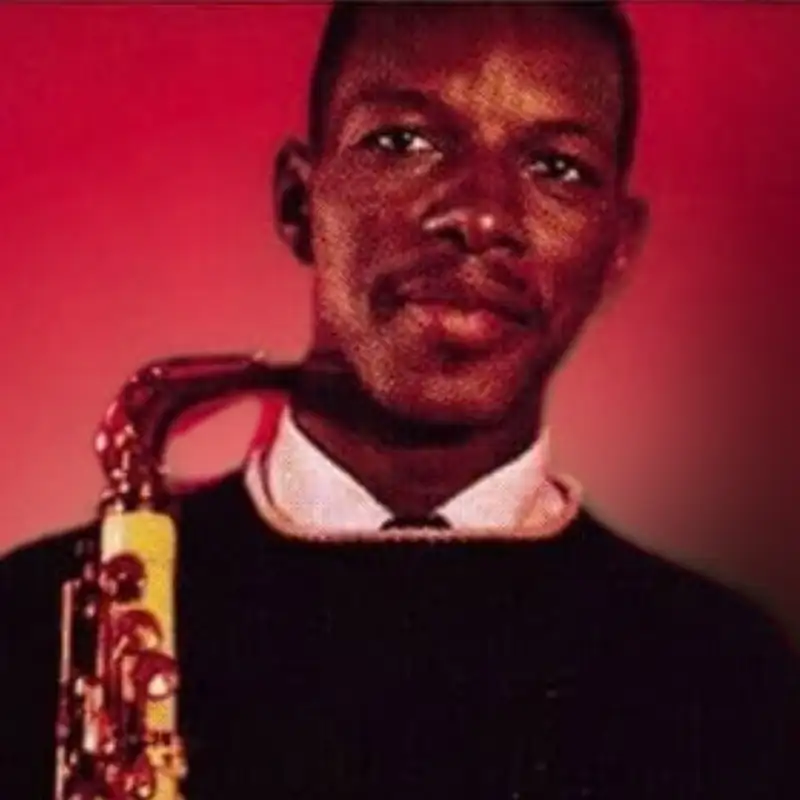
Miles Davis thought he was crazy.
Dizzy Gillespie said that he had no idea what this music was, but it wasn't
jazz.
And Max Roach once followed him out of the Five Spot and punched him in the
face. Ornette
Coleman, he was divisive, he
was revolutionary. In 1959, he packed the Five
Spot in downtown Manhattan
with musical royalty clamoring to hear sounds unlike anything they'd heard
before, the music that would define
The Shape of Jazz to
Come.
I'm Adam Maness.
And I'm Peter Martin.
And you're listening to the You'll Hear It podcast.
Music Explored.
Explored, brought to you today by Open Studio.
Go to openstudiojazz.com for oh,
oh-
Oh, Dobio
... oh, oh, oh, oh, oh, oh, oh-
Oh
... oh, oh-
Oh, save it
... all of your jazz lesson needs. I'm trying to be fresh, Peter, because this
album we're listening to today inspired new sounds.
I thought I would make some new sounds.
That's right. That's right. 1959's The Shape of Jazz to
Come, one of the greatest titled records, maybe the greatest
titled record ever.
That's a bold statement. That's a bold statement.
It's a bold statement.
We'll get into the title actually.
Yeah.
We'll get into the title.
Yeah, yeah. Oh, what great stuff here.
Uh, what a, what a pivotal rec- what, what a pivotal year, 1959.
How many times have we said that?
I mean, we've said it now, I think this is the fifth album we've done-
Wow
... from that year, so we did Time Out.
We've done-
Wow, we're really old souls, aren't we?
We've done Kind of Blue, which by the way, we're gonna be redoing Kind of Blue
pretty soon, I think.
Yep.
It's time. It's time for a re-Kind of Blue.
We've done Charles Mingus, Mingus Ah Um.
Yeah. That one's right.
And we've done Nina Simone live.
At the Town Hall.
At Town Hall.
Right.
And this will be the fifth album.
And Giant Steps-
Well-
... John Coltrane
... is that 1959, do you think?
Ish, yeah. Recorded in 1959.
No, but you know, this is an interesting one.
I don't know what your relationship is with The Shape of Jazz to Come.
We actually haven't talked about it, but for me, this is one that hit me at a time
in my musical life that was so impactful.
I was a very young man when I heard this for the first time.
Mm.
I had literally never heard anything like it, which is I
think probably how everybody else must have felt in
1959. You know, I mentioned in that intro that Miles Davis wasn't a
fan. Miles would eventually come around-
Oh, yeah
... and start making music that kinda sounds a little like this album.
I know.
You know what I'm saying?
And be influenced by.
Be influenced by.
Yeah.
It's, it w-
And say nice things later on about Ornette.
For sure. Yeah, no, it just, I think it just hit everybody like a slap in the
face.
Right.
And what I do think about this album is it's like there's no tepid reactions to
this album.
Right.
You either have a very positive reaction or a, a very
negative. Most people, I should say.
Yeah.
I'm sure that's not true for everybody, but it seems to, like, really cause some
severe, uh, opinions, this album.
Ornette Coleman is interesting-
Yes
... as a player.
Yeah.
He doesn't have the traditional path.
Like, almost every other jazz musician we've covered on the show who starts off
playing, like, a lot of sideman work, recording with a lot of people before he
does his own thing, he did play in, like, in blues and R&B bands
around Texas-
Yeah
... and the South. He actually-
Is he from Texas?
He's from Fort Worth, Texas.
Right.
Yeah.
I always think about him as a West Coast guy, but in a way, Texas is-
Yeah
... but, but the Texas saxophone tradition, you hear that on here-
That's-
... so much, so that totally makes sense.
Oh, I think i- honestly, on this-
Like, he was, he was always one step away from jumping up and walking the bar-
He's a-
... you can hear it
... he is a blues musician-
Yeah
... almost first and foremost.
Yeah.
And that, that is played out on this record, I think.
No, but, you know, we mentioned, like, the, the extreme reactions for some of the
musicians, but even back in the day, there's lore that in 1949 on tour in
Louisiana, Ornette was booted off the bandstand.
He was dragged outside, beaten by an angry mob, and his horn was thrown off a
cliff. That seems like a legend more than it does-
Right
... a fact, but there's all of these stories about him being
kicked out of jam sessions, being booted off gigs.
He played a, a little white plastic saxophone.
Right.
Um, and he had his-
A yellow one on here
... he had his own thing that was,
you know, for lack of a better word, very divisive.
Yeah.
And I think that's the price you pay for being an absolute
original. So here's why his path wasn't very traditional, right?
Mm-hmm.
Like, usually when we do our build-up to these iconic albums, there are all
these albums that these artists have played on- ... on other people's names.
Not true for Ornette Coleman. He didn't do a ton of other stuff before he made
Shape of Jazz to Come in 1959. He made,
uh, he made an album, uh, in
1958 called Something
Else.
Yeah, that's piano, Peter.
Yeah.
Yeah. Uh, he made an album in early 1959
called Tomorrow Is the Question.
Yeah.
No piano on this.
It's a great record. It is a great record.
Ooh.
That's really good. Well-
You're right, too, about, you're, you're mentioning about the 20s, even
stylistically, you, and you hear some of that on The Shape of Jazz to Come.
Uh, I think it's on Chronology. Like, the, almost, like, the,
the, the, uh, collective improvisation, or at least the
spirit of it between Don Cherry and Ornette Coleman à la New Orleans.
Al- as in the roots of the music, you just heard it there, a little bit of, like,
implied street beat to the way they're phrasing and stuff, a real connection with
the tradition of the music.
So in the late '50s, Ornette was living in California-
Yep
... uh, which is where he met Charlie Haden.
Yep.
Uh, and he was working as an elevator operator and a stockroom cl-
clerk in LA while studying music theory on his lunch breaks.
Uh-
He was hustling.
He was hustling.
Definitely.
Uh, then John Lewis of the Modern Jazz Quartet heard him, called him, "The only
real new thing in jazz since Charlie Parker," and got him a deal with Atlantic
Records. The album, The Shape of Jazz to Come, was recorded in one
day, and that very same year, him and his
quartet, uh, Don Cherry and, uh, Charlie
Haden, aided by, um, uh, Billy Higgins—went to
New York and started a residency at the Five Spot.
And, you know, the lore goes that there would be Leonard Bernstein there with
his- his ear to Charlie Haden's F hole in the bass.
Mm.
Like, just there checking it out, and all these- these music luminaries, Gunther
Schuller, and all these people there to check out Ornette Coleman.
The jazz intelligentsia, you might say.
Well, even, just even the- the music intelligentsia.
Yeah.
Right? The avant-garde intelligentsia.
Right.
And some of the jazz guys were not super happy about this,
like, you know, kinda guy who came outta nowhere-
Right
... playing a plastic saxophone, sounding not like anybody else.
And that's, uh, you know, where the story of Max Roach getting
mad enough to follow him up and- and try to beat him up, basically-
Right
... comes from.
Right.
Um, but let's hear that first track from The Shape of Jazz to Come.
One of the best opening track- we say this on every album.
Well, yeah.
One of the best opening tracks ever.
'Cause it's true.
Higgins and Haden.
Ah.
Come on. Like, one of,
one of the great rhythm sections of all time.
100%.
We don't talk about th- those two in particular together,
100%. And what, they're
22, 22, 22 years old,
both of them, or 23.
That's Don Cherry on the cornet, Charlie Haden on the bass, Billy Higgins on the
drums.
Woo. A little tenor sax, a little Texas
tenor vibe
there.
Billy
Higgins' just the engine driving this train.
Ah, yeah.
You know what I mean?
Woo. You hear that?
Ah.
Woo.
You know what I'm saying?
It's Texas R&B roots.
Very.
Man, this Lonely Woman, it-
it's like a jazz standard that no one can play. You know?
I've played it. We've played it before.
Yeah.
But it's- it's tough to pull off, man.
But if you go to a jam session, you're like, "Yeah, Lonely Woman, one, two,
one." That's not gonna work, right?
Not gonna work.
Yeah.
Man, Ornette, like, the personality,
yeah, and, like, the way these forms work. Okay, so, man, so much to talk about.
There's so much.
I- I just wanna throw one thing out there.
The balance of this quartet, even though there's no piano, quibble bit, but,
um, like, you have Haden's and Higgins', especially, like, on this, well, there's a
couple tracks where they're, of course, all playing together
beautifully, but there's very much, like, a two and two kinda situation, right?
Absolutely.
So Ornette, Coleman, and Don Cherry, the way they do-do, do, bo-bo,
we-do, we-ba, da, bo-we.
Like, the freedom with which they're stretching, they're playing rubato-
Yeah
... basically. But they're breathing, they're phrasing.
They go in and out of the groove at little places, but they're floating that.
And then Haden is, like, not worried about, like, "It was this four of ours.
This is the A part." Do, do. And those double stops.
And Higgins is driving, as you said.
Like, there's a real, like, tension and balance-
Yeah
... between this that is, um, that I actually
would say if there was a piano there, it might screw it up.
It 100% wouldn't. You know why?
Because of the way they're playing.
They've dissolved the traditional sense of form-
Yeah
... that every bebop musician that was coming before them, hard bop musician,
post-bop musician-
Right
... was playing. And even, you know, the same year that this comes out, Kind of
Blue comes out.
Yeah.
So What? And everybody talks about, oh, it's like modal jazz.
There's only two chords, and there's not-
Right, yeah.
But compared to this- ... that might as well be, like, a
Gershwin tune.
Smooth jazz.
Right? Yeah, exactly. Yeah, this is really, truly
dissolving many of the rules of forms and traditional song forms-
Yeah
... that were- were put upon the music before this, and a- a lot of people weren't
re- ready for it. It's-
Let me just say this to that, though.
Like, that's, I absolutely agree with what you're saying.
Yet, for the listener, I think it- it feels very...
Like, this doesn't feel like free jazz.
I think it does to musicians in a way because we understand, like, wow,
there's no, like, form or chart or whatever.
But because of the way they play and because of that balance between the quartet
with the rhythm section and the horns, and it's so clear w- when they're going to
the solos and coming out and then coming back to the melody.
Mm-hmm.
It's so intentional-
Yeah
... that I think it gives it this feel, like, a very
mysterious and challenging but very edifying listening experience,
especially Lonely Woman. I mean, this is-
In- in 2002, Charlie Haden in an interview, a print interview, said,
"Ornette completely turned jazz upside down.
There were several innovators in jazz, Louis Armstrong, Duke Ellington, Charlie
Parker, and Dizzy Gillespie, bebop.
Wow.
"And Ornette's band started what we started.
I saw it as a new vocabulary."
Ornette called it harmolodic. For instance, if you play Jerome Kern's All the
Things You Are, you play the melody, then everyone improvises and takes solos.
What we do in Ornette's band is create, uh, from a
composition of his, so that after you play the melody, you create a new
chord structure that's always different. It's never the same.
Mm.
It's moving. And here's Don Cherry on that term,
harmolodics-
Mm
... which is what they called that sort of formless form.
And when we're speaking of harmolodic, we, we speaking of melody and
harmony. And a good example is when Ornette would write a
melody, and I would, we would learn the melody and play it in unison
together. Then he would write harmony to the
melody. And as I would be playing the melody and
the harmony that he would write, the harmony itself would become
the melody, and the melody that I would be playing would become
harmony-
Flipping the, yeah
... to the actual harmony melody. You can hear that in, in-
Isn't that crazy?
Oh, that's so great.
Yeah. Let's check out the second track, Peter. This is Eventually.
Mm.
This is so good.
Bebop.
Woo. So swinging.
Yeah.
Woo, hey, pushing.
So-
They're just-
Off of the melody.
Yeah.
Everything is off of the melody.
Yeah.
It's the most melody-focused music that I think it has been up to this
point.
Hey.
Ooh.
Woo.
Ah.
So
there's a line between this way of improv- especially at this
tempo, a direct line I'm, I'm gonna throw out
there. And, and I, I, I wasn't even planning on ta- I, I've never really put this
together theoretically.
Preach.
But-
Talk about it
... but with the, with the burnout style of the '80s-
Oh, yeah
... which kind of was a little bit of a flash and then it went away, um,
although it would show its... So what we're talking about really, I think, Wynton
Marsalis, Branford Marsalis, Kenny Kirkland-
Yeah
... Jeff Watts.
Yeah.
Um, uh, Kenny Garrett-
Yeah
... to a certain degree. Um-
Yeah
... but, like, that crew and, and a bunch of other folks, I think
there's a direct connection between this way of playing, especially on a couple of
the tunes off here. Now, I'm thinking back.
I know Wynton was, is very up on this record and was at-
Are you serious?
... in the '80s. I remember him-
Never would've guessed that.
I know. A lot of people wouldn't. But in fact, I remember, he was the one who told
me, like, "You gotta check out The Shape of Jazz." I was like, "Wow." I was
surprised he said that.
That was Wynton who recommended?
That was Wynton.
Oh, yeah.
Absolutely. So, like, he was definitely up on this.
That's blowing my mind right now.
And, but it makes sense. Like, you hear that way, and then even the way, like,
Haden is playing, I mean
like, way on top of the beat A lot like Bob Hurst, later
on Reginald Veal, Charnett Moffett. A, a lot of influences there.
But just this approach where it's like there's no chords, right?
Like, it's coming off the melody. It's coming off whatever you're creating.
Um, with the burnout stuff they were doing, there was, sometimes there was a form,
but sometimes, sometimes there wasn't, too.
Yeah.
So.
Yeah.
I got a little chance to play some of that with them over different times.
It's a very exciting way of playing.
But I think it's, I think it's more connected specifically with
this record in some ways, or as connected as it is
with, like, Herbie, Ron, Tony, which is always, like, Plugged Nickel during that-
Yep
... which was definitely a little bit influenced from this, too, I think.
This is what I'm saying.
Wayne Shorter.
No, you know, you know, Miles Davis comes around.
But, and you can definitely hear some of this.
Yeah.
This, I, I just think, like, the en- entire idea of this, we take it for granted
now because it's been around our whole lives, and even if we, if I, you know, I
didn't hear it till I was 22, this album, but I heard people who were influenced
by this album. You heard people who were influenced by this album.
Yes.
So it's been amongst our musical culture-
Yeah
... our entire existence. And for the people in 1959, this would've been
out of outer space.
Right.
It would've just been coming down from a place of complete, you know, never
heard anything to, like, I mean, in, in, in popular
jazz. I'm sure there were-
Yeah
... people doing this. And, and, and don't at me in the comments about like- ...
well, actually, and this, and the, the-
Oh, no. There've been weirder stuff out this year and before.
Oh, no, no, no, for sure.
Yeah, yeah.
But, but to take, like, the scene by storm-
Right
... in a way, right?
Right.
Where he's gaining, like, like, national popularity in America on it.
And look, a lot of this, like, the way I had it broken down, it's almost like
there's two, like, straight up hard bop, or you could call it burnout, but that
wasn't coined until later. Two bebop, like, hard bop
tunes, or free bop you might wanna call it, where they're swinging out hard.
Absolutely.
Um, and then there's two, like, kind of beautiful, you know, clad, you know, Peace
and Lonely Woman. I mean, it's all beautiful. Come on.
But then there's sort of hybrids, the other two tunes.
But we're gonna get into that.
Let's check out Peace.
Yeah.
This might be the most beautiful song on the
album.
And in a way, it's the most traditional-
Yeah
... song. You know, it's a song song.
Yeah, but again.
Yeah, relatively.
Yeah.
Yeah.
But then it has that.
The implied harmony here without having the piano, but you can fill in the, oh,
it's so great.
Appreciate it.
It doesn't hurt that Charlie Haden's playing bass on this either. Oh my God.
You know? I think
it's interesting 'cause, like, Haden and Higgins are both,
like, master technicians.
Like, that brushwork, you know?
Haden.
Oh, and Ornette comes in, man.
Right
when he comes here.
Mm.
Man, it's so good.
Ooh,
yeah.
Man.
Are there changes on this?
Are there?
Yeah.
I don't know.
I mean, they're definitely playing harm- harmolodics, but I mean, like, they're
listening ... There's a tonal center, but when they...
Like, when Haden moves away-
I don't-
... like, there's a give and take there.
Yeah, that's the thing, man. I don't think they're thinking about these as
traditional chord changes.
Right.
I think it's all around. There's a fo- there's a form. Obviously, there's a head.
Yeah.
There's a melody. And everything...
And Charlie Haden is playing a bass movement that's repeatable on the
melody, but I don't know if those...
if you can, if you can, um, extract an entire chord
progression from what they're doing. I guess- suppose you could. Should we try it?
Nerd nook.
No, but it's, it-
It's really the begin- It's... All right.
Notice there's no keyboard here today, by the way.
There's, there's no, no chords to bookends.
'Cause the piano was not invited to the session.
It was not invited to this party and we wanna respect that.
Yeah.
But no, I don't know, man. You know, it's funny too, like,
th- you, you mentioned, like, no one pulls out Lonely Woman at the jam session.
I... first of all, I bet people do. Depending on how nerdy your jam session is, I
bet someone does. But this, this-
Which is weird, because actually, it sh- that's the kind of tune that should be.
Oh.
Think about, like, the complicated tunes.
To learn how to improvise?
Yeah, where it's like, "Wait, you gotta do the head, you gotta do..."
Buddy.
Like, no, just everybody listen. All you need to do is learn this melody-
Man
... and have great ears in a musical sense.
So my son, Ivan, is, is 13. He's learning how to play the bass right now.
Yeah.
And he's learning how to improvise, and we're working on, like, you know, the forms
like the blues and Satin Doll and things like that.
And he realized trying to teach a 13-year-old how to improvise, man, this is hard
on the blues.
Right.
It's actually harder than you might think-
Yes
... to learn how to improvise. I w- I was like, I bet he could, like, play along to
Lonely Woman-
Yeah
... and just really get into it in a way that would be, like, just imitate what
they're doing. Like, all they're doing is, is, is listening to the
melody and, and f- I mean, all they're doing.
You know, it's, it's-
That's just.
It's world-class what they're doing.
Yeah.
But, like, you could get in there in the spirit of this without having to know a
bunch of changes. They all, of course, know how to play changes-
Right
... and everything like that, but, but this is more, like, I think accessible-
Yes
... for not just, like, players, but listeners too.
Well, it's like the thing, like, they had to know and understand and
learn advanced harmony in order to be able to get to the point where they could,
like, develop their ears to be able to come and play in this
way, but then they had to a, to a certain degree be able to, like, push all that
out of their minds.
Yeah.
So it's like, you need to have the openness, the confidence, the ear
training, but then you can't get stuck in that.
Like, if he hears, you know, Haden go down to that low E, he can't be like, "Oh, I
could put this ch-" Like, he has to just be able to react, but you also can't just
be ignorant and be like, "Oh, I don't know what I'm doing.
I'm just playing random stuff" because there's definitely a period, um...
I know we're not supposed to say this. Is this, is this safe space?
Yeah.
Okay. Um, there, there was a period of free jazz,
so-called free jazz, where the, the action and the
intent was just like, "Play whatever you want."
Yeah.
"Don't listen to each other."
Yeah.
Now, this, I'm not saying... I'm not trying to disparage any movement or anything.
It's not about that. It's just like anything.
Just like there's not good bebop players, there's not good blues players, there's
not good free jazz players. But for some reason, 'cause it's free, you could get
away with that more maybe in that ar- in that arena,
right? But when you're bringing all the skills and you're a- able to sublem-
sublimate those to a greater purpose of playing some, some
shape of jazz to come type of stuff, um, and like, you hear
different... All of them in a way, like, trying to kind of
connect and pull things into something they know.
I think more with Haden and Higgins in a way because of the rhythm section.
Like, there's not this aversion to like, "No, we're not gonna do a 4/4 swing."
Like, da, da, dun, dun. You know, boom, boom.
But then it's like, doom, doom, doom, doom, dun, doh. Break it up. Dun, dun, ka.
But, like, that groove is always there.
So they're not afraid to be in the tradition.
Yeah.
And even to your point from earlier, even to jump back a couple of decades-
Yeah
... as well, and to make those connections.
Oh.
So to me, that's all about the freedom, right?
The freedom that they're bringing to this.
That's free jazz.
Hey, Peter.
Hey.
Since we're talking about how to get to freedom-
Yes
... by using the structure.
Yeah.
You like that transition-
That was good
... by the way?
That was good.
Um, woo! You know, this brings us right back to openstudiojazz.com.
Yeah.
If you're interested in learning how to get those fundamental
skills to get you to be able to-
Yeah, to be able to forget and play shape of jazz to come.
Exactly right. You can go to openstudiojazz.com/yhi-
Yes
... and start a 14-day free trial. We deal with this stuff in a bunch of different
courses-
Yeah
... especially, like, nuts and bolts music stuff.
Yeah.
Like, the basics that get you into how to be
free. We start talking about, like, chords,
scales-
Yeah
... learning tunes, how to-
Ideas, narratives-
Ideas
... improvisation
... improvisation-
Yeah
... rhythm, all that stuff is available.
Beginner, intermediate, and advanced. And what's above advanced?
Shape of jazz to come.
Shape of jazz to come. Uh, start your f- free, start your
14-day free trial-
Yeah
... at openstudiojazz.com/yhi. That's
openstudiojazz.com/yhi for
Oh
Your jazz lesson needs-
Back to the show.
Okay. Okay.
Let's get away from that rude commercial interruption.
Yeah.
Back to us, buddy .
You know who put this in a really cool way?
Yeah.
So Charles Mingus, around the time that this album came out-
Mm
... he did one of those Down Beat blindfold tests.
Yeah. Oh, wow, I wanna know about this.
And you can... I'm gonna read this.
I'm here for it.
I'm gonna read this for you, 'cause you hear Mingus.
Mingus, who's one of the great artists of his time-
Yeah
... especially, like, pushing boundaries, like all the things we're talking about
today.
If only he'd made a record in 1959.
He did. And he, but he c- really cared about this kind of
stuff, about the new, right?
Yeah.
And he's taking this blindfold test, and at the end of the blindfold test he says,
"You didn't play anything by Ornette Coleman.
I'll comment on him anyway."
We need more people like that in jazz.
Now, I don't care if he doesn't like me, but anyway, one night- ...
Symphony Sid was playing a whole lot of stuff, and then he put on an Ornette
Coleman record. So he wrote-
Symphony Sid famously, uh, DJ at, what was the radio station?
Or maybe, I think it was Nationwide.
It was Nationwide, I think.
Yeah, yeah.
Yeah. Now, he is really an old-fashioned alto player.
He's not as modern as Bird. He plays in C and F and G and B-flat
only. He does not play in all the keys. So he doesn't, he's not good to go.
You don't take him to alto keys.
Basically, you can hit a pedal point C all the time and it'll have some
relationship to what he's playing, right?
Now, aside from the fact that I doubt he can even play a C scale in whole
notes, tied whole notes- ... a couple of bars a piece in
tune, the fact remains that his notes and lines are
so fresh.
Oh, man.
So when Symphony said, Sid played his record, it made everything else he was
playing, even my own record that he played, sound terrible.
Wow.
I'm not saying everybody's gonna have to play like Coleman, but they're going to
have to stop copying Bird. Nobody can play Bird right yet
but him.
Hmm.
Now, what would Fats Navarro and JJ have played like if they never heard of Bird or
even Dizzy? Would he still play like Roy Eldridge?
Anyway, when they put Coleman's record on, the only record they could have put on
behind it would've been Bird. It doesn't matter about the key he's playing
in. He's got a percussional sound, like a cat on a whole lot of
bongos. He's brought a thing in. It's not new.
I won't say who started it. But whoever started it, people overlooked it.
It's not having anything to do with what's around you and being right in your own
world. You can't put your finger on what he's doing.
It's like organized disorganization or playing wrong right, and
it gets you, and it gets to you emotionally, like a drummer.
That's what Coleman means to me. Isn't that-
Damn
... unbelievable?
That is so...
I've never heard so much glaze and shade in the same-
I know
... review ever.
But man, the h- my, tip of the hat to Charlie Mingus, Charles
Mingus, for, like, putting it all out there-
Oh, my God
... and then being open to, like, but damn, he play, he's, like, he's not very
good, but his music is very good.
Doesn't it make you wanna hang with Charles Mingus?
Yeah.
Don't you wish Charles Mingus had a podcast?
That would be-
Oh
... unbelievable.
That's right.
Man.
Yeah.
Should we do more Mingus? That'd be fun.
Yeah, for sure.
Okay. Uh, next up is the penultimate song, Focus on Sanity.
Penultimate to the
penultimate.
Ooh.
Is this in C?
No, but you could put a C pedal to it.
I
think he, Ornette wanted the record to be called Fo- Focus on Sanity.
That's right. He wanted this-
Atlantic said no
... this title, Focus on Sanity, to be the name of this record.
And Atlantic said The Shape of Jazz to Come.
That's a great name.
Focus on Sanity?
Yeah.
I know.
Can't say that anymore.
No.
Ooh. Some say that's a swing, swingin' rhythm section right there.
Oh, my God.
Swing.
Also, by the way-
Ornette gave him space, too. Go ahead.
Listening to this album is like listening to a set.
Yeah.
This is the point in the set.
Yeah.
Where would they, they would put this long extended-
Right
... piece so it works really well.
Whoa.
Ah, Charlie Haden.
Tw- was he, was he actually 22 on this? You know what?
So many great players are t- I, I'm not gonna say 22 is young anymore.
It just amazes me for some reason. I was doing great stuff at 22, so I shouldn't be
amazed. Mm.
I was listening to this album at 22.
Man.
Maybe that's why it hit me so hard. I was the age of these guys when they made it.
Oh.
You know what I mean?
So Charlie Haden...
Charlie Haden was, um, I actually got a chance to play with him a couple
times, and, and-
Lucky duck
... mostly... Yeah, totally lucky duck.
Early '90s, we did a tour in Europe, uh, for a, a while.
I wanna say a couple weeks. It might've been, like, 10 days with the Roy Hargrove
Quintet and, uh, Charlie Haden Quartet West, where we were doing, like,
concerts in these cool little, like, 300, 400-seat theaters in
France, and w- I think we went to Germany a little bit and Italy, but it was a
really fun tour. Um, and for some reason, like,
Charlie insisted on, like, opening each night.
Yeah.
He was just like, "No, you guys are young cats." Uh, w- it was his...
I, I didn't even wanna do his voice, but he had a great-
Yeah
... we used to all, like, you know-
Just a very distinct voice.
Yeah, man. So it was very... You know, I-
Yeah
... that's not a good version of it.
But-
Do you have that impression of everyone you've played with?
'Cause sometimes it seems like that.
Um, sorry, I'm a listener. Um, no, but he was so
kind with us. It was Roy Hargrove, Ron Blake, Rodney Whitaker-
Oh, my God. What a band
... Greg Hutchinson.
Holy smokes.
Yeah. No, that w- yeah, that was Roy's band.
It's a smoke show of a band.
And then Charlie had this great quartet, and they were, m- Roy and Charlie were
both on Verve Records.
Yeah.
Actually, I think that Charlie was on JATP.
Tell me that Roy and Charlie played a ballad together at some point.
Oh, yeah, for sure.
I would-
For sure
... pay a million dollars to hear that.
For su- oh.
Good, 'cause I've got it on my phone.
Son of a-
Can I beam it to you?
Text you that. I mean, you got a, a jump drive?
No, so i- basically, uh, he would play t- Quartet
West, which was a great band. This was one of the great '90s bands.
They actually have some records that we should do.
Uh, Lawrence Marable, I believe was his name, on drums. It was all, Quartet West.
L- LA Cats.
Yeah.
You know, Charlie had been out there.
Sure, sure, sure.
Ernie Watts on saxophone.
Sure, sure, sure, sure.
You know, from The Tonight Show.
Yeah.
And, um, wh- what was his name? Uh, I was gonna say Andre Watts on
piano. It was not Andre Watts. It was, um, I'll remember his name in a minute.
Great pianist, um, legendary, like, Hollywood,
uh, com- film composer, but also j- great jazz pianist.
John Williams.
No. No, no. Really, really, like, serious. I... Alan.
Alan something. I'm, I'm spacing on his name. Great cat. My apologies.
But he would, um... The theme of the band was they would play s-
music of, like, old Hollywood from the '30s and the
'40s.
Oh, that's great.
And, like, standards, but not, like, All the Things You Are.
Like, stuff that, that... I mean, maybe the '40s and '50s. I'm not sure.
But, like, film noir stuff and, and, and it was sm- I can still remember how
they sounded. But Charlie Haden was just killing it every night, and then he would
stay and, like, "Listen to us," and we would hang, and, and it was such a...
All of them. It was, it was a great experience for me.
Alan Broadbent.
Alan Broadbent.
Yeah.
Of course. Alan Broadbent.
Totally.
Yep.
Um, yeah, Charlie Haden, one of my all-time favorite musicians, honestly.
W- the, the album that's impacted me the most in the last 10 years-
Yep
... of all the albums I've, I've heard, is the duo album with him and
Hank Jones-
Oh, yeah
... that I just discovered.
You and I go over that, yeah.
Um, where they... Called Steal Away, where they're playing all of these hymns, just
duo. Hank Jones and Charlie Haden from-
Yeah
... like, the mid-'90s.
Yeah.
And it is-
And that's two of your favorites right there.
It's one of the most gorgeous albums I've ever heard.
Yeah.
And, and it's been such a huge influence on my playing as a pianist.
Can we add that to the list?
Don Cherry, too, Peter. Don Cherry is an important part of this.
Yes.
Playing, uh, the pocket trumpet, the cornet,
um, and such an interesting player, such an incredible
sound.
Yeah.
One of my favorite parts of, of the story of this album and the Don Cherry
connection, though, this is gonna seem a little crass, but, you know, Don Cherry
had some kids who made music, too.
That's right.
Did you know that?
Uh, well, one of which I knew. The other one I've learned about, so.
So, they, he had, he had kids who were musicians, two of which
had mega pop hits.
Big hits.
They were big, I guess you could call them one-hit wonders. I don't know.
Neneh was, I think, I don't re-
Neneh Cherry-
I just remember that one record
... and Eagle-Eye Cherry.
Yeah.
Both had huge hits. So here's Neneh.
And if you don't know the songs, you do know the songs.
Yeah.
Here's Neneh Cherry singing.
If you're of a certain age.
I think this is '89 or '90 maybe.
Yeah.
We're looking good today.
This is great.
We're looking good in every way. No stopping me.
You better watch, don't mess with me.
No money man-
Come on, now
Yeah
... can win my love.
It's sweetness that's-
Yeah. That was a big hit
... so enough.
So that's Don Cherry's daughter, Neneh, and this is Don Cherry's son, Eagle-Eye, in
the mid-'90s. This was so popular when I was in high
school.
Say tonight. Fight the breakup,
dawn comes tomorrow.
The Sam Falls loving it.
Tomorrow I'll be gone.
Oh, my God.
Say tonight.
How old is that dude?
I just think it's, I think it's so interesting.
That guy's 30.
I just think it's so interesting after listening to this album and hearing all this
amazing avant-garde playing by Don Cherry-
Right
... that his two kids have these huge, like, hugely produced-
Right
... pop hits. It's-
All our producer, all our staff is getting excited, like, "Oh, you know that
record?"
I know. They wanna hear Eagle-Eye Cherry.
We know it.
Uh, all right. So the, the, the last track on the album is Congeniality.
Wait, what about Chronology?
Oh, sorry. The second to last track. Sorry.
The penultimate. Yeah.
Excuse me.
That's okay.
Ooh.
Another hard bop.
Yeah, I have this song. Free bop.
It is free bop, isn't it?
Free bop.
That's great.
Brop.
Brop. Eh.
Yeah.
I don't know about that.
Free bop.
Oh.
It's so playful.
Hey.
Ooh.
Yeah, I mean, at this time,
the way...
Yeah.
The way he's phrasing, though, like, I could see how people would be like,
"Nah." You know?
Yeah.
'Cause it's like, it's not like, he's, like, playing lines and being, "Be do ba do
ba do ba," but it's like, "Be do ba do ba do ba." Like, he's going in and out of a,
almost a rubato within the line, right?
Oh, yeah, compared to, like, Bird.
Yeah.
Cannonball.
Sonny. Sonny Rollins.
Yeah.
Train.
But is there a Train without Ornette? You know?
He definitely-
Or at least Train is-
... shaped-
... '65, '66, shapes-
... shaped the jazz that would come.
Ooh.
Um, before we get-
Coming up. Well done
... before we get to the categories, there's one more track to check out.
Yep.
This is, this is-
This is a short record, by the way.
It's, like, 37 and a half minutes.
Right.
Here's Chronology.
Ooh, another brop.
What a great song.
I always thought this was Rhythm Changes, but I don't know if it is.
I felt like it was their take on Rhythm Changes.
It's got the vibe.
Yep. It's definitely 32 bar
form.Oh, I
know. 'Cause that's seven bars, seven.
Yeah.
Seven, seven, eight, seven.
Whoo.
Uh.
Roy Hargrove, influenced by Don Cherry a bunch.
Talk about a percussive player.
Yeah.
Uh.
Whoo.
Man, what a great partner with Ornette.
Now, am I speaking out of turn-
Are there-
... if I were to say that Don Cherry and Ornette did not
have... Like, part of, I think, the balance of this, that somehow it works
beautifully, Don Cherry and Ornette did not have the technical prowess that Charlie
Haden and Billy Higgins had.
You think so?
I think so. You know?
That's hard to say.
But it's not, but it doesn't, like, there's no detriment to the music on this.
Like, if I really listen to it, um, and, and
like, Charlie Haden and Billy Higgins were, like, master technicians and, like,
just great at their instruments, right?
I don't think any of this matters to the listener, actually.
Like, how good is your technique or wha- ... It's like with a, a painter.
Like, certain painters are known for having incredible technique.
Some weren't, not as much, but that, but the artistic vision and
execution can be equal if not greater either way.
It's just that when you have a quartet, there's a symmetry there and a balance, you
know-
Yeah
... that I just think works.
Well, I think it depends on where you put value in technique, right?
Like, so what do you, what you're calling technique depends on what you put
technical value on. And-
Well, no, I'm just talking about basic stuff.
Like, kinda like Mingus was saying, "I don't think he can play a scale."
Yeah.
All the way that would be, that would be a little harsh.
But, but the artistic vision of Don Cherry and Or- Ornette Coleman is of the
highest order.
Oh, yeah.
That's, that's the technique, is like the artistic technique, m- m- you know,
more than maybe the instrumental technique.
Yeah.
I hear you.
Maybe that's what I'm saying.
And there's balance in this. And, I mean, we got a little flack a couple weeks ago
when we were comparing, like, Charlie Parker to punk rock for being underground,
and it wasn't. That was definitely like, yeah, Charlie Parker's not in, in punk
rock. Like, uh, uh, compared to punk rock, in that Charlie Parker was a masterful
technician, and punk rock musicians didn't give a shit about being-
And wore that as a badge of honor.
And wore it upon, the-
Right.
And this is kind of in the middle of that-
Right
... a little bit, where it's like part of the art of this is how different it
sounds from all of these flashy technical players that would've-
Right
... been around them at this time.
I just think that, like-
And by the way, that's a thing now. Like, this is a genre.
Sure.
A whole genre of jazz now.
Sure, of course. But I just think that the ba- like, we, we shouldn't...
Like, when you have a masterful re- record like this, a document that stood the
ste- you know, test of time, and is just, has so many different angles and en-
uh, to enjoy it from, I think looking at the balance of
the players. Like, if everybody has the, the level of technique
i- you know, in terms of the rhythm section that maybe Don Cherry and Ornette
Coleman had, maybe this doesn't work.
But maybe, you know, Charlie Haden, and I'm, I'm oversimplifying. Apologies.
No.
But Charlie Haden and Billy Higgins, maybe they're
being elevated with the artistic freedom.
For-
You know what I mean? So it, but, 'cause none of this really matters.
Like, what is the output?
Yeah.
What is the whole result?
And this is one of the greatest albums.
Maybe they got lucky. Maybe Ornette was a genius and was like, "I'm gonna get this
kind of," but, but whatever, for whatever reason, it comes out.
Like, sometimes having all, like, master technicians on their instrument in a band
is not fun. You know what I mean? And look, not everyone's gonna be a master
technician.
It's degrees, man.
Yeah. And a master. But, like, the whole thing is, like, from a quartet,
from a, a trio, a duo, anything time you get beyond solo piano, whatever.
Okay. Can I be honest about this?
Yeah.
I actually find the Venn diagrams of people who are master technicians and
master artists to be almost two complete separate circles.
Yeah.
Like, that's my opinion on this.
Yeah.
But I mean, you know, and really the only person who's
linking them up is kind of Art Tatum. You know what I mean?
Who's in the mi-
Yeah.
But even people think he's too flashy and too, there's too much fireworks.
People think Oscar Peterson is too technical.
Yeah.
Right? So it is just a matter of taste.
Right.
Some people might think that this is, this, this playing is BS, because
it's not, you know, Jackie McLean. It's not technical.
It's not-
Right.
It's not biting or whatever. It, it is technical in, in certain ways, but it's not
the obvious ways that, like, a, uh, you know, a Charlie Parker is, where
it's just obvious, like, holy smokes, nobody can do that. You know what I mean?
Right, right.
So I, I-
And in some ways, look, Ornette has such a distinctive
sound. But, like, if you put it with, like, Sonny Stitt, Sonny Rollins,
Coltrane around this time, like, you could s- you, there's just specific things you
could say about the roundness of his tone.
Well, I mean, t- tone is different.
Because, like, if you have a sound-
Yeah
... you're killing it, right?
Yeah, yeah.
But, I mean, just in terms of, like, finger technique and, and that kinda thing.
I mean, the intonation, actually, like, they have a lot of control over-
They do
... intonation and stuff.
I, I'm just talking about, like, here's what makes, this is what makes Bird and
Coltrane, I think, in particular-
Yeah
... so special, is that they are
technical masters of their instruments.
Right.
Like-
Right
... no doubt.
Yeah.
And they push the art that they were making forward
10 years. Both of them.
Yeah.
And there's varying degrees of that in all of the people that we love and talk
about, but I think with those two in particular, and, and I'm sure everybody has
their favorites that they, they think. That's what I'm saying.
It's a degree of taste with what you like-
Yeah
... with this kinda stuff.
I just think, man, this combination, I love it. You know?
I love it, too.
I mean-
No, I mean, this is amazing
... not to say that if you took any one, it's not like, oh, they need each other.
No, I'm just saying on this music, the balance of this record
is, is incredible. You know, just for you, this extra track that was added
on later is fine. I mean, it just, I was used to the flow of the six tracks.
I got it.
So that's all, that's why we're not listening to that one.
Let's get to some, uh, categories here.
Okay.
So our categories, we have ni- uh, eight categories.
Yes.
And we'll start with our desert-
Oh, chill
... desert island tracks. If you had one track to take from this album
on a desert island, which would it be?
I would say Peace. I love Peace, but I mean, Lovely, Lonely Woman is lovely as
well.
Peace is a great call.
Yeah.
I have Lonely Woman. I think you can make an argument for either.
Yeah.
Apex moments. What's your apex moment?
Man, I love Billy Hig- we didn't get to it, Billy Higgins' solo on
Focus On Your Sanity, Focus on Sanity at the end.
We could maybe just play a little. And then the way,
the way they end it. Come back with the so-called melody really q- I mean,
it's masterful.
This solo.
One of the great free drums- drums, jazz drum solos.
Billy Higgins.
Yeah.
And really, the, you gotta get, you know, the whole build-up.
We won't get into all that, but, like, where this comes from is, like, is kinda
the- the- the- the apex moment of this track, and, like, the whole thing
leading up to it is so good.
That's amazing.
Yeah.
You know what I have for apex moment?
Yes.
Here's what I wrote down.
I mean, no, I don't.
That's not what this album is about.
Okay.
I have that. I really think one of the-
The, like, billion soul, is that what you said?
I love billion soul. No, I really think one of the striking things listening to
this now, and, uh, you know, like I said, this hit me when I was really a- a
younger man, and I don't pull this out as much as I- I probably do other
albums at the moment, but the way that
this hit me listening to it this week was that, like,
you talked about, like, that Wynton band with Tain and Kenny Kirkland-
Yeah
... and Miles is at the Plugged Nickel.
A lot of those bands have this amazing way that they apex these
solos.
Mm-hmm.
You know, there are these incredible apex moments.
I mean, or we listened to, like, Stevie last week, and the whole album apex is the
final chord.
Yeah, at the, uh, yeah.
Yeah, and it's in- just incredible.
Yeah.
What's in- interesting about this is, even though they're doing all of this intense
stuff, and it's so free, it stays at this...
They're so relaxed.
Yeah.
And it's so even. Even as these things are
happening, it is not this, like, intense build to this, this
intense-
Yeah
... build to this. Now we break it down. This intense build to this.
Everything maintains the simmer.
Mm-hmm.
I love it about it.
That's great.
So in a way-
Yeah, and it's like there's ebbs and flows, but there's not peaks and there's
valleys.
There's not peaks and valleys-
Yeah
... but there's, like, curves and s- uh, swerves.
Yeah.
I don't know how to describe it, but that's how I truly feel about it.
But what do you got for a Bespoke Playlist title?
Um, I mean, I'm gonna just go to the classic.
Well, this is classic 1959, you know?
Like you-
Classic 1959.
Yeah. I mean, you could, you... That we- we've talked about and debated, but you
could just have a playlist of all music from 1959, and it would be jazz from
1959, and it would be quite varied.
Yeah. Uh-
What do you have?
I have, I have Music That Starts a Riot, and you could put this with some
Stravinsky.
Ooh.
You might put this with a little bit of The Clash.
Right.
You know what I mean? Like, put it with a little bit of, like, ooh, this is
dangerous music.
Right.
And people are pushing back against it. That's what that is.
That's understated, but I got you. Okay.
You got your quibble bits-
Quibble bits. I mean-
... on this album, anything you disagree with, even no matter how minute.
I mean, just, I mean, this is a silly one, no piano. That's for selfish reasons.
He doesn't need it.
I had a, I had a similar, just a funny one, which is, like, could've used some
chords.
Selfish.
That's not true.
Harmolodics is great, but what about harmony?
Yeah, what about a little... You ever heard of a diminished chord, guys? Come on.
Uh, snob-o-meter.
How many?
How snobby is this? This is a one, not snobby at all, 10, maximum.
Do you want me to go first, or do you wanna go first on this?
I got a 10. Do you got a five?
This is a classic five.
Oh, we-
If this is not... Okay, how could this be?
You're saying that this is the snobbiest record of all time?
It's one of the snobbiest.
But, dude, this is on, like, every top 10 jazz albums.
It's, like, checking the box. That's the free, weird one.
Everybody knows it. What's snobbier?
Okay, I- I'm not gonna disagree with you.
And even if it's, even if you say Ornette Coleman is snob, you'd be like, "Free
jazz over Shape of Jazz to Come." This is a very commercially successful-
Okay
... I, am I lying?
I think this music- ... if you don't, like you s- you even said it in the beginning
of the show, you can't come into this unseasoned.
You have to have listened to a lot of jazz to even understand where this is coming
from. And this-
Is that what the snob-o-meter measures?
Well, that's, to me-
How seasoned one is?
... how I think about it. Yeah, like, you, a- a layperson who's, has never heard
this music, if this was the first jazz they heard, they'd be like, "Ugh, I don't
understand what's going on."
I know, but a snob would be like, "Ah, that's not even his best record."
Oh, okay.
So that's why I said five.
Uh-
But Aunt Linda would not like this record.
Not at all, no.
That's why I can't go one, so.
She would, she would get violent. She would start a riot.
She'd start a riot.
Uh, is this better-
And not a quiet riot.
No. Is this better than Kind of Blue?
Uh, no.
No. Uh-
But it's damn good.
It's damn good, but I don't, I don't prefer it to Kind of Blue.
No.
Uh, accoutrements.
Al- although, think, hmm.
Better than...
It's so stupid, this category. 'Cause it's so different than Kind of Blue.
Yeah.
It's so ridiculous to even compare them.
Okay.
But are we talk- If, if I'm just talking about my own personal listening habits-
I know
... which one have I listened to more in my life, Kind of Blue wins.
Yeah, for sure.
Um, accoutrements. We got-
I'm going eight, and I'm, I would almost go nine.
Yeah.
Um, but the, uh, this, the- the- the
typography or the font-
The font?
... I'm not crazy about.
Okay, see, for me, that's a feature, not a bug.
Well, no, no. I mean, and it's so, I- I mean, everything in the, the
pictures are great, but to me, that takes away a little bit.
It's, it's good, though.
I got a nine. I think it's really good.
Okay.
I really-
It fits the, the, the vibe of the album so well, so that's good.
The only reason I don't have a 10 is 'cause I wonder what it would be like if they
let Ornette name it Focus on Sanity.
Yeah, I know.
And what that would look like.
For, I mean, if we're including-
I love, first of all, I just love his sweater.
Yeah, the sweater with the sh-
The sweater, shirt, tie.
Yeah, and the tie's kinda hidden under there.
Classic combination.
That's, that's an Adam Maness album.
By the way, Ornette, even though, you know, I mean, he's playing this, this, um,
avant-garde music, incredible dresser.
Yeah. He was-
Incredibly well-dressed his whole life
... snappy dresser.
Incredible.
I mean, I would almost push it up to a nine if we're taking the title into the
accoutrements 'cause this is one of the... I, I would give the title a 10.
Shape of Jazz to Come.
Up next, what do you got?
Um, oh, what did I... Oh, free jazz.
Perfect.
Yeah.
'Cause-
'Cause actually, so this is one thing I would think about, and this is why I'll
almost, uh, uh, equivocated on Kind of Blue better than Kind of
Blue. This kind of music, I remember, like, once you get into it and listen to this
whole album like I've been doing on the LP the last few days-
Yeah
... like, it makes me want more. Like, I can't listen to this and then be like,
"Oh, let's go listen to Time Out," or, "Let's go listen to KOB."
You want more.
Like, it seems, yeah, I wanna go to free jazz.
Yeah.
You know what I mean?
I know. I know. Well, I wanna go to Eric Dolphy's Out to Lunch.
Out to Lunch. This is a great one.
One of my favorite albums of all time.
Yeah.
Uh, I discovered it around the same time I discovered this album. I love them both.
They're like family to me at this point, so.
You know what album I truly love but I would never listen to after this?
What?
Anita Baker's Rapture. I don't know why I'm thinking of that, but we're gonna throw
that in the mix next time.
Coming up next on You'll Hear It. Uh, hey, by the way, did you know that we have a
newsletter?
I love newsletters.
If we had a newsletter, what would we call it from the You'll Hear It podcast?
What would-
Uh, You'll, You'll Hear It Written Edition. .com.
Snappy. Snappy title. No, it's called You'll Read It, Peter.
Oh, You'll Read It. Of course.
Yeah. You're gonna get insights and behind-the-scenes from the show.
Go to youllreadit.com.
No.
Oh, okay.
Just click the link in the description to sign up for the newsletter.
Yeah.
And yeah.
Oh, we have some, some more notes. Oh, no, that's from the record.
Yeah.
Hey, we, uh, we were nominated for an AMBY.
I know. We didn't win.
An Ambie. It's an Ambie.
Is it Ambie? Ambiance? We did not win.
No.
Shout out to, uh, Twenty Thousand Hertz, uh, from-
Yeah, Twenty Thousand, Dallas and-
... the Ambies
... and the crew. Yeah.
But thanks.
We were, we were at, we were with some good people there.
I mean, uh, is it-
I watched, I watched the... We're going, we're going next year.
Is this show good?
It's good. It's pretty good.
Ah, I don't know. All right.
I wish I hadn't taken an Ambien right before I watched the...
That, that kinda threw me off a little bit.
Yeah, your text got super dark. All right, till next time.
You'll Hear It.